Julian Fellowes - Past Imperfect
Здесь есть возможность читать онлайн «Julian Fellowes - Past Imperfect» весь текст электронной книги совершенно бесплатно (целиком полную версию без сокращений). В некоторых случаях можно слушать аудио, скачать через торрент в формате fb2 и присутствует краткое содержание. Жанр: Современная проза, на английском языке. Описание произведения, (предисловие) а так же отзывы посетителей доступны на портале библиотеки ЛибКат.
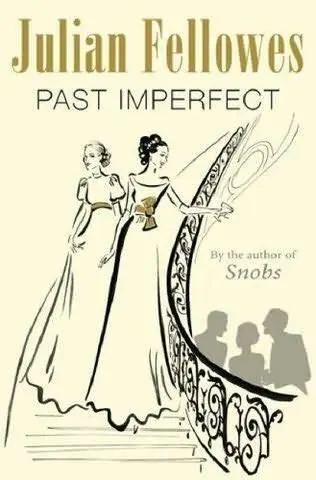
- Название:Past Imperfect
- Автор:
- Жанр:
- Год:неизвестен
- ISBN:нет данных
- Рейтинг книги:3 / 5. Голосов: 1
-
Избранное:Добавить в избранное
- Отзывы:
-
Ваша оценка:
Past Imperfect: краткое содержание, описание и аннотация
Предлагаем к чтению аннотацию, описание, краткое содержание или предисловие (зависит от того, что написал сам автор книги «Past Imperfect»). Если вы не нашли необходимую информацию о книге — напишите в комментариях, мы постараемся отыскать её.
Past Imperfect — читать онлайн бесплатно полную книгу (весь текст) целиком
Ниже представлен текст книги, разбитый по страницам. Система сохранения места последней прочитанной страницы, позволяет с удобством читать онлайн бесплатно книгу «Past Imperfect», без необходимости каждый раз заново искать на чём Вы остановились. Поставьте закладку, и сможете в любой момент перейти на страницу, на которой закончили чтение.
Интервал:
Закладка:
But, at the time this contradictory attitude towards hereditary rank meant that as a weapon, titles had to be used circumspectly and that all public display was self-defeating. Just as anyone who shouts ‘Do you know who I am?’ at a hotel or airline employee immediately forfeits what little advantage they might possibly have gained from their position.
Forty years later all this has altered. After half a century, while a life peerage is a perfectly respectable honour, it is only really meaningful in a political context. In smart society it has failed to garner any real aura or kudos beyond that of a knighthood. Mrs Thatcher tried to acknowledge this with a few hereditary creations in the early 1980s, but she was not supported and after that the nobility remained shut, despite continuing to dominate the social pyramid unchallenged. In fact, when toffs are given life peerages they tend to wear them lightly as if anxious to show that they do not take their new rank seriously. ‘We’re just the day boys,’ said one to me recently. Obviously, the old system should either be reopened or abolished, since the present situation should be judged untenable in any democratic society, but there is little sign of reform. Instead, today, up and down the land the descendants of some lucky mayor or banker in the Twenties, reign graciously over us, while the great of our own day, often with far more significant achievements than the forebears of the grandees present, give place and sit forever below the salt.
The point is that today Serena would never question the advantage of her position and using it in this context would almost certainly work. But in those days, forty years ago, it was an act of bravery for her to hold it up and risk a potshot. She was right to be diffident, since it was clear her intervention wouldn’t do the trick. The man stared at her officiously. ‘I’m very sorry, Your Ladyship,’ he started, ‘I’m afraid-’
‘This is absolutely ridiculous!’ Dagmar’s shrill cry rang out across the room. One of her striking and even poignant qualities was the absolute Englishness of her voice, making her foreign name and rank feel even stranger. And it was not just English, but a sound from the England of sixty years before, the voice of a miniature duchess opening a charity bazaar in 1910. She strode towards the table, pushing the crowd apart as she came, like a Munchkin general. ‘Of course Damian does not have to go!’
This complication really flummoxed the man. ‘But Her Royal Highness asked most particularly-’
‘Her Royal Highness doesn’t know anything about it!’
‘Oh, I think I do!’ The vast bulk of the Grand Duchess was now added to the mix. The guests fell back as she swept majestically through the room, a re-enactment of Sherman marching through Georgia, scorching the earth on her journey, accompanied by, interestingly, Andrew Summersby, who hovered beside her like a small and ugly tug in the shadow of an ocean-going liner. ‘I’m very sorry, Mr Baxter, I am sure you did not mean to offend in any way.’ She paused for breath and I saw Damian try to cut in, presumably with a view to improving his chances, but she was not interested in a dialogue, only in a statement of policy. ‘However, I feel there are rules in these things and they must be adhered to.’ She smiled to sugar the pill. ‘We can’t risk Society crashing down about our ears. I hope you won’t think too harshly of me.’
‘No, indeed,’ said Damian waggishly, still hoping to regain his balance.
‘But Damian was invited!’ The cry came from a hideously embarrassed Dagmar. Naturally it made an interesting contribution to the argument. The crowd’s eyes swung towards her, like the audience of the tennis match in Hitchcock’s Strangers on a Train. ‘I invited him!’ I am sure everyone present knew this was a lie, but it was a gallant and generous lie, and it sent her higher in the estimation of her guests, most of whom were not particularly fond of her before that night, despite their readiness to take full advantage of her hospitality. I say this so you may know that her intervention did achieve some good. As an argument against her mother’s decision it was of course completely fatuous.
‘Excuse me, my dear, but Mr Baxter was not invited. Not by you. And, more to the point, not by me.’ The Grand Duchess’s tone brooked no argument. She had not finished. ‘This was something he made quite clear within earshot of Lord Summersby, who was good enough to bring it to my attention. I would go so far as to say that Mr Baxter was boasting of his lack of invitation.’ The shade of the Grand Duchess’s face was darkening and it was not a becoming alteration. Coupled with the primary colours of her costume, she was beginning to resemble a blow-up Santa Claus hovering between the buildings in Regent Street at Christmas; but, as always with her, there was a quality to be reckoned with. I especially enjoyed a slight flavour of Eastern Europe in her voice as her rage intensified, as if her duty towards her people – subjects in a country which, lest we forget, she had never even visited – had somehow infused her with a new and different past, washing away her healthy, early years in West Yorkshire and making her Moravian in spite of herself.
Her words had naturally revealed who was to blame for the incident, which I would like to describe as ‘horrid,’ but which had, of course, completely made the party for most of those present. The sneak responsible was none other than Andrew Summersby. I would guess that this public unveiling was not part of his original plan and he looked uncomfortable as the eyes of the company now turned upon him. He hesitated for a moment before making the decision, which I cannot blame him for, given his situation that, having been uncovered, he had better brazen it out.
Until this point he’d been hovering at the back of the proceedings, but now he strode forward. ‘Come on,’ he said, laying hold of Damian by the upper arm, rather like someone making a citizen’s arrest, which I suppose he was doing, and attempting to guide him away.
In one swift move, and to the amazement of us all, Damian again got free, this time with a thousand times more fury than he had vented on the hotel employee when the man had tried something similar. ‘Take your hand off me this instant,’ he snarled. ‘You stupid, ridiculous oaf!’ Obviously, Andrew was not expecting anything of this sort when he had first decided to betray the uninvited guest, least of all from someone whom he judged to be far beneath him in God’s scheme of things. Andrew unquestionably was an oaf, and a very stupid one, but few people would then have called him such to his face and he was quite unprepared for it. To be honest, I think he just wanted to have a go at Serena or one of the other girls who had been hovering around Damian all evening and he’d got jealous. I’m quite sure nobody was sorrier than he that the whole situation seemed to be spiralling out of control.
He was dressed, like some of the others, as a Death’s Head hussar, with tight, in his case unbecoming, trousers, and a coat slung across his back, all of which may have fatally impeded his movement, but he couldn’t back out now. He lunged forward, making a second attempt to grip the miscreant’s arm. Once more, Damian was too quick for him, stepping back in a sort of pirouette, like Errol Flynn in a Warner Brothers romance, and before anyone could stop him he had swung the full force of his right fist into a punch that met Andrew’s nose with a loud and sickening crunch. Several of the girls screamed, particularly the nearest, one Lydia Maybury, whose white, organza frock, charmingly cut on the bias and embroidered with lilies of the valley, was copiously sprayed with a mixture of gore and snot from Andrew’s smashed proboscis. He himself looked so startled, so astonished by the unbelievable course events had taken, as if the sea itself had suddenly come rushing in through the ballroom windows, that he stood for a moment in a trance, staring through sightless eyes, stock still, blood spouting from his nostrils, before staggering backwards. Watching this, but paralysed with a kind of ecstatic horror, none of us thought to catch and save him, and instead he collapsed full length on to the breakfast buffet, pushing it over as he fell, showering himself and the bystanders with hot plates and sausages and jugs of orange juice and bacon and toast and burners and scrambled eggs and mustard and cutlery and all. The crash was like the Fall of Troy, echoing through the hotel passages, frightening the horses, wakening the dead. It was succeeded by complete and total silence. We all stood there, rabbits caught in the headlights, stunned, amazed, hypnotised, watching the bloody, breakfast-decorated body of the fallen Viscount. Even Dagmar was as still and as silent as a statue.
Читать дальшеИнтервал:
Закладка:
Похожие книги на «Past Imperfect»
Представляем Вашему вниманию похожие книги на «Past Imperfect» списком для выбора. Мы отобрали схожую по названию и смыслу литературу в надежде предоставить читателям больше вариантов отыскать новые, интересные, ещё непрочитанные произведения.












Обсуждение, отзывы о книге «Past Imperfect» и просто собственные мнения читателей. Оставьте ваши комментарии, напишите, что Вы думаете о произведении, его смысле или главных героях. Укажите что конкретно понравилось, а что нет, и почему Вы так считаете.