Ghita Schwarz - Displaced Persons
Здесь есть возможность читать онлайн «Ghita Schwarz - Displaced Persons» весь текст электронной книги совершенно бесплатно (целиком полную версию без сокращений). В некоторых случаях можно слушать аудио, скачать через торрент в формате fb2 и присутствует краткое содержание. Жанр: Современная проза, на английском языке. Описание произведения, (предисловие) а так же отзывы посетителей доступны на портале библиотеки ЛибКат.
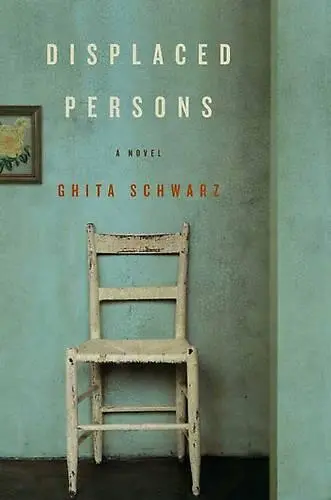
- Название:Displaced Persons
- Автор:
- Жанр:
- Год:неизвестен
- ISBN:нет данных
- Рейтинг книги:5 / 5. Голосов: 1
-
Избранное:Добавить в избранное
- Отзывы:
-
Ваша оценка:
Displaced Persons: краткое содержание, описание и аннотация
Предлагаем к чтению аннотацию, описание, краткое содержание или предисловие (зависит от того, что написал сам автор книги «Displaced Persons»). Если вы не нашли необходимую информацию о книге — напишите в комментариях, мы постараемся отыскать её.
In May 1945, Pavel Mandl, a Polish Jew recently liberated from a concentration camp, lands near a displaced persons camp in the British occupation zone of newly defeated Germany. Alone, possessing nothing but a map, a few tins of food, a toothbrush, and his identity papers, he must scrape together a new life in a chaotic community of refugees, civilians, and soldiers.
Gifted with a talent for black-market trading, Pavel soon procures clothing, false documents, and a modest house, where he installs himself and a pair of fellow refugees – Fela, a young widow who fled Poland for Russia at the outset of the war, and Chaim, a resourceful teenage boy whose smuggling skills have brought him to the Western zones. The trio soon form a makeshift family, searching for surviving relatives, railing against their circumscribed existence, and dreaming of visas to America.
Fifteen years later, haunted by decisions they made as "DPs," Pavel and Fela are married and living in Queens with their young son and daughter, and Chaim has recently emigrated from Israel with his wife, Sima. Pavel opens a small tailoring shop with his scheming brother-in-law while Fela struggles to establish peace in a loosely traditional household; Chaim and Sima adapt cheerfully to American life and its promise of freedom from a brutal past. Their lives are no longer dominated by the need to endure, fight, hide, or escape. Instead, they grapple with past trauma in everyday moments: taking the children to the municipal pool, shopping for liquor, arguing with landlords.
For decades, Pavel, Fela, and Chaim battle over memory and identity on the sly, within private groups of survivors. But as the Iron Curtain falls in the 1990s, American society starts to embrace the tragedy as a cultural commodity, and survivor politics go public. Clever and stubborn, tyrannical and generous, Pavel, Fela, and Chaim articulate the self-conscious strivings of an immigrant community determined to write its own history, on its own terms.
In Displaced Persons, Ghita Schwarz reveals the interior despairs and joys of immigrants shaped by war – ordinary men and women who have lived through cataclysmic times – and illuminates changing cultural understandings of trauma and remembrance.
Displaced Persons — читать онлайн бесплатно полную книгу (весь текст) целиком
Ниже представлен текст книги, разбитый по страницам. Система сохранения места последней прочитанной страницы, позволяет с удобством читать онлайн бесплатно книгу «Displaced Persons», без необходимости каждый раз заново искать на чём Вы остановились. Поставьте закладку, и сможете в любой момент перейти на страницу, на которой закончили чтение.
Интервал:
Закладка:
SHE LOOKED SOMETHING LIKE her own self, older, of course, thinner than the last time he had seen her, in the spring of 1942. She had come to Foehrenwald with a bundle of typhus-ridden women liberated from a barn crowded with remnants of a death march, hospitalized in one camp, then transferred to another. She was a small girl-no longer a girl, Pavel supposed, she had grown to womanhood in camps-but still sharp. Her chestnut hair, still short, had returned to its wavy beauty. He touched it as they embraced, and as they walked from the camp office he let his hands roam through it and embraced her again. He stopped every few steps to look at her. It was hard to breathe: a body created from the same bodies that created him, a living being from the same mother and father.
Hinda, he said, again and again. Hinda, Hinda.
Pavel, she said, Pavel.
They walked together to a small area near the camp school. They would have some privacy. As they moved behind the building, toward a small garden, Pavel heard his sister coughing. He looked at her. So reserved a moment before, Hinda now had tears streaming down her face, and as he watched her, he realized he himself was weeping. They wept the same way: in silence. They sat on a bench, and Pavel felt his skin chapping where the salt water had dried on his cheeks. It was a humid and cloudy day.
After some time Hinda spoke: I want to get married.
Hmm? he said, surprised. To whom?
She had a friend, it seemed, someone who had gotten through the war on Aryan papers-he fought on the Polish side in the Warsaw uprising! Hinda said, with an uncharacteristic excitement-and who cared for her, who had a great future in front of him, who wanted to marry her and take her out, to England or to America, whichever came first, to escape this new prison, to take her away and make her life something calm and peaceful.
Pavel frowned. I should meet him before you decide anything, he said.
No, Hinda said. I have decided. You should meet him, of course. But I have decided, Pavel. You are not my father. You are my brother.
He said nothing.
My only living brother, she said. Her tears again flowed.
She seemed to think he had no say in the matter. After a moment, he said, I have a house. I live in a house. After I meet him, there we will make your wedding.
It would be something beautiful. Nothing like what the other refugees had, more and more marrying after one meeting, two meetings, a walk with the intended, a dozen onlookers crowded to watch the two say their marriage prayers under a canopy made from an army-issued sheet. Hinda’s wedding would be different, not the impoverished little gatherings around a barracks of hungry people, but a party, something elegant and full, with pastries and delicacies and even, he thought, a little music. Yes, a little music. He would give to his sister what she might have experienced had she grown to be a bride under the watch of their father.
FELA AND HINDA DID not make a good impression on each other. Fela put out her hand when they met, and Hinda seemed not to notice it. Pavel saw, and a protest welled up in his throat: Hinda! he wanted to cry. But he said nothing, watching Fela start back in surprise.
The rest of their hour together was stiff, labored. Kuba, Hinda’s intended, at the last minute had been obliged to attend to some business. Hinda entered the little house alone, delivered by a car that had been dispatched by Pavel. Now it was up to Pavel to move the conversation.
All right, Pavel thought. At least Kuba did business, unlike those refugees who slept all day in the barracks of the DP camp, moving about in a state of apathy, refusing to get up and work or even talk. But the meeting, which had been arranged so Pavel could assess Kuba, instead became a chance for Hinda to judge Fela. And here was Hinda, sullen and haughty, just as she had been years ago when their father married their stepmother, just as she had been when she had seen, by chance, Pavel in the street with a girl. Years ago.
You smoke too much, said Hinda, watching Fela strike another match.
Who did not smoke? It kept down the hunger. It gave the body the illusion of warmth. Few of the refugees had given it up. In fact Hinda smoked also; she had brought her own cigarettes.
Kuba has a good contact, Hinda said. He is so blond, it is easy for him to move around. He gets French ones, sometimes. I try to be careful; it is not so ladylike to smoke so much.
Fela blew out a puff from her mouth. The smoke came out in two little circles. Often when she did that, even as a joke, Pavel thought she looked like a film actress. But now he didn’t. He was worried. He said, We all smoke.
He knew it was not an adequate answer. He could feel Fela’s anger in the caress she gave his hand, which rested on the table, holding his own cigarette. She did not touch him in front of others, but now, in front of Hinda, she wanted to throw off her restraint. Her gesture had an effect: Hinda looked coldly at the two of them and said, Not all of us smoke so much.
Pavel and Fela retained a modesty in public, acting as friends, perhaps cousins. For what would others think of him, not marrying a beautiful Jewish girl with whom he shared a bed? Yet the explanation was even worse-that Fela still looked for her husband. So they were discreet, and they depended on Chaim-who had moved into Fela’s room-to keep quiet himself. What did others need to know about their living arrangements? They had their own dwellings to worry about.
Yet here was Fela, openly touching, her pale fingers rubbing his knuckles. Was she taunting his sister, or perhaps him? He did not know. Pavel was relieved-no, not relieved, he thought, just tired, just ready to rest-when Chaim hopped off Fela’s bicycle and bounded into the garden, giving Hinda a tip of the cap as she stood up to leave.
PAVEL BROUGHT CHAIM WITH him to meet this Kuba near Munich. It was better that way, men among men. Kuba stayed with a friend from his childhood in a bare apartment only moderately clean. Pavel sniffed a bit when he came in. Even without a woman living in the home, one had to make attempts! His sister’s intended did not seem to waste money on luxuries. But Kuba was friendly, a round pink face atop a small body, neatly dressed in gray trousers and a dark jacket, and he shook Pavel’s and Chaim’s hands with vigor.
Kuba too had thought to have an observer. His friend Marek brought glasses from the kitchen, and they sat down in the front room with a bottle of schnapps, a gift from Pavel. Chaim unpacked from his satchel a bundle of American cigarettes.
Marek took a cigarette first. He lit it with a match, then passed the light on his cigarette to Pavel’s. All this travel just to take a look at the sister’s groom, yes? That is a loyal brother.
Was he making fun? No, Pavel decided. He breathed out. She is all I have, he said.
Kuba interjected. She talks of you like a hero. Smuggling letters between work camps. Sending her packages in Foehrenwald, even before you knew for sure she was alive. Then travel through the Russian zone to get to the American!
Pavel coughed, suddenly nervous. She is all I have, he repeated.
More than many of us, nodded Marek.
A silence.
Chaim said, We make the wedding in our house. Fela already plans for the meal.
Pavel threw him a look-should it be given away so quickly that Kuba had passed Pavel’s scrutiny?-then looked back at Kuba with a grave face.
I see you must make good business, if you live outside a camp.
Marek and Kuba exchanged glances. We get along all right, said Kuba. We have our own connections. No doubt different from yours-
Marek interrupted. We don’t have a car, that is for sure!
The two of them laughed, and Pavel joined in.
Coffee, said Pavel, is better than diamonds.
Читать дальшеИнтервал:
Закладка:
Похожие книги на «Displaced Persons»
Представляем Вашему вниманию похожие книги на «Displaced Persons» списком для выбора. Мы отобрали схожую по названию и смыслу литературу в надежде предоставить читателям больше вариантов отыскать новые, интересные, ещё непрочитанные произведения.








Обсуждение, отзывы о книге «Displaced Persons» и просто собственные мнения читателей. Оставьте ваши комментарии, напишите, что Вы думаете о произведении, его смысле или главных героях. Укажите что конкретно понравилось, а что нет, и почему Вы так считаете.