Nick Hornby - Fever Pitch
Здесь есть возможность читать онлайн «Nick Hornby - Fever Pitch» весь текст электронной книги совершенно бесплатно (целиком полную версию без сокращений). В некоторых случаях можно слушать аудио, скачать через торрент в формате fb2 и присутствует краткое содержание. Год выпуска: 1992, ISBN: 1992, Издательство: Victor Gollancz, Жанр: Современная проза, на английском языке. Описание произведения, (предисловие) а так же отзывы посетителей доступны на портале библиотеки ЛибКат.
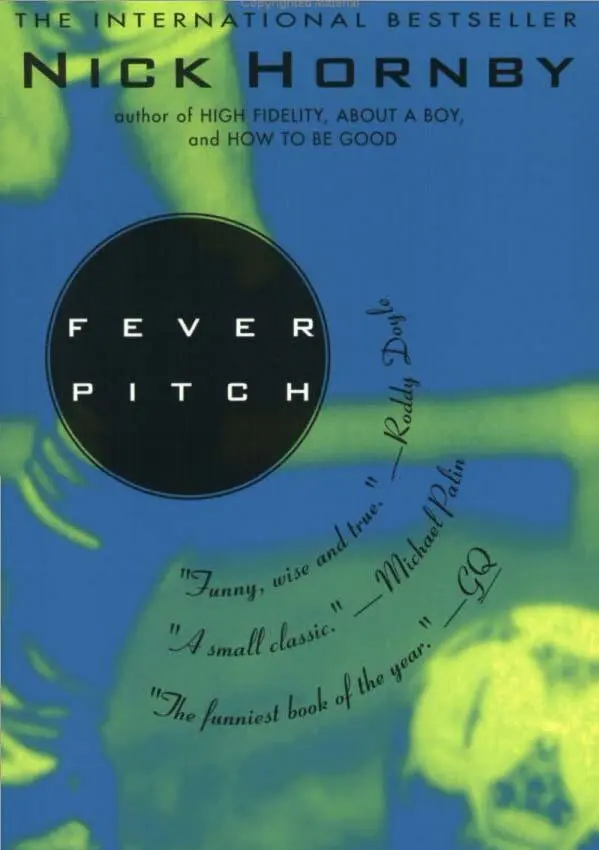
- Название:Fever Pitch
- Автор:
- Издательство:Victor Gollancz
- Жанр:
- Год:1992
- ISBN:0 575 40015 3
- Рейтинг книги:3 / 5. Голосов: 1
-
Избранное:Добавить в избранное
- Отзывы:
-
Ваша оценка:
Fever Pitch: краткое содержание, описание и аннотация
Предлагаем к чтению аннотацию, описание, краткое содержание или предисловие (зависит от того, что написал сам автор книги «Fever Pitch»). Если вы не нашли необходимую информацию о книге — напишите в комментариях, мы постараемся отыскать её.
Nick Hornby has been a football fan since the moment he was conceived. Call it predestiny. Or call it preschool. Fever Pitch is his tribute to a lifelong obsession. Part autobiography, part comedy, part incisive analysis of insanity, Hornby’s award-winning memoir captures the fever pitch of fandom—its agony and ecstasy, its community, its defining role in thousands of young mens’ coming-of-age stories. Fever Pitch is one for the home team. But above all, it is one for everyone who knows what it really means to have a losing season.
Fever Pitch — читать онлайн бесплатно полную книгу (весь текст) целиком
Ниже представлен текст книги, разбитый по страницам. Система сохранения места последней прочитанной страницы, позволяет с удобством читать онлайн бесплатно книгу «Fever Pitch», без необходимости каждый раз заново искать на чём Вы остановились. Поставьте закладку, и сможете в любой момент перейти на страницу, на которой закончили чтение.
Интервал:
Закладка:
They knew, of course, about the football (the topic somehow seemed to crop up in more than one conversation class). So when the Italian students started to complain, on the afternoon of the 29th of May, that they had no access to a television, and therefore could not watch Juve beat Liverpool in the European Cup Final that night, I offered to come down to the school with the keys so that we could watch the match together.
There were scores of them when I arrived, and I was the only non-Italian in the place; I was pushed, by their cheerful antagonism and my own vague patriotism, into becoming an honorary Liverpool fan for the night. When I turned the TV on, Jimmy Hill and Terry Venables were still talking, and I left the sound down so that the students and I could talk about the game, and I put a little bit of technical vocabulary up on the board while we were still waiting. But after a while, when conversation started to flag, they wanted to know why the game hadn’t started and what the Englishmen were saying, and it wasn’t until then that I understood what was going on.
So I had to explain to a group of beautiful young Italian boys and girls that in Belgium, the English hooligans had caused the deaths of thirty-eight people, most of them Juventus supporters. I don’t know how I would have felt watching the game at home. I would have felt the same rage that I felt that night in the school, and the same despair, and the same terrible sick shame; I doubt if I would have had the same urge to apologise, again and again and again, although perhaps I should have done. I would certainly have cried, in the privacy of my own front room, at the sheer stupidity of it all but in the school I wasn’t able to. Maybe I thought it would be a bit rich, an Englishman weeping in front of Italians on the night of Heysel.
All through 1985, our football had been heading unstoppably for something like this. There was the astonishing Millwall riot at Luton, where the police were routed, and things seemed to go further than they ever have done at an English football ground (it was then that Mrs Thatcher conceived her absurd ID card scheme); there was the Chelsea v Sunderland riot, too, where Chelsea fans invaded the pitch and attacked players. These incidents took place within weeks of each other, and they were just the pick of the bunch. Heysel was coming, as inevitably as Christmas.
In the end, the surprise was that these deaths were caused by something as innocuous as running, the practice that half the juvenile fans in the country had indulged in, and which was intended to do nothing more than frighten the opposition and amuse the runners. The Juventus fans—many of them chic, middle-class men and women—weren’t to know that, though, and why should they have done? They didn’t have the intricate knowledge of English crowd behaviour that the rest of us had absorbed almost without noticing. When they saw a crowd of screaming English hooligans running towards them, they panicked, and ran to the edge of their compound. A wall collapsed and, in the chaos that ensued, people were crushed to death. It was a horrible way to die and we probably watched people do it: we all remember the large bearded man, the one who looked a little like Pavarotti, imploring with his hand for a way out that nobody could provide.
Some of the Liverpool fans who were later arrested must have felt genuinely bewildered. In a sense, their crime was simply being English: it was just that the practices of their culture, taken out of its own context and transferred to somewhere that simply didn’t understand them, killed people. “Murderers! Murderers!” the Arsenal fans chanted at the Liverpool fans the December after Heysel, but I suspect that if exactly the same circumstances were to be recreated with any group of English fans—and these circumstances would include a hopelessly inadequate local police force (Brian Glanville, in his book Champions of Europe , reports that the Belgian police were amazed that the violence began before the game started, when a simple phone call to any metropolitan constabulary in England could have put them right), a ludicrously decrepit stadium, a vicious set of opposing fans, and pitifully poor planning on the part of the relevant football authorities—then the same thing would surely happen.
I think this is why I felt quite so ashamed by the events of that night. I knew that Arsenal fans might have done the same, and that if Arsenal had been playing in the Heysel that night then I would certainly have been there—not fighting, or running at people, but very much a part of the community that spawned this sort of behaviour. And anyone who has ever used football in the ways that it has been used on countless occasions, for the great smell of brute it invariably confers on the user, must have felt ashamed too. Because the real point of the tragedy was this: it was possible for football fans to look at TV coverage of, say, the Luton-Millwall riot, or the Arsenal-West Ham stabbing, and feel a sense of sick horror but no real sense of connection or involvement. The perpetrators were not the kind of people that the rest of us understood, or identified with. But the kids’ stuff that proved murderous in Brussels belonged firmly and clearly on a continuum of apparently harmless but obviously threatening acts—violent chants, wanker signs, the whole petty hard-act works—in which a very large minority of fans had been indulging for nearly twenty years. In short, Heysel was an organic part of a culture that many of us, myself included, had contributed towards. You couldn’t look at those Liverpool fans and ask yourself, as you had been able to do with the Millwall fans at Luton, or the Chelsea fans in their League Cup match, “Who are these people?”; you already knew.
I am still embarrassed by the fact that I watched the game; I should have turned the TV off, told everyone to go home, made a unilateral decision that football no longer mattered, and wouldn’t for quite a while. But everyone I know, more or less, wherever they were watching, stuck with it; in my school room, nobody really cared who won the European Cup any more, but there was still a last, indelible trace of obsession left in us that made us want to talk about the dubious penalty decision which gave Juventus their 1-0 win. I like to think I have an answer for most irrationalities connected with football, but this one seems to defy all explanation.
Dying on its Feet
ARSENAL v LEICESTER
31.8.85
The season following Heysel was the worst I can remember—not just because of Arsenal’s poor form, although that didn’t help (and I regret to say that if we had won the League or the Cup, then I’m sure I would have been able to put all those deaths into some kind of perspective ), but because everything seemed poisoned by what had gone on in May. Gates, which had been falling imperceptibly for years, were down even further, and the whacking great holes in the terraces were suddenly noticeable; the atmosphere at games was subdued; without the European competitions, second, third or fourth place in the League was useless (a high position had previously guaranteed a team a place in the UEFA Cup), and as a consequence, most First Division fixtures in the second half of the season were even more meaningless than usual.
One of my Italian students, a young woman with a Juventus season-ticket, found out that I was a football fan and asked if she could come with me to Highbury for the Leicester game. And though she was good company, and the chance of talking to a female European obsessive about the difference between her obsession and mine doesn’t come along too frequently, I was hesitant about it. It definitely wasn’t because I couldn’t take a young lady to stand on the North Bank among the thugs (even an Italian, a Juventus fan, three and a half months after Heysel): as we had seen in May, the people she spent her time with on Sunday afternoons were familiar with the symptoms of the English disease, and she had already waved away my clumsy and pious apologies on behalf of the Liverpool fans. It was more because I was ashamed of the whole thing—the desperate quality of Arsenal’s football, the half-empty stadium, the quiet, uninterested crowd. In the event, she said she enjoyed herself, and even claimed that Juventus were just as bad early-season (Arsenal scored after quarter of an hour and spent the rest of the match trying to keep out a dismal Leicester team). I didn’t bother to tell her that this was as good as we ever got.
Читать дальшеИнтервал:
Закладка:
Похожие книги на «Fever Pitch»
Представляем Вашему вниманию похожие книги на «Fever Pitch» списком для выбора. Мы отобрали схожую по названию и смыслу литературу в надежде предоставить читателям больше вариантов отыскать новые, интересные, ещё непрочитанные произведения.







Обсуждение, отзывы о книге «Fever Pitch» и просто собственные мнения читателей. Оставьте ваши комментарии, напишите, что Вы думаете о произведении, его смысле или главных героях. Укажите что конкретно понравилось, а что нет, и почему Вы так считаете.