Colleen McCullough - 4. Caesar's Women
Здесь есть возможность читать онлайн «Colleen McCullough - 4. Caesar's Women» весь текст электронной книги совершенно бесплатно (целиком полную версию без сокращений). В некоторых случаях можно слушать аудио, скачать через торрент в формате fb2 и присутствует краткое содержание. Жанр: Современная проза. Описание произведения, (предисловие) а так же отзывы посетителей доступны на портале библиотеки ЛибКат.
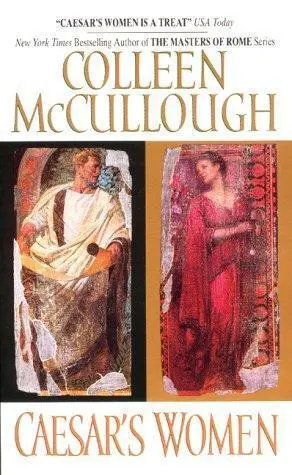
- Название:4. Caesar's Women
- Автор:
- Жанр:
- Год:неизвестен
- ISBN:нет данных
- Рейтинг книги:3 / 5. Голосов: 1
-
Избранное:Добавить в избранное
- Отзывы:
-
Ваша оценка:
4. Caesar's Women: краткое содержание, описание и аннотация
Предлагаем к чтению аннотацию, описание, краткое содержание или предисловие (зависит от того, что написал сам автор книги «4. Caesar's Women»). Если вы не нашли необходимую информацию о книге — напишите в комментариях, мы постараемся отыскать её.
4. Caesar's Women — читать онлайн бесплатно полную книгу (весь текст) целиком
Ниже представлен текст книги, разбитый по страницам. Система сохранения места последней прочитанной страницы, позволяет с удобством читать онлайн бесплатно книгу «4. Caesar's Women», без необходимости каждый раз заново искать на чём Вы остановились. Поставьте закладку, и сможете в любой момент перейти на страницу, на которой закончили чтение.
Интервал:
Закладка:
Caesar acquitted himself as a good friend ought by speaking in the House in favor of both Crassus's proposals, enfranchisement of the Trans Padane Gauls and the annexation of Egypt, but his chief interest that year lay elsewhere: he had been elected one of the two curule aediles, which meant that he was now permitted to sit in the ivory curule chair, and was preceded by two lictors bearing the fasces. It had happened "in his year," an indication that he was exactly as far up the cursus honorum of public magistracies as he was supposed to be. Unfortunately his colleague (who polled far fewer votes) was Marcus Calpurnius Bibulus. They had very different ideas as to what the curule aedileship consisted of, and that went for every aspect of the job. Together with the two plebeian aediles, they were responsible for the general upkeep of the city of Rome: the care of streets, squares, gardens, marketplaces, traffic, public buildings, law and order, the water supply including fountains and basins, land registers, building ordinances, drainage and sewers, statues displayed in public places, and temples. Duties were either carried out by all four together, or else amicably assigned to one or more among them. Weights and measures fell to the lot of the curule aediles, who had their headquarters in the temple of Castor and Pollux, a very central location on the Vestal fringe of the lower Forum; the set of standard weights and measures was kept under the podium of this temple, always referred to simply as "Castor's," Pollux being quite overlooked. The plebeian aediles were located much farther away, in the beautiful temple of Ceres at the foot of the Aventine, and perhaps because of this seemed to pay less attention to the duties involved in caring for Rome's public and political center. One duty all four shared was most onerous of all: the grain supply in all its aspects, from the moment in which it was taken off the barges until it disappeared into an entitled citizen's sack to be carried home. They also were responsible for buying in grain, paying for it, tallying it on arrival, and collecting the money for it. They kept the list of citizens entitled to low priced State grain, which meant they had a copy of the roll of Roman citizens. They issued the chits from their booth in the Porticus Metelli on the Campus Martius, but the grain itself was stored in huge silos lining the cliffs of the Aventine along the Vicus Portae Trigeminae at the Port of Rome. The two plebeian aediles of that year were no competition for the curule aediles, with Cicero's younger brother, Quintus, the senior of the pair. "Which means undistinguished games from them," said Caesar to Bibulus, and sighing as he said it. "It appears they're not going to do much about the city either." Bibulus eyed his colleague with sour dislike. "You may disabuse yourself of any grand pretensions in the curule aediles as well, Caesar. I will contribute to good games, but not great games. My purse won't run to that any more than yours will. Nor do I intend to undertake any surveys of the sewers, or have the adjutages inspected along every branch of the water supply, or put a new coat of paint on Castor's, or go rushing around the markets checking every pair of scales." "What do you intend to do?" asked Caesar, lifting his lip. "I intend to do what is necessary, and nothing more." "Don't you think checking scales is necessary?" "I do not." "Well," said Caesar, grinning nastily, "I think it's very appropriate that we're located in Castor's. If you want to be Pollux, go right ahead. But don't forget Pollux's fate never to be remembered and never to be mentioned." Which was not a good start. However, always too busy and too well organized to bother with those who declared themselves unwilling to co operate, Caesar went about his duties as if he were the only aedile in Rome. He had the advantage of owning an excellent network of reporters of transgressions, for he enlisted Lucius Decumius and his crossroads brethren as informers, and cracked down very hard on merchants who weighed light or measured short, on builders who infringed boundaries or used poor materials, on landlords who had cheated the water companies by inserting bigger bore adjutage pipes from the mains into their properties than the law prescribed. He fined ruthlessly, and fined heavily. No one escaped, even his friend Marcus Crassus. "You're beginning to annoy me," said Crassus grumpily as February commenced. "So far you've cost me a fortune! Too little cement in some building mix, too few beams in that insula I'm putting up on the Viminal and it does not encroach on public land, I don't care what you say! Fifty thousand sesterces in fines just because I tapped into the sewer and put private latrines into my new flats on the Carinae? That's two talents, Caesar!" "Break the law and I'll get you for it," said Caesar, not at all contrite. "I need every sestertius I can put into my fine chest, and I'm not about to exempt my friends." "If you continue like this, you won't have any friends." "What you're saying, Marcus, is that you're a fine weather friend," said Caesar, a little unfairly. "No, I am not! But if you're after money to fund spectacular games, then borrow it, don't expect every businessman in Rome to foot the bill for your public extravaganzas!" cried Crassus, goaded. "I'll lend you the money, and I won't charge you interest." "Thank you, but no," said Caesar firmly. "If I did that, I'd be the fine weather friend. If I have to borrow, I'll go to a proper moneylender and borrow." "You can't, you're in the Senate." I can, Senate or no. If I get thrown out of the Senate for borrowing from usurers, Crassus, it will go down to fifty members overnight," said Caesar. His eyes gleamed. "There is something you can do for me." "What?" Put me in touch with some discreet pearl merchant who might want to pick up the finest pearls he's ever seen for less by far than he'll sell them for." "Oho! I don't remember your declaring any pearls when you tabulated the pirate booty!" "I didn't, nor did I declare the five hundred talents I kept. Which means my fate is in your hands, Marcus. All you have to do is lodge my name in the courts and I'm done for." "I won't do that, Caesar if you stop fining me," said Crassus craftily. "Then you'd better go down to the praetor urbanus this moment and lodge my name," said Caesar, laughing, "because you won't buy me that way!" "Is that all you kept, five hundred talents and some pearls?'' "That's all." "I don't understand you!" "That's all right, nor does anyone else," said Caesar, and prepared to depart. "But look up that pearl merchant for me, like a good chap. I'd do it myself if I knew whereabouts to start. You can have a pearl as your commission." "Oh, keep your pearls!" said Crassus, disgusted.
Caesar did keep one pearl, the huge strawberry shaped and strawberry colored one, though why he didn't quite know, for it would probably have doubled the five hundred talents he got for all the others. Just some instinct, and that was even after the eager buyer had seen it. "I'd get six or seven million sesterces for it," the man said wistfully. "No," said Caesar, tossing it up and down in his hand, "I think I'll keep it. Fortune says I should." Profligate spender though he was, Caesar was also capable of totting up the bill, and when by the end of February he had totted up the bill, his heart sank. The aedile's chest would probably yield five hundred talents; Bibulus had indicated that he would contribute one hundred talents toward their first games, the ludi Megalenses in April, and two hundred talents toward the big games, the ludi Romani, in September; and Caesar had close to a thousand talents of his own money which represented all he had in the world aside from his precious land, and that he would not part with. That kept him in the Senate. According to his reckoning, the ludi Megalenses would cost seven hundred talents, and the ludi Romani a thousand talents. Seventeen hundred all told, just about what he had. The trouble was that he intended to do more than give two lots of games; every curule aedile had to give the games, all the distinction a man could earn was in their magnificence. Caesar wanted to stage funeral games for his father in the Forum, and he expected them to cost five hundred talents. He would have to borrow, then offend everyone who voted for him by keeping on, fining for his aedile's chest. Not prudent! Marcus Crassus tolerated it only because, despite his stinginess and his rooted conviction that a man helped his friends even at the expense of the State, he really did love Caesar. "You can have what I got, Pavo," said Lucius Decumius, who was there to watch Caesar work over his figures. Though he looked tired and a little discouraged, out flashed a special smile for this odd old man who was such a huge part of his life. "Go on, dad! What you've got wouldn't hire a single pair of gladiators." "I got close to two hundred talents." Caesar whistled. "I can see I'm in the wrong profession! Is that what you've salted away all these years guaranteeing peace and protection for the residents of the outer Via Sacra and the Vicus Fabricii?" "It mounts up," said Lucius Decumius, looking humble. "You keep it, dad, don't give it to me." "Where you going to get the rest from, then?" "I'll borrow it against what I make as propraetor in a good province. I've written to Balbus in Gades, and he's agreed to give me letters of reference to the right people here in Rome." "Can't you borrow it from him?" "No, he's a friend. I can't borrow from my friends, dad." "Oh, you are a strange one!" said Lucius Decumius, shaking his grizzled head. "That's what friends are for." "Not to me, dad. If something happens and I can't pay the money back, I'd rather owe strangers. I couldn't bear the thought that my idiocies meant any of my friends were out of purse." "If you can't pay it back, Pavo, I'd say Rome was done." Some of the care lifted, Caesar drew a breath. "I agree, dad. I'll pay it back, have no fear. Therefore," he went on happily, "what am I worrying about? I'll borrow however much it takes to be the greatest curule aedile Rome has ever seen!" This Caesar proceeded to do, though at the end of the year he was a thousand talents in debt rather than the five hundred he had estimated. Crassus helped by whispering in these obliging moneylending ears that Caesar was a good prospect, so ought not to be charged extortionate rates of interest, and Balbus helped by putting him in touch with men who were prepared to be discreet as well as not too greedy. Ten percent simple interest, which was the legal rate. The only difficulty was that he had to begin to pay the loan back within a year otherwise the interest would go from simple to compound; he would be paying interest on the interest he owed as well as on the capital borrowed.
Читать дальшеИнтервал:
Закладка:
Похожие книги на «4. Caesar's Women»
Представляем Вашему вниманию похожие книги на «4. Caesar's Women» списком для выбора. Мы отобрали схожую по названию и смыслу литературу в надежде предоставить читателям больше вариантов отыскать новые, интересные, ещё непрочитанные произведения.











Обсуждение, отзывы о книге «4. Caesar's Women» и просто собственные мнения читателей. Оставьте ваши комментарии, напишите, что Вы думаете о произведении, его смысле или главных героях. Укажите что конкретно понравилось, а что нет, и почему Вы так считаете.