Colleen McCullough - 4. Caesar's Women
Здесь есть возможность читать онлайн «Colleen McCullough - 4. Caesar's Women» весь текст электронной книги совершенно бесплатно (целиком полную версию без сокращений). В некоторых случаях можно слушать аудио, скачать через торрент в формате fb2 и присутствует краткое содержание. Жанр: Современная проза. Описание произведения, (предисловие) а так же отзывы посетителей доступны на портале библиотеки ЛибКат.
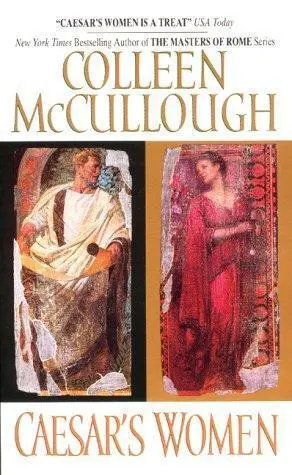
- Название:4. Caesar's Women
- Автор:
- Жанр:
- Год:неизвестен
- ISBN:нет данных
- Рейтинг книги:3 / 5. Голосов: 1
-
Избранное:Добавить в избранное
- Отзывы:
-
Ваша оценка:
4. Caesar's Women: краткое содержание, описание и аннотация
Предлагаем к чтению аннотацию, описание, краткое содержание или предисловие (зависит от того, что написал сам автор книги «4. Caesar's Women»). Если вы не нашли необходимую информацию о книге — напишите в комментариях, мы постараемся отыскать её.
4. Caesar's Women — читать онлайн бесплатно полную книгу (весь текст) целиком
Ниже представлен текст книги, разбитый по страницам. Система сохранения места последней прочитанной страницы, позволяет с удобством читать онлайн бесплатно книгу «4. Caesar's Women», без необходимости каждый раз заново искать на чём Вы остановились. Поставьте закладку, и сможете в любой момент перейти на страницу, на которой закончили чтение.
Интервал:
Закладка:
Clodius and Fulvia were married late in Quinctilis, after the last of the elections. They had been full of surprises, starting with Catilina's application to stand in absentia for next year's consulship. But though Catilina's return from his province was delayed, other men from Africa had made it their business to be in Rome well before the elections. It seemed beyond any doubt that Catilina's governorship of Africa was distinguished only for its corruption; the African farmers tax and otherwise who had come to Rome were making no secret of their intention to have Catilina prosecuted for extortion the moment he arrived home. So the supervising consul of the curule elections, Volcatius Tullus, had prudently declined to accept Catilina's in absentia candidacy on the grounds that he was under the shadow of prosecution. Then a worse scandal broke. The successful candidates for next year's consulships, Publius Sulla and his dear friend Publius Autronius, were discovered to have bribed massively. Gaius Piso's lex Calpurnia dealing with bribery might be a leaky vessel, but the evidence against Publius Sulla and Autronius was so ironclad that not even slipshod legislation could save them. Whereupon the guilty pair promptly pleaded guilty and offered to conclude a deal with the existing consuls and the new consuls elect, Lucius Cotta and Lucius Manlius Torquatus. The upshot of this shrewd move was that the charges were dropped in return for payment of huge fines and an oath sworn by both men that neither of them would ever again stand for public office; that they got away with it was thanks to Gaius Piso's bribery law, which provided for such solutions. Lucius Cotta, who wanted a trial, was livid when his three colleagues voted that the miscreants could keep both citizenship and residency as well as the major portions of their immense fortunes. None of which really concerned Clodius, whose target was, as eight years earlier, Catilina. Mind running riot with dreams of revenge at last, Clodius prevailed upon the African plaintiffs to commission him to prosecute Catilina. Wonderful, wonderful! Catilina's comeuppance was at hand just when he, Clodius, had married the most exciting girl in the world! All his rewards had come at once, not least because Fulvia turned out to be an ardent partisan and helper, not at all the demure little stay at home bride other men than Clodius might perhaps have preferred. At first Clodius worked in a frenzy to assemble his evidence and witnesses, but the Catilina case was one of those maddening affairs wherein nothing happened quickly enough, from finding the evidence to locating the witnesses. A trip to Utica or Hadrumetum took two months, and the job needed many such trips to Africa. Clodius fretted and chafed, but then, said Fulvia, Think a little, darling Publius. Why not drag the case out forever? If it isn't concluded before next Quinctilis, then for the second year in a row, Catilina won't be allowed to run for the consulship, will he?" Clodius saw the point of this advice immediately, and slowed down to the pace of an African snail. He would secure Catilina's conviction, but not for many moons to come. Brilliant! He then had time to think about Lucullus, whose career was ending in disaster. Through the lex Manilia, Pompey had been dowered with Lucullus's command against Mithridates and Tigranes, and had proceeded to exercise his rights. He and Lucullus had met at Danala, a remote Galatian citadel, and quarreled so bitterly that Pompey (who had until then been reluctant to squash Lucullus under the weight of his imperium maius) formally issued a decree outlawing Lucullus's actions, then banished him from Asia. After which Pompey re enlisted the Fimbriani; free though they were at last to go home, the Fimbriani couldn't face such a major dislocation after all. Service in the legions of Pompey the Great sounded good. Banished in circumstances of awful humiliation, Lucullus went back to Rome at once, and sat himself down on the Campus Martius to await the triumph he was certain the Senate would grant him. But Pompey's tribune of the plebs,, his nephew Gaius Memmius, told the House that if it tried to grant Lucullus a triumph, he would pass legislation in the Plebeian Assembly to deny Lucullus any triumph; the Senate, said Memmius, had no constitutional right to grant such boons. Catulus, Hortensius and the rest of the boni fought Memmius tooth and nail, but could not marshal sufficient support; most of the Senate was of the opinion that its right to grant triumphs was more important than Lucullus, so why allow concern for Lucullus to push Memmius into creating an unwelcome precedent? Lucullus refused to give in. Every day the Senate met, he petitioned again for his triumph. His beloved brother, Varro Lucullus, was also in trouble with Memmius, who sought to convict him for peculations alleged to have occurred years and years before. From all of which it might safely be assumed that Pompey had become a nasty enemy of the two Luculli and of the boni. When he and Lucullus had met in Danala, Lucullus had accused him of walking in to take all the credit for a campaign he, Lucullus, had actually won. A mortal insult to Pompey. As for the boni, they were still adamantly against these special commands for the Great Man. It might have been expected that Lucullus's wife, Clodilla, would visit him in his expensive villa on the Pincian Hill outside the pomerium, but she didn't. At twenty five she was now a complete woman of the world, had Lucullus's wealth at her disposal and no one save big brother Appius to supervise her activities. Of lovers she had many, of reputation none savory. Two months after Lucullus's return, Publius Clodius and Fulvia visited her, though not with the intention of effecting a reconciliation. Instead (with Fulvia listening avidly) Clodius told his youngest sister what he had told Lucullus in Nisibis that he, Clodia and Clodilla had done more than just sleep together. Clodilla thought it a great joke. "Do you want him back?" asked Clodius. "Who, Lucullus?" The great dark eyes widened, flashed. "No, I do not want him back! He's an old man, he was an old man when he married me ten years ago had to fill himself up with Spanish fly before he could get a stir out of it!" "Then why not go out to the Pincian and see him, tell him you're divorcing him?" Clodius looked demure. If you fancy a little revenge, you could confirm what I told him in Nisibis, though he might choose to make the story public, and that could be hard for you. I'm willing to take my share of the outrage, so is Clodia. But both of us will understand if you're not." "Willing?" squeaked Clodilla. "I'd love it! Let him spread the story! All we have to do is deny it, with many tears and protestations of innocence. People won't know what to believe. Everyone is aware of the state of affairs between you and Lucullus. Those on his side will believe his version of events. Those in the middle will vacillate. And those on our side, like brother Appius, will think us shockingly injured." "Just get in first and divorce him," said Clodius. "That way, even if he also divorces you, he can't strip you of a hefty share in his wealth. You've no dowry to fall back on." "How clever," purred Clodilla. "You could always marry again," said Fulvia. The dark and bewitching face of her sister in law twisted, became vicious. "Not I!" she snarled. "One husband was one too many! I want to manage my own destiny, thank you very much! It's been a joy to have Lucullus in the East, and I've salted away quite a snug little fortune at his expense. Though I do like the idea of getting in first with the divorce. Brother Appius can negotiate a settlement which will give me enough for the rest of my life." Fulvia giggled gleefully. "It will set Rome by the ears!'' It did indeed set Rome by the ears. Though Clodilla divorced Lucullus, he then publicly divorced her by having one of his senior clients read out his proclamation from the rostra. His reasons, he said, were not merely because Clodilla had committed adultery with many men during his absence; she had also had incestuous relations with her brother Publius Clodius and her sister Clodia. Naturally most people wanted to believe it, chiefly because it was so deliciously awful, but also because the Claudii/Clodii Pulchri were an outlandish lot, brilliant and unpredictable and erratic. Had been for generations! Patricians, say no more. Poor Appius Claudius took it very hard, but had more sense than to be pugnacious about it; his best defense was to stalk around the Forum looking as if the last thing in the world he wanted to talk about was incest, and people took the hint. Rex had remained in the East as one of Pompey's senior legates, but Claudia, his wife, adopted the same attitude as big brother Appius. The middle one of the three brothers, Gaius Claudius, was rather intellectually dull for a Claudian, therefore not considered a worthy target by the Forum wits. Luckily Clodia's husband, Celer, was another absentee on duty in the East, as was his brother, Nepos; they would have been more awkward, asked some difficult questions. As it was, the three culprits went about looking both innocent and indignant, and rolled on the floor laughing when no outsiders were present. What a gorgeous scandal! Cicero, however, had the last word. "Incest," he said gravely to a large crowd of Forum frequenters, "is a game the whole family can play."
Читать дальшеИнтервал:
Закладка:
Похожие книги на «4. Caesar's Women»
Представляем Вашему вниманию похожие книги на «4. Caesar's Women» списком для выбора. Мы отобрали схожую по названию и смыслу литературу в надежде предоставить читателям больше вариантов отыскать новые, интересные, ещё непрочитанные произведения.










Обсуждение, отзывы о книге «4. Caesar's Women» и просто собственные мнения читателей. Оставьте ваши комментарии, напишите, что Вы думаете о произведении, его смысле или главных героях. Укажите что конкретно понравилось, а что нет, и почему Вы так считаете.