Colleen McCullough - 4. Caesar's Women
Здесь есть возможность читать онлайн «Colleen McCullough - 4. Caesar's Women» весь текст электронной книги совершенно бесплатно (целиком полную версию без сокращений). В некоторых случаях можно слушать аудио, скачать через торрент в формате fb2 и присутствует краткое содержание. Жанр: Современная проза. Описание произведения, (предисловие) а так же отзывы посетителей доступны на портале библиотеки ЛибКат.
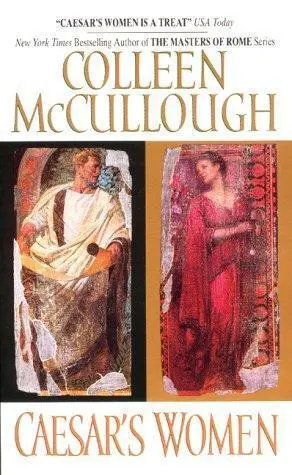
- Название:4. Caesar's Women
- Автор:
- Жанр:
- Год:неизвестен
- ISBN:нет данных
- Рейтинг книги:3 / 5. Голосов: 1
-
Избранное:Добавить в избранное
- Отзывы:
-
Ваша оценка:
4. Caesar's Women: краткое содержание, описание и аннотация
Предлагаем к чтению аннотацию, описание, краткое содержание или предисловие (зависит от того, что написал сам автор книги «4. Caesar's Women»). Если вы не нашли необходимую информацию о книге — напишите в комментариях, мы постараемся отыскать её.
4. Caesar's Women — читать онлайн бесплатно полную книгу (весь текст) целиком
Ниже представлен текст книги, разбитый по страницам. Система сохранения места последней прочитанной страницы, позволяет с удобством читать онлайн бесплатно книгу «4. Caesar's Women», без необходимости каждый раз заново искать на чём Вы остановились. Поставьте закладку, и сможете в любой момент перейти на страницу, на которой закончили чтение.
Интервал:
Закладка:
* * *
"What exactly does Bibulus's retiring to his house to watch the skies mean to us, Caesar?" Pompey asked. "For instance, could our laws be invalidated next year?'' Not the ones which were ratified before today, Magnus, so you and Crassus are safe enough. It's my province will be at greatest peril, since I'll have to use Vatinius and the Plebs though the Plebs are not religiously constrained, so I very much doubt that Bibulus's watching the skies can make plebiscites and the activities of tribunes of the plebs look sacrilegious. However, we'd have to fight it in court, and depend upon the urban praetor." The wine, Caesar's very best (and strongest), was beginning to restore Pompey's equilibrium, even if his spirits were still low. The Domus Publica suited Caesar, he reflected, all rich dark colors and sumptuous gilt. We fair men look best against such backgrounds. "You know of course that we'll have to legislate another land bill," Pompey said abruptly. "Im in and out of Rome constantly, so I've seen for myself what it's like for the commissioners. We need the Ager Campanus." "And the Capuan public lands. Yes, I know." "But Bibulus makes it invalid." "Perhaps not, Magnus," Caesar said tranquilly. "If I draft it as a supplementary bill attached to the original act, it's less vulnerable. The commissioners and committeemen wouldn't change, but that's not a problem. It will mean that twenty thousand of your veterans can be accommodated there well within the year, plus five thousand Roman Head Count to leaven the new settler bread. We should be able to put twenty thousand more veterans on other lands almost as quickly. Which leaves us with sufficient time to prise places like Arretium free of their lands, and puts far less pressure on the Treasury to buy private land. That's our argument for taking the Campanian ager publicus, the fact that it's already in State ownership." "But the rents will cease," said Pompey. "True. Though you and I both know that the rents are not as lucrative as they ought to be. Senators are reluctant to pay up." "So are senators' wives with fortunes of their own," Pompey said with a grin. "Oh?" "Terentia. Won't pay a sestertius in rent, though she leases whole forests, oak for pigs. Very profitable. Hard as marble, that woman! Ye gods, I feel sorry for Cicero!" "How does she get away with it?" "Reckons there's a sacred grove in it somewhere." "Clever fowl!" laughed Caesar. "That's all right, the Treasury isn't being nice to brother Quintus now he's returning from Asia Province." "In what way?" "Insists on paying him his last stipend in cistophori." "What's wrong with that? They're good silver, and worth four denarii each." "Provided you can get anyone to accept them," Pompey chuckled. "I brought back bags and bags and bags of the things, but I never intended them to be given to people in payment. You know how suspicious people are of foreign coins! I suggested the Treasury melt them down and turn them into bullion." "That means the Treasury doesn't like Quintus Cicero." "I wonder why." At which point Eutychus knocked to say that dinner was being served, and the two men walked the short distance to the dining room. Unless employed to accommodate a larger party, five of the couches were pushed out of the way; the remaining couch, with two chairs facing its length across a long and narrow table of knee height, sat in the prettiest part of the room, looking out at the colonnade and main peristyle. When Caesar and Pompey entered two servants helped them remove their togas, so huge and clumsy that it was quite impossible to recline in them. These were carefully folded and put aside while the men walked to the back edge of the couch, sat upon it, took off their senatorial shoes with the consular crescent buckles, and let the same two servants wash their feet. Pompey of course occupied the locus consularis end of the couch, this being the place of honor. They lay half on their stomachs and half on their left hips, with the left arm and elbow supported by a round bolster. As their feet were at the back edge of the couch, their faces hovered near the table, whatever was upon it well within reach. Bowls were presented for them to wash their hands, cloths to dry them. Pompey was feeling much better, didn't hurt the way he had. He gazed approvingly at the peristyle outside, with its fabulous frescoes of Vestal Virgins and magnificent marble pool and fountains. A pity it didn't get more sun. Then he began to track the frescoes adorning the dining room walls, which unfolded the story of the battle at Lake Regillus when Castor and Pollux saved Rome. And just as he took in the doorway, the Goddess Diana came into the room. She had to be Diana! Goddess of the moonlit night, half not there, moving with such grace and silver beauty that she made no sound. The maiden Goddess unknown by men, who looked upon her and pined away, so chaste and indifferent was she. But this Diana, now halfway across the room, saw him staring and stumbled slightly, blue eyes widening. "Magnus, this is my daughter, Julia." Caesar indicated the chair opposite Pompey's end of the couch. "Sit there, Julia, and keep our guest company. Ah, here's my mother!" Aurelia seated herself opposite Caesar, while some of the servants began to bring food in, and others set down goblets, poured wine and water. The women, Pompey noted, drank water only. How beautiful she was! How delicious, how delightful! And after that little stumble she behaved as a dream creature might, pointing out the dishes their cooks did best, suggesting that he try this or that with a smile containing no hint of shyness, but not sensuously inviting either. He ventured a question about what she did with her days (who cared about her days what did she do with her nights when the moon rode high and her chariot took her to the stars?) and she answered that she read books or went for walks or visited the Vestals or her friends, an answer given in a deep soft voice like black wings against a luminous sky. When she leaned forward he could see how tender and delicate her chest was, though sight of her breasts eluded him. Her arms were frail yet round, with a tiny dimple in each elbow, and her eyes were set in skin faintly shadowed with violet, a sheen of the moon's silver on each eyelid. Such long, transparent lashes! And brows so fair they could scarcely be seen. She wore no paint, and her pale pink mouth drove him mad to kiss it, so full and folded was it, with creases at the corners promising laughter. For all that either of them noticed, Caesar and Aurelia might not have existed. They spoke of Homer and Hesiod, Xenophon and Pindar, and of his travels in the East; she hung on his words as if his tongue was as gifted as Cicero's, and plied him with all kinds of questions about everything from the Albanians to the crawlies near the Caspian Sea. Had he seen Ararat? What was the Jewish temple like? Did people really walk on the waters of the Palus Asphaltites? Had he ever seen a black person? What did King Tigranes look like? Was it true that the Amazons had once lived in Pontus at the mouth of the river Thermodon? Had he ever seen an Amazon? Alexander the Great was supposed to have met their Queen somewhere along the river Jaxartes. Oh, what wonderful names they were, Oxus and Araxes and Jaxartes how did human tongues manage to invent such alien sounds? And terse pragmatic Pompey with his laconic style and his scant education was profoundly glad that life in the East and Theophanes had introduced him to reading; he produced words he hadn't realized his mind had absorbed, and thoughts he hadn't understood he could think. He would have died rather than disappoint this exquisite young thing watching his face as if it was the fount of all knowledge and the most wonderful sight she had ever beheld. The food stayed on the table much longer than busy impatient Caesar usually tolerated, but as day began to turn to night outside in the peristyle he nodded imperceptibly to Eutychus, and the servants reappeared. Aurelia got up. "Julia, it's time we went," she said. Deep in a conversation about Aeschylus, Julia jumped, came back to reality. "Oh, avia, is it?" she asked. "Where did the time go?" But, noted Pompey, neither by word nor look did she convey any impression that she was unwilling to leave, or resented her grandmother's termination of what she had told him was a special treat; when her father had guests she was not usually allowed to be in the dining room, as she was not yet eighteen. She rose to her feet and held out her hand to Pompey in a friendly way, expecting him to shake it. But though Pompey was not prone to do such things, he took the hand as if it might fall to fragments, raised it to his lips and lightly kissed it. "Thank you for your company, Julia," he said, smiling into her eyes. "Brutus is a very lucky fellow." And to Caesar after the women had gone, "Brutus really is a very lucky fellow." "I think so," said Caesar, smiling at a thought of his own. "I've never met anyone like her!" "Julia is a pearl beyond price." After which there didn't seem to be very much left to say. Pompey took his leave. "Come again soon, Magnus," said Caesar at the door. "Tomorrow if you like! I have to go to Campania the day after, and I'll be away a market interval at least. You were right. It's not a satisfactory way to live, just three or four philosophers for company. Why do you suppose we house them at all?" "For intelligent masculine company not likely to appeal to the women of the house as lovers. And to keep our Greek pure, though I hear Lucullus was careful to pop a few grammatical solecisms in the Greek version of his memoirs to satisfy the Greek literati who will not believe any Roman speaks and writes perfect Greek. For myself, the habit of housing philosophers is not one I've ever been tempted to adopt. They're such parasites." "Rubbish! You don't house them because you're a forest cat. You prefer to live and hunt alone." "Oh no," said Caesar softly. "I don't live alone. I am one of the most fortunate men in Rome, I live with a Julia." Who went up to her rooms exalted and exhausted, her hand alive with the feel of his kiss. There on the shelf was the bust of Pompey; she walked across to it, took it off the shelf and dropped it into the refuse jar which lived in a corner. The statue was nothing, unneeded now she had seen and met and talked to the real man. Not as tall as tata, yet quite tall enough. Very broad shouldered and muscular, and when he lay on the couch his belly stayed taut, no middle aged spread to spoil him. A wonderful face, with the bluest eyes she had ever seen. And that hair! Pure gold, masses of it. The way it stood up from his brow in a quiff. So handsome! Not like tata, who was classically Roman, but more interesting because more unusual. As Julia liked small noses, she found nothing to criticize in that organ. He had nice legs too! The next stop was her mirror, a gift from tata that avia did not approve of, for it was mounted on a pivoted stand and its highly polished silver surface reflected the viewer from head to foot. She took off all her clothes and considered herself. Too thin! Hardly any breasts! No dimples! Whereupon she burst into tears, cast herself upon her bed and wept herself to sleep, the hand he had kissed tucked against her cheek.
Читать дальшеИнтервал:
Закладка:
Похожие книги на «4. Caesar's Women»
Представляем Вашему вниманию похожие книги на «4. Caesar's Women» списком для выбора. Мы отобрали схожую по названию и смыслу литературу в надежде предоставить читателям больше вариантов отыскать новые, интересные, ещё непрочитанные произведения.









Обсуждение, отзывы о книге «4. Caesar's Women» и просто собственные мнения читателей. Оставьте ваши комментарии, напишите, что Вы думаете о произведении, его смысле или главных героях. Укажите что конкретно понравилось, а что нет, и почему Вы так считаете.