Roddy Doyle - Paddy Clarke, Ha Ha Ha
Здесь есть возможность читать онлайн «Roddy Doyle - Paddy Clarke, Ha Ha Ha» весь текст электронной книги совершенно бесплатно (целиком полную версию без сокращений). В некоторых случаях можно слушать аудио, скачать через торрент в формате fb2 и присутствует краткое содержание. Жанр: Современная проза, на английском языке. Описание произведения, (предисловие) а так же отзывы посетителей доступны на портале библиотеки ЛибКат.
- Название:Paddy Clarke, Ha Ha Ha
- Автор:
- Жанр:
- Год:неизвестен
- ISBN:нет данных
- Рейтинг книги:5 / 5. Голосов: 1
-
Избранное:Добавить в избранное
- Отзывы:
-
Ваша оценка:
Paddy Clarke, Ha Ha Ha: краткое содержание, описание и аннотация
Предлагаем к чтению аннотацию, описание, краткое содержание или предисловие (зависит от того, что написал сам автор книги «Paddy Clarke, Ha Ha Ha»). Если вы не нашли необходимую информацию о книге — напишите в комментариях, мы постараемся отыскать её.
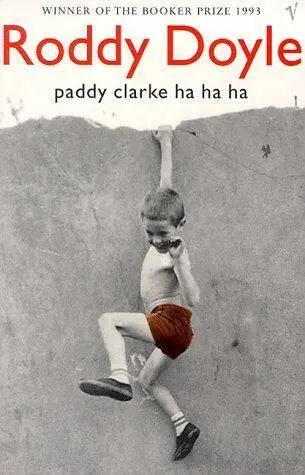
The 1993 Booker Prize-winner. Paddy Clarke, a ten-year-old Dubliner, describes his world, a place full of warmth, cruelty, love, sardines and slaps across the face. He's confused; he sees everything but he understands less and less.
Paddy Clarke, Ha Ha Ha — читать онлайн бесплатно полную книгу (весь текст) целиком
Ниже представлен текст книги, разбитый по страницам. Система сохранения места последней прочитанной страницы, позволяет с удобством читать онлайн бесплатно книгу «Paddy Clarke, Ha Ha Ha», без необходимости каждый раз заново искать на чём Вы остановились. Поставьте закладку, и сможете в любой момент перейти на страницу, на которой закончили чтение.
Интервал:
Закладка:
This field looked like they had started to get it ready for building on but they’d stopped. There was a wide trench, wider than a lane, down the middle and other trenches grown over. Some of the fields hadn’t been touched. Da said that the building had been stopped because they’d had to wait till the mains pipes were down and finished, with water in them.
I ran through the untouched part of the field – for no reason, just running – and the grass was great, up to way over my knees. I had to lift my legs out of it, like in water. It was the type of grass that could cut you sometimes. It had tops like wheat. I brought loads of it home to my ma once but she said you couldn’t make bread out of it. I said she could but she said you couldn’t, you just couldn’t, it was a pity. My feet made swoosh noises going through the grass and then there was another noise, one in front of me. And the grass moved. I stopped, and a long bird flew out of the grass. And stayed low, flew out in front of me. I could feel its wings beating. It was a pheasant. I turned back.
Kevin’s brother built his huts in the hills. They dug long holes; they got lends of their das’ spades. Terence Long had his own one; he got it for his birthday. They divided the hole into segments, rooms. They covered the hole with planks. They sometimes got hay out of Donnelly’s barn. That was the basement.
When I came out of a hut my hair was full of clay and muck. I could make my hair stand up.
The rest of the hut was made of mostly sods. Wherever you went in Barrytown you found places where sods had been cut out, even in front gardens; patches of bare earth, all straight lined. Kevin’s brother was able to get the spade through the grass into the earth with no effort. I loved the watery crunch of the blade going through the mesh of roots. Terence Long stood up on the spade and rocked, and got down and moved the spade and did it again. They piled the sods like thin bricks and pushed them down. They became a solid wall but they could be pushed over easily. But if you did that you got killed; Kevin’s brother always found out who’d done it. There were more walls inside the main walls, rooms again, planks on top, and a plastic sheet and more sods for the roof. From not too far away the but was like a square hillock. It didn’t look built, not until you were up to it.
Worms came out of the sods.
We made booby traps all around our hut. We buried open paint cans and hid them with grass. If your foot went through the grass into the can usually nothing happened except you fell over. But if you were running your leg could be broken. It was easy to imagine. We buried one with the paint still in it but no one stood in it. We got a milk bottle and broke it. We put the biggest bits of glass standing up in a can right in front of the hut door.
– What if one of us puts our foot in it?
The traps were supposed to be for the enemy.
– We won’t, said Kevin. -We know where it is, stupid.
– Liam doesn’t.
Liam was at his auntie’s.
– Liam’s not in our gang.
I hadn’t known that – Liam had been playing with us the day before – but I didn’t say anything.
We sharpened sticks and stuck them in the ground pointing out towards where the enemy would be sneaking up from. We kept the sticks low. If the enemy was creeping along he’d get a pointy stick in the face.
Ian McEvoy ran into a trip wire and he had to go to hospital for stitches.
– His foot was hanging off him.
It was real wire, not string like we usually used. We didn’t know who’d set it up. It was tied between two trees in the field behind the shops. There was no but near it. We didn’t build huts in that field; it was too flat. They’d been playing relievio, Ian McEvoy and them, in front of the shops and when Kilmartin’s hall door opened Ian McEvoy had thought that it was Missis Kilmartin going to yell at them to go away and he’d run into the field and the trip wire. The wire was a mystery.
– Fellas from the Corpo houses did it.
There were six new families living in the first row of finished Corporation houses. Their gardens were full of hardened half-bags of cement and smashed bricks. Some of the children were the same age as us but that didn’t mean that they could hang around with us.
– Slum scum.
My ma hit me when I said that. She never hit me usually but she did then. She smacked behind my head.
– Never say that again.
– I didn’t make it up, I told her.
– Just never say it again, she said. -It’s a terrible thing to say.
I didn’t even know what it really meant. I knew that the slums were in town.
The road with the six Corporation houses wasn’t joined to any other road. It ended just before the first house. There was a turn-off for the new road off our road, just past the beginning of Donnelly’s first field, but it only went in a few feet, then stopped. Our pitch was on the bit of field between the two roads. We only had one goal. We used jumpers at the other end for the other goal. We usually played three-and-in. You only needed one goal. It was easy to score, especially on the left side cos there was a hill there and you could get the ball way over the keeper’s head, but it was always crowded. There were no teams in three-and-in; it was every man for himself. Twenty players meant twenty teams. Sometimes there were more than twenty players. There were only ever three or four of us really playing, trying to score goals. The rest, mostly little kids smaller than Sinbad, just ran around after the ball but never tried to get it; they just followed it, laughing, especially when they all had to turn back the way they’d come. Elbowing and pushing kids out of the way was allowed. When I had the ball I’d go so there were some kids between me and the nearest real player, Kevin or Liam or Ian McEvoy or one of them. The kids would run beside me, so no one could get at me, like in a film I saw where John Wayne got away from the baddies by riding in the middle of a stampede, low down, hanging on to the side of his horse. Then when he was safe he hooshed himself back up properly into the saddle and looked back to where he’d just come from and grinned and rode on. The only thing about three-and-in, the only bad thing, was that when you won, when you’d scored three goals, you had to go in goal. I was a better player than Kevin but I stopped trying after two goals. I hated being in goal. Aidan was the best player, way easily – he was a brilliant dribbler – but he was still picked last or second-last when we were playing five-a-side; no one wanted him. He was the only one who played for a real club, Raheny Under Elevens, even though he wasn’t even nine.
– Your uncle’s the manager.
– He isn’t, said Liam.
– What is he?
– He isn’t anything. He just watches.
Aidan had a blue jersey with a real number, a stitched one, on it; number 11.
– I’m a winger, he said.
– So what?
It was a real heavy jersey, a real jersey. He didn’t tuck it in. You couldn’t see his nicks.
He was good in goal as well.
Five-a-side games never finished. The team playing into the jumper goal end were always winning.
– Charlton to Best – Great goal!
– It wasn’t a goal! It went over the jumper, it hit the bar.
– It hit the inside of the jumper.
– Yeah; in-off.
– No way.
– Yeah way.
– I’m not playing then.
– Good.
Sometimes we played when we were eating our lunch. I’d scored two goals already. I hit an easy shot for Ian McEvoy to save. He put his sandwich down on the jumper and the ball bounced past him. I’d scored; I’d won. I was in goal now.
– You did that on purpose.
I pushed Ian McEvoy.
– I did not, you.
Читать дальшеИнтервал:
Закладка:
Похожие книги на «Paddy Clarke, Ha Ha Ha»
Представляем Вашему вниманию похожие книги на «Paddy Clarke, Ha Ha Ha» списком для выбора. Мы отобрали схожую по названию и смыслу литературу в надежде предоставить читателям больше вариантов отыскать новые, интересные, ещё непрочитанные произведения.




Обсуждение, отзывы о книге «Paddy Clarke, Ha Ha Ha» и просто собственные мнения читателей. Оставьте ваши комментарии, напишите, что Вы думаете о произведении, его смысле или главных героях. Укажите что конкретно понравилось, а что нет, и почему Вы так считаете.