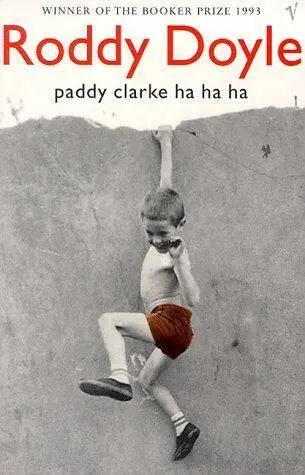
Roddy Doyle - Paddy Clarke, Ha Ha Ha
Здесь есть возможность читать онлайн «Roddy Doyle - Paddy Clarke, Ha Ha Ha» весь текст электронной книги совершенно бесплатно (целиком полную версию без сокращений). В некоторых случаях можно слушать аудио, скачать через торрент в формате fb2 и присутствует краткое содержание. Жанр: Современная проза, на английском языке. Описание произведения, (предисловие) а так же отзывы посетителей доступны на портале библиотеки ЛибКат.
- Название:Paddy Clarke, Ha Ha Ha
- Автор:
- Жанр:
- Год:неизвестен
- ISBN:нет данных
- Рейтинг книги:5 / 5. Голосов: 1
-
Избранное:Добавить в избранное
- Отзывы:
-
Ваша оценка:
Paddy Clarke, Ha Ha Ha: краткое содержание, описание и аннотация
Предлагаем к чтению аннотацию, описание, краткое содержание или предисловие (зависит от того, что написал сам автор книги «Paddy Clarke, Ha Ha Ha»). Если вы не нашли необходимую информацию о книге — напишите в комментариях, мы постараемся отыскать её.
The 1993 Booker Prize-winner. Paddy Clarke, a ten-year-old Dubliner, describes his world, a place full of warmth, cruelty, love, sardines and slaps across the face. He's confused; he sees everything but he understands less and less.
Paddy Clarke, Ha Ha Ha — читать онлайн бесплатно полную книгу (весь текст) целиком
Ниже представлен текст книги, разбитый по страницам. Система сохранения места последней прочитанной страницы, позволяет с удобством читать онлайн бесплатно книгу «Paddy Clarke, Ha Ha Ha», без необходимости каждый раз заново искать на чём Вы остановились. Поставьте закладку, и сможете в любой момент перейти на страницу, на которой закончили чтение.
Интервал:
Закладка:
The new road was straight now, all the way. The edges of Donnelly’s fields were chopped off and you could see all the farm because the hedges were gone; it was like Catherine’s dolls’ house with the door opened. You could see all the being-built houses on the other side of the fields. The farm was being surrounded. The cows were gone, to the new farm. Big lorries took them. The smell was a laugh. One of the cows skidded on the ramp getting up into the lorry. Donnelly hit it with his stick. Uncle Eddie was behind him. He had a stick as well. He hit the cow when Donnelly did. We could see the cows all packed in the lorries, trying to get their noses out between the bars.
Uncle Eddie went in one of the lorries beside the driver. He had his elbow sticking out the window. We waved at him, and cheered when the lorry full of cows went through the knocked-down gates of the farmhouse and turned left onto the new road. It was like Uncle Eddie was going away.
I saw him later, running down to the shops before they shut to get the Evening Press for Donnelly.
The old railway bridge wasn’t big enough any more for the road to get under it. They built a new one, made of huge slabs of concrete, right beside the old one. The road dipped down under the bridge so that big traffic, lorries and buses, could get under it. They cut away the land beside the road so the road could go further down. More concrete slabs stopped the cut-away land from falling onto the road. They said that two men were killed doing this work but we never saw anything. They were killed when some of Donnelly’s field fell on them, after it had been raining and the ground was loose and soggy. They drowned in muck.
I had a dream sometimes that made me wake up. I was eating something. It was dry and gritty and I couldn’t get it wet. It hurt my teeth; I couldn’t close my mouth and I wanted to shout for help and I couldn’t. And I woke up and my mouth was all dry, from being open. I wondered had I been shouting; I hoped I hadn’t but I wanted my ma to come in and ask me was I alright and sit on the bed.
They didn’t blow up the old bridge. We thought they’d have to, but they didn’t.
– If they blew it up they’d blow up the new one as well, said Liam.
– No, they wouldn’t; that’s stupid.
– They would so.
– How would they?
– The explosion.
– They have different explosions for different things, Ian McEvoy told him.
– How do you know, Fatso?
That was Kevin. Ian McEvoy wasn’t all that fat. He just had little diddies, like a woman’s. He never swam now, after we’d seen him.
– I just do, said Ian McEvoy. -They’re able to control the explosion.
We weren’t interested any more.
The old bridge was gone. They just knocked it down; took away the rocks and rubble in lorries. I missed it. It had been a great place for hiding under and shouting. It only fitted one car at a time. Da kept his hand on the horn right through it. The new bridge whistled when it was windy, but that was all.
He let us look in the window, but no further. Only a few got into the house. He pushed the couch away from the window so we could see it properly, his Scalextric. Alan Baxter was the only one in Barrytown that had it. He was a Protestant, a proddy, and he was older than us. He was the same age as Kevin’s brother. He went to secondary school and he played cricket; he had a real bat and the yokes for your legs. When they played rounders, the bigger boys, behind the shops, when he played he kept taking his jumper off and putting it back on again but he wasn’t any better of a player than the others. When he was fielding he put his hands on his knees and bent forward. He was a sap. But he had Scalextric.
It wasn’t as good as the ads, a track the same shape as a train-set track – two tracks joined together like an eight – and the cars never went too far without jamming. But it was brilliant. The controls looked great and easy. The blue car was much better than the red one. Terence Long had the red one; Alan Baxter had the blue. Our breathing and handprints were messing up the window. Terence Long – he was six foot one and still only fourteen – kept having to straighten up the red car; when it started a corner it got stuck. A few times it beat the corner and kept going. But the blue one was way ahead. Kevin’s brother picked up the red one and looked under it but Alan Baxter made him put it back. They were the only ones in the living room, Alan Baxter, Terence Long and Kevin’s brother. The rest of us – we were all much younger – had to watch outside. The worst was when it was dark. It really felt outside then. Kevin got in once, because of his brother. But I didn’t. I was the oldest in my family; I had nobody to get me through the door. They didn’t let Kevin do anything. They just let him watch.
Kevin’s brother got into big trouble once. His name was Martin. He was five years older than us and what he did was, he went to the toilet down a bit of hosepipe through Missis Kilmartin’s car window and he got caught because Terence Long blabbed to his ma because he’d been the one holding the hose and he was afraid he’d get blamed for going to the toilet as well. Terence Long’s ma told Kevin and Martin’s ma.
– Terence Long Terence Long -
Has a mickey three foot long -
He tried to get Kevin’s brother and them to call him Terry or Ter but everybody still called him Terence, especially his ma.
– Terence Long Terence Long -
Wears no socks -
What a pong -
He wore sandals in the summer, big ones like priests’, and no socks. Kevin’s da killed Martin and he made him wash Missis Kilmartin’s car seat with everyone watching. He was crying. Missis Kilmartin didn’t come out. She sent Eric out with the car keys. He was her son and he was mental.
Martin smoked and he was leaving school after the Inter. He drank Coca-Cola with aspirins in it and got sick. He mitched all the time, all day down at the seafront even in the winter. He was an altar boy. But he got thrown out for painting white stripes on his black runners. He got Sinbad – him and Terence Long and even Alan Baxter – and they painted the other lens of his glasses black. They made him walk home wearing the glasses, right up to our house, with a stick they’d painted white. Ma did nothing about it; she sang to Sinbad while he was crying -
– I TOLD MY BROTHER SEAMUS
I’D GO OFF AND BE RIGHT FAMOUS -
– and when he was finished she went into the garage and got a bottle of spirits and started to clean his lens and she showed him how to do it. I said I’d help him but he wouldn’t let me. Da laughed; he was home late and Sinbad was in bed, but I wasn’t. He laughed. So did I. He said that Sinbad would be doing things like that when he was Kevin’s brother’s age. Then he got annoyed because the plate covering the plate that his dinner was on was stuck because the gravy had hardened to it in the cooker. Ma sent me to bed.
Martin wore longers in the summer. He always had his hands in his pockets. He had a comb. I thought he was brilliant. Kevin did too but he hated him as well.
He got Missis Kilmartin back. He gave Eric Kilmartin a box in the face and Eric couldn’t tell who’d done it cos he couldn’t talk properly; he could only make noises.
Martin and them built huts. We did too, from the stuff we got off the building sites – it was one of the first things we did when the summer was coming – but theirs were better, miles better than our ones. There was a field behind the newest of our type of houses – not the one behind the shops – and that was where most of the huts got built. It was full of hills like dunes, only made of muck instead of sand. It used to be part of a farm but that was years before. The wreck of the farmhouse was at the edge of the field. The walls weren’t bricks; they were made of light brown mud full of gravel and bigger stones. They were dead easy to demolish. I found a piece of cup in the nettles against the wall. I took it home and I washed it. I showed it to my da and he said it was probably worth a fortune but he wouldn’t buy it off me. He told me to put it in a safe place. It had flowers on it, two full ones and a half one. I lost it.
Читать дальшеИнтервал:
Закладка:
Похожие книги на «Paddy Clarke, Ha Ha Ha»
Представляем Вашему вниманию похожие книги на «Paddy Clarke, Ha Ha Ha» списком для выбора. Мы отобрали схожую по названию и смыслу литературу в надежде предоставить читателям больше вариантов отыскать новые, интересные, ещё непрочитанные произведения.



Обсуждение, отзывы о книге «Paddy Clarke, Ha Ha Ha» и просто собственные мнения читателей. Оставьте ваши комментарии, напишите, что Вы думаете о произведении, его смысле или главных героях. Укажите что конкретно понравилось, а что нет, и почему Вы так считаете.