Janet Fitch - White Oleander
Здесь есть возможность читать онлайн «Janet Fitch - White Oleander» весь текст электронной книги совершенно бесплатно (целиком полную версию без сокращений). В некоторых случаях можно слушать аудио, скачать через торрент в формате fb2 и присутствует краткое содержание. Жанр: Современная проза, на английском языке. Описание произведения, (предисловие) а так же отзывы посетителей доступны на портале библиотеки ЛибКат.
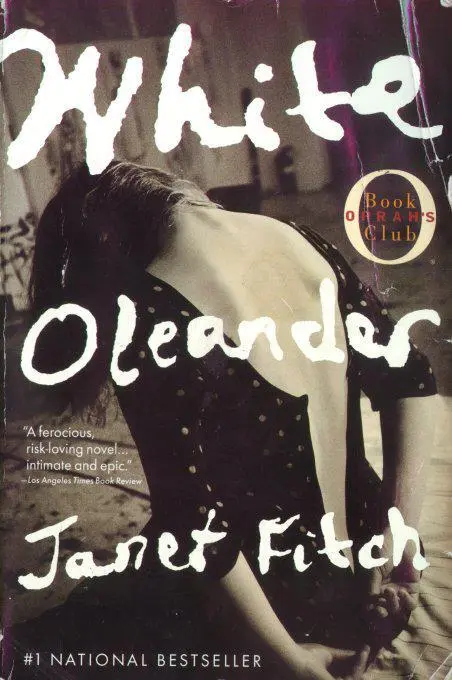
- Название:White Oleander
- Автор:
- Жанр:
- Год:неизвестен
- ISBN:нет данных
- Рейтинг книги:3 / 5. Голосов: 1
-
Избранное:Добавить в избранное
- Отзывы:
-
Ваша оценка:
White Oleander: краткое содержание, описание и аннотация
Предлагаем к чтению аннотацию, описание, краткое содержание или предисловие (зависит от того, что написал сам автор книги «White Oleander»). Если вы не нашли необходимую информацию о книге — напишите в комментариях, мы постараемся отыскать её.
White Oleander — читать онлайн бесплатно полную книгу (весь текст) целиком
Ниже представлен текст книги, разбитый по страницам. Система сохранения места последней прочитанной страницы, позволяет с удобством читать онлайн бесплатно книгу «White Oleander», без необходимости каждый раз заново искать на чём Вы остановились. Поставьте закладку, и сможете в любой момент перейти на страницу, на которой закончили чтение.
Интервал:
Закладка:
I was crying. I knew I could have done better, I could have made arrangements, I could have followed up, found someone to help me. At this moment my classmates were going up for their awards, National Merit, Junior State. How did I get so lost? Mother, why did you let my hand slip from yours on the bus, your arms so full of packages? I felt like time was a great sea, and I was floating on the back of a turtle, and no sails broke the horizon.
“So funny, you know,” Yvonne said. “I was sure I was going to hate you. When you came, I thought, who needs this gringa, listen to her, who she thinks she is, Princess Diana? That’s what I say to Niki. This is all we need, girlfriend. But now, you know, we did. Need you.”
I squeezed her hand. I had Yvonne, I had Niki. I had this Raphael sky. I had five hundred dollars and an aquamarine from a dead woman and a future in salvage. What more could a girl want.
THAT SUMMER we flogged our stuff at swap meets from Ontario to Santa Fe Springs. Rena got a deal on zebra-striped contact paper, so I zebra-striped barstools, bathroom scales, shoebox “storage units.” I striped the hospital potty chair, the walker, for the zingy seniors. The cats hid.
“Display,” was Rena’s new catchword. “We have to have display.”
Our dinette set already went, striped and varnished. She got four hundred dollars for it, gave me a hundred. She said I could stay as long as I wanted, pay room and board like Niki. She meant it as a compliment, but it scared me to death.
At the Fairfax High swap meet, we had a blue plastic tarp stretched over our booth, so the ladies could come in and look at our clothes without having sunstroke. They were like fish, nibbling along the reef, and we were the morays, waiting patiently for them to come closer.
“Benito wants me to move in,” Yvonne said when Rena was busy with a customer, adjusting a hat on the woman, telling her how great it looked.
“You’re not going to,” Niki said.
Yvonne smiled dreamily.
She was in love again. I saw no reason to dissuade her. These days, I had given up trying to understand what was right or wrong, what mattered or didn’t. “He seems like a nice guy,” I said.
“How many people ask you to come share their life?” Yvonne said.
“People who want a steady screw,” Niki said. “Laundry and dishes.”
I shared a mug of Russian Sports Mix with Yvonne, a weak brew of vodka and Gatorade that Rena drank all day long.
Rena brought a sunburned woman over to meet me, hoisted the striped American Tourister hardsider onto the folding table.
“This is our artist,” Rena said, lighting one of her black Sobranies. “Astrid Magnussen. You remember name. Someday that suitcase worth millions.”
The woman smiled and shook my hand. I tried not to breathe Sports Mix on her. Rena handed me a permanent marker with a flourish, and I signed my name along the bottom edge of the suitcase. Sometimes being with Rena was like doing acid. The artist. The Buddhist book I’d found on trash day said you accrued virtue just by doing a good job with whatever you were doing, completely applying yourself to the task at hand. I looked at the zebra bar and barstools, the suitcase disappearing with the sunburned woman. They looked good. I liked making them. Maybe if that was all I did my entire life, wasn’t that good enough? The Buddhists thought it shouldn’t matter whether it’s contact paper or Zen calligraphy, brain surgery or literature. In the Tao, they were of equal value, if they were done in the same spirit.
“Lazy girls,” Rena said. “You have to talk to customer. Work up sale.”
She saw a young man in shorts and Top-Siders looking at the barstools, turned on her smile and went out to hook him. She saw those Top-Siders fifty feet off.
Niki finished her mug of Gatorade cocktail, made a face, poured some more while Rena had her hands full. “The things we do for a high.”
“When are you going?” I asked Yvonne.
“Tomorrow,” she whispered, half-hiding behind her curtain of smooth hair.
I stroked her hair back with my hand, tucked it behind her small, multipierced ear. She looked up at me and smiled, and I hugged her. She burst into tears. “I don’t know, Astrid, do you think I should? You always know what to do.”
I laughed, caught unaware. I squatted down by her seat on a rickety director’s chair. “Me? I know less than nothing.”
“I thought you didn’t lie,” she said, smiling, holding her hand in front of her mouth, a habit to conceal her bad teeth. Maybe Benito would marry her. Maybe he would take her to the dentist. Maybe he would hold her in the night and love her. Who was to say he wouldn’t?
“I’m going to miss you,” I said.
She nodded, couldn’t talk, crying while she was smiling. “God, I must look like such a mess.” She swiped at her mascara that was running down her cheeks.
“You look like Miss America,” I said, hugging her. It was what women said. “You know, when they put the crown on? And she’s crying and laughing and taking her walk.”
That made her laugh. She liked Miss America. We watched it and got stoned and she took some dusty silk flowers Rena had lying around and walked up and down the living room, waving the mechanical beauty queen wave.
“If we get married, you can be maid of honor,” she said.
I saw the cake in her eyes, the little bride and groom on top, the icing like lace, layer after layer, and a dress like the cake, white flowers glued to the car and everybody honking as they drove away.
“I’ll be there,” I said. Imagining the wedding party, not a soul over eighteen, each one planning a life along the course of the lyrics of popular songs. It made me sad to think of it.
“You’ll get back together with your boyfriend,” she said, as if to soften the blow. “Don’t worry. He’ll wait for you.”
“Sure,” I said. But I knew, nobody waited for anybody.
THE NEXT NIGHT, Yvonne packed a few clothes, her horse, and her radio, but she left the picture of the TV actor in his frame on the dresser. Rena gave her some money, rolled up in a rubber band. We all waited on the front porch with her until Benito came by in his primer-gray Cutlass. Then she was gone.
31
ON THE ANVIL OF AUGUST, the city lay paralyzed, stunned into stupidity by the heat. The sidewalks shrank under the sun. It was a landscape of total surrender. The air was chlorinated, thick and hostile, like the atmosphere of a dead planet. But in the front yard, the big oleander bloomed like a wedding bouquet, a sky full of pinwheel stars. It made me think of my mother.
There was still no call from Susan. Many times, I’d wanted to call her and demand a meeting. But I knew better. This was a chess game. First the urgency, then the waiting. I would not run down the street after her, begging. I would develop my pieces and secure my defenses.
I woke up very early now, to catch a few breaths of cool air before the heat set in. I stood on the porch and gazed at the giant oleander. It was old, it had a trunk like a tree. You just had to roast a marshmallow on one twig and you were dead. She’d boiled pounds of it to make the brew of Barry’s death. I wondered why it had to be so poisonous. Oleanders could live through anything, they could stand heat, drought, neglect, and put out thousands of waxy blooms. So what did they need poison for? Couldn’t they just be bitter? They weren’t like rattlesnakes, they didn’t even eat what they killed. The way she boiled it down, distilled it, like her hatred. Maybe it was a poison in the soil, something about L.A., the hatred, the callousness, something we didn’t want to think about, that the plant concentrated in its tissues. Maybe it wasn’t a source of poison, but just another victim.
Читать дальшеИнтервал:
Закладка:
Похожие книги на «White Oleander»
Представляем Вашему вниманию похожие книги на «White Oleander» списком для выбора. Мы отобрали схожую по названию и смыслу литературу в надежде предоставить читателям больше вариантов отыскать новые, интересные, ещё непрочитанные произведения.










Обсуждение, отзывы о книге «White Oleander» и просто собственные мнения читателей. Оставьте ваши комментарии, напишите, что Вы думаете о произведении, его смысле или главных героях. Укажите что конкретно понравилось, а что нет, и почему Вы так считаете.