Ellen Sussman - French Lessons
Здесь есть возможность читать онлайн «Ellen Sussman - French Lessons» весь текст электронной книги совершенно бесплатно (целиком полную версию без сокращений). В некоторых случаях можно слушать аудио, скачать через торрент в формате fb2 и присутствует краткое содержание. Жанр: Современная проза, на английском языке. Описание произведения, (предисловие) а так же отзывы посетителей доступны на портале библиотеки ЛибКат.
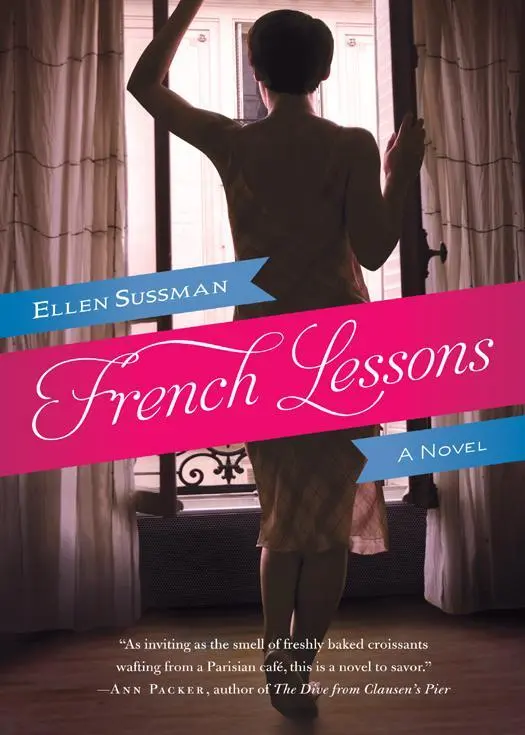
- Название:French Lessons
- Автор:
- Жанр:
- Год:неизвестен
- ISBN:нет данных
- Рейтинг книги:3 / 5. Голосов: 1
-
Избранное:Добавить в избранное
- Отзывы:
-
Ваша оценка:
French Lessons: краткое содержание, описание и аннотация
Предлагаем к чтению аннотацию, описание, краткое содержание или предисловие (зависит от того, что написал сам автор книги «French Lessons»). Если вы не нашли необходимую информацию о книге — напишите в комментариях, мы постараемся отыскать её.
Josie, Riley, and Jeremy have come to the City of Light for different reasons: Josie, a young high school teacher, arrives in hopes of healing a broken heart. Riley, a spirited but lonely expat housewife, struggles to feel connected to her husband and her new country. And Jeremy, the reserved husband of a renowned actress, is accompanying his wife on a film shoot, yet he feels distant from her world.
As they meet with their tutors – Josie with Nico, a sensitive poet; Riley with Phillippe, a shameless flirt; and Jeremy with the consummately beautiful Chantal – each succumbs to unexpected passion and unpredictable adventures. Yet as they traverse Paris's grand boulevards and intimate, winding streets, they uncover surprising secrets about one another – and come to understand long-buried truths about themselves.
French Lessons — читать онлайн бесплатно полную книгу (весь текст) целиком
Ниже представлен текст книги, разбитый по страницам. Система сохранения места последней прочитанной страницы, позволяет с удобством читать онлайн бесплатно книгу «French Lessons», без необходимости каждый раз заново искать на чём Вы остановились. Поставьте закладку, и сможете в любой момент перейти на страницу, на которой закончили чтение.
Интервал:
Закладка:
“Sorry, sweetie,” Riley says, pulling Gabi back to safety. But there is no safety. Gabi throws up in Riley’s lap.
“Mom, I’ll call you back.” And she hangs up.
She’s holding Gabi in the air. Vomit puddles in her pajama bottoms. And Cole pats her shoulder. “It’s okay, Mama.”
Soon she will clean the mess and call her mother back.
Soon Cole will find a French cartoon on TV and watch happily as if he understands every single word of this damn language.
Soon she’ll call Vic and ask him why he had to call a breakfast meeting when he had a dinner meeting last night and will have another dinner meeting tonight.
Soon she’ll call every pediatrician listed in the guide her realtor gave her and ask every snooty receptionist, “Parlez-vous anglais?” until she finds someone who does, and she’ll make an appointment to check Gabi’s ears.
Soon it will stop raining.
Soon she’ll see Philippe.
Riley slides into a chair inside the café-the rain has stopped for a moment, but she knows Paris well enough to know that the wet stuff will rain on her parade.
She’s amazed she has managed so much already today. She called her mother back but Mom said she was going to sleep-it was 1:30 in the morning in Florida and she needed her beauty rest. Riley convinced the woman downstairs to watch the kids. She found clean clothes. They almost fit her-another ten pounds and she’ll be back to her fighting weight. But she’s not giving up the pain au chocolat and there is the problem of her enormous milk-laden breasts. Tant pis . She’s learned that expression-too fucking bad. So the shirt pulls tight across her chest and the jeans hug her hips. Tant pis , Victor.
She’s early. She opens her notebook to last week’s lesson. The words swim in front of her eyes. She used to be a smart person. She used to be a person who had long conversations with intelligent people about politics and the arts and why her neighbor in apartment 3B sang in the middle of the night.
Now she’s either silent or she talks to infants. Either way, there’s been a diminishing of intelligence, she’s noticed. Hard to discuss global warming when she’s got potty mouth.
And Philippe won’t speak English. She’s sure he can-he’s got that European je ne sais quoi that usually means “Oh, I speak six languages. And a little Japanese.”
He thinks that if she has to speak in French, then she will. Instead, she sits there as if she’s a timid soul, one of those mousy girls in high school who never raised her hand. “I’m the teacher’s pet! she wants to scream. I’ve got so much to say that you can’t shut me up!” But she has nothing to say, because she doesn’t have any of the words with which to say it.
Her wondrous career, which she gave up three weeks before Cole was born-though she can’t remember why anymore-had her writing crisis communications for major corporations. Stock tumbling? I’ll spin that! CEO caught in the men’s room with the mail boy? Give me a second and I’ll explain how this is good for the company! But now she can’t even turn her own life into a good story-because she doesn’t have the words for it. Je suis lost.
The waiter comes over and asks her something that she knows she can answer. “Café, s’il vous plaît.” Then he says something else and she nods. He’s probably going to bring her a plate of pigs’ feet with her coffee and she won’t be able to complain. Because she doesn’t have the words!
Six months ago, Cole went through a tough phase. Her American mom friends told her: “It’s the terrible twos, don’t worry, it will pass.” He raged-throwing things, often including himself, onto the floor and most often in the most public places. She and Vic found a phrase that helped: “Use your words.” And miraculously, as Cole learned his first few words, the tantrums stopped. He could say “Pop Tart” or “Rug Rat” or “Pig in Wig” or “bad Mama” and they would nod and get him what he needed. (“Bad Mama” meant that Daddy should put him to bed.) When Riley is standing in the middle of Les Enfants Rouges farmers’ market and the cheese lady asks her something in rapid-fire French, Riley considers throwing herself on the ground and kicking her feet. Use your words! But there aren’t any.
The waiter returns with coffee and no pigs’ feet. Riley burns her tongue on the coffee. Doesn’t matter, she thinks. Don’t need this tongue. Everything about her feels raw. She has stopped crying and promised her mother she won’t be a drama queen. It’s only cancer, for Christ’s sake. Everyone has cancer these days. Her mother is redefining “tough cookie” and Riley is redefining ball of mush. “On with your day!” her mother ordered. This is her day then. On with it!
She looks around the café. The place is crowded though it’s mid-morning. Is Vic the only one who goes to work in this city? Everyone else seems to sit in cafés all day, drinking endless espresso until they start drinking wine. They’re immaculately dressed, as if eventually they’ll either go to the office or a movie premiere. One woman is wearing a leopard suit, skintight, with four-inch stilettos. Probably on her way to pick up her babies and go to the park, Riley thinks.
The door opens and Philippe breezes in.
He’s tall and gangly and has wasted-rock-star good looks. Too many drugs, too many hard nights. It becomes him. His hair always falls in his eyes and Riley spends much of the French lessons imagining something so simple: She reaches out and tucks that lovely hair behind his ear. Today it’s a little greasy, though. Maybe she’ll pay better attention to the lesson.
“Je suis désolé,” he says breathlessly. She smells cigarettes and coffee and something else-sex? His clothes are rumpled. Did he rush here from his girlfriend’s bed?
She smiles at him. She could say something like “No big deal,” or “What is that delicious smell wafting from you?” but she doesn’t have the words.
When he had answered his cell phone earlier she had started to speak in English. “En français,” he admonished her. And so she gave him the name and address of the café and a time. That’s all. She felt a little bit like a spy giving out only the crucial information. No chitchat for her. She’s got international intrigue on her mind!
“Bon,” he says, settling into the seat across from her, pulling out his books from his very distressed leather messenger bag, ordering something from the waiter who says something in response, and then he turns to her and smiles.
She smiles back.
He asks a question.
She smiles back.
He shakes his head, unleashing that lock of hair. She looks away.
“Bon,” he says again. Though nothing is good. Even the coffee tastes like burnt tongue.
“Okay, listen,” she says in English. “Maybe we try something different. Maybe we get to know each other a little bit, figure out something we’d both like to talk about-I mean, I don’t know a thing about you-and then we could, I don’t know, talk about that. In English. And then eventually I’d be speaking in French because it would be just so interesting that the French words would squeeze their way into my little brain and pour right out of my mouth. Whaddaya think?”
“En français,” he says. He’s smiling though. Either he’s a nice guy or he understood every word she said.
That’s the other thing. She doesn’t know how to read people here. Back in the States, she had a sharp ear-she could figure out who was worth knowing by how they spoke, how witty they were, how observant and caustic and wry. She chose her best friend because the woman used remarkable metaphors, inventing them on the spot. She chose her first boyfriend because he skewered the sociology professor for his foppish mannerisms. She chose her husband because he was the first guy to beat her at Scrabble. She imagines a Scrabble game with Philippe. How often could she use the word bon ?
Читать дальшеИнтервал:
Закладка:
Похожие книги на «French Lessons»
Представляем Вашему вниманию похожие книги на «French Lessons» списком для выбора. Мы отобрали схожую по названию и смыслу литературу в надежде предоставить читателям больше вариантов отыскать новые, интересные, ещё непрочитанные произведения.








Обсуждение, отзывы о книге «French Lessons» и просто собственные мнения читателей. Оставьте ваши комментарии, напишите, что Вы думаете о произведении, его смысле или главных героях. Укажите что конкретно понравилось, а что нет, и почему Вы так считаете.