Peter Matthiessen - Shadow Country
Здесь есть возможность читать онлайн «Peter Matthiessen - Shadow Country» весь текст электронной книги совершенно бесплатно (целиком полную версию без сокращений). В некоторых случаях можно слушать аудио, скачать через торрент в формате fb2 и присутствует краткое содержание. Жанр: Современная проза, на английском языке. Описание произведения, (предисловие) а так же отзывы посетителей доступны на портале библиотеки ЛибКат.

- Название:Shadow Country
- Автор:
- Жанр:
- Год:неизвестен
- ISBN:нет данных
- Рейтинг книги:3 / 5. Голосов: 1
-
Избранное:Добавить в избранное
- Отзывы:
-
Ваша оценка:
Shadow Country: краткое содержание, описание и аннотация
Предлагаем к чтению аннотацию, описание, краткое содержание или предисловие (зависит от того, что написал сам автор книги «Shadow Country»). Если вы не нашли необходимую информацию о книге — напишите в комментариях, мы постараемся отыскать её.
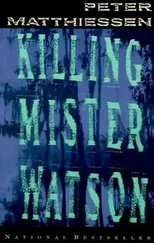
Peter Matthiessen's great American epic-Killing Mister Watson, Lost Man's River, and Bone by Bone-was conceived as one vast mysterious novel, but because of its length it was originally broken up into three books. In this bold new rendering, Matthiessen has cut nearly a third of the overall text and collapsed the time frame while deepening the insights and motivations of his characters with brilliant rewriting throughout. In Shadow Country, he has marvelously distilled a monumental work, realizing his original vision.
Inspired by a near-mythic event of the wild Florida frontier at the turn of the twentieth century, Shadow Country reimagines the legend of the inspired Everglades sugar planter and notorious outlaw E. J. Watson, who drives himself relentlessly toward his own violent end at the hands of neighbors who mostly admired him, in a killing that obsessed his favorite son.
Shadow Country traverses strange landscapes and frontier hinterlands inhabited by Americans of every provenance and color, including the black and Indian inheritors of the archaic racism that, as Watson's wife observed, "still casts its shadow over the nation."
Peter Matthiessen's lyrical and illuminating work in the Watson narrative has been praised highly by such contemporaries as Saul Bellow, William Styron, and W. S. Merwin. Joseph Heller said "I read it in great gulps, up each night later than I wanted to be, in my hungry impatience to find out more and more."
Shadow Country — читать онлайн бесплатно полную книгу (весь текст) целиком
Ниже представлен текст книги, разбитый по страницам. Система сохранения места последней прочитанной страницы, позволяет с удобством читать онлайн бесплатно книгу «Shadow Country», без необходимости каждый раз заново искать на чём Вы остановились. Поставьте закладку, и сможете в любой момент перейти на страницу, на которой закончили чтение.
Интервал:
Закладка:
“Evening!” he said, his smile friendly as ever. “Anybody seen Mrs. Watson and the children?”-his way of reminding us that Ed J. Watson was a family man and not no common killer. The man knew from start to finish just what he was doing. Having bluffed us twice in the last fortnight, he was pretty sure he could pull it off again. Them double barrels down along his leg reminded us how fast us ones up front could be laying there stone dead, whilst his friendly grin took the last fight out of those fellers that wasn’t scared half sick to death already.
The soft water sound of the Warrior ’s wake, still follering in, riffled and washed along the muddied shore. Dusk had come and the miskeeters. We was too tense to pay ’em any mind.
D. D. House was the man nearest to Watson. I stood alongside him on his right hand, young Dan and Lloyd on his left. The rest were kind of bunched on that left side.
D. D. House was an impatient man, never liked to wait. He said, “You got a body in that boat? Where’s his head?”
Boys, Watson said, he sure was sorry to disappoint ’em. He’d shot Cox as planned when that skunk come down to meet him at the dock but damned if the body didn’t roll right off into the current. Worked for two days with gator hooks in that storm flood, never come up with him. Nosir, all he had to show was the bullet hole in Cox’s hat. And he dragged a crumped-up brown felt hat out of his coat pocket and held it out to Daddy with a rueful smile.
Daddy shook his head, he wouldn’t take it. “That hat ain’t good enough.”
“Sir? Not good enough for what?” Watson’s voice turned cold.
Someone leaned and whispered in my ear, “Cox never wore no hat, the
times I seen him.” Watson with his wolf ears snapped, “How’d that go, Wilson?” and I thought, Lordamighty! What’s he doing here? Alderman had worked for Watson in north Florida and still passed for his friend; the Watson family was lodging in his cabin.
When my dad would not accept the hat, Ed Watson poked a finger through the bullet hole and beckoned comically like he might do with little kids or dogs or idiots. Angry that Pap refused to take his word, maybe outraged that Alderman stood there with us, he was rubbing our noses in that hat, defying us. (Erskine Thompson seen it later, claimed it were the same hat Watson shot off the old French man’s head back in the nineties that had hung on a peg in his kitchen ever since.)
Watson lifted the hat with his finger through the hole and twirled it. nobody spoke. Some feller broke wind. Nobody laughed. This weren’t no kind of joke but a damn insult. Watson waited, gazing from face to face. Eyes flinched when he yanked his hand out of his coat to slap a skeeter on his neck. Didn’t slap it exactly, just reached up slow and pinched it dead, then studied the blood between his thumb and finger like that blood was a sign of something he should know about.
A breeze came racketing through the storm-torn palms, died away too quick. Isaac Yeomans spat, maybe more loud and disgusted than us other fellers might of wanted. “You use your revolver, Ed? That shotgun never made that hole in that damn hat.”
Watson smiled a disappointed smile, shaking his head. At the Bend, he had left his shotgun in the boat to make sure Cox let him come close enough to talk, after which he had taken care of him with his revolver. “See for yourself.” He pointed at his boat. “Got his damn blood all over my stern.”
Pap said, “You told us he fell off your dock.”
“That’s correct. Fell headfirst onto the transom, bleeding like hell, thrashed off the stern into the current before I could grab hold of him.”
Isaac waded out to inspect the cockpit. “There’s blood all right,” he said. He put his finger to the blood, then sniffed it. “Smells like fresh fish,” he said. “It sure ain’t three days old.”
That’s when Pap said quietly, “Might be a good idea to hand over your weapons, Watson.”
Slow and growly, Watson said, “Nosir, Mr. House. That ain’t a good idea at all.” When he hitched his gun onto his arm, there come a gasp and shuffle, and I never had to look behind to know which ones was getting set to scatter. Why was his neighbors acting so suspicious, Watson inquired kind of grieved. He could not figure for the life of him why his friends and neighbors would treat him like some kind of a criminal when they knew Cox was the guilty man and Cox was dead.
But he wasn’t really arguing no more, he was gathering himself for his next move. Pap must of seen it that same way cause he warned him hoarse and urgent, “Better drop that gun.” But Watson only gazed over his head toward the store where Mrs. Watson had come outside with my sister and was starting down to meet him. Maybe he seen her. Maybe he seen his Lost Man’s friends, just watching. Maybe he wondered why none of them friends such as Erskine ever tried to warn him, wave him away from shore, never even hollered at him now to drop his weapons. Not one man came down to meet him. They were keeping a safe distance, out of shotgun range.
He looked lost-the only time I ever seen Ed Watson seem unsure what to do next. For one second there, I might have felt a little sorry for him. That feeling passed quick. In the shift of an eye, he had a ears-back look, real hard and mean, like he would take your life and not think twice about it. Of course that look might of been put on to bluff and scare us.
“Mister Watson, you are under arrest,” I warned, to back Pap up. “Citizen’s arrest,” said Isaac Yeomans.
“Citizen’s arrest?” Watson spat out his contempt and ground the spit into the ground, hard, with his boot toe. “You boys are full of shit,” he grated, shifting his feet a little, shifting his weapon. “You have a warrant?”
Hearing that anger, so sudden and so cold, beyond all reach, the line of men went wobbly, and some of ’em, I ain’t saying which ones, begun to whine : If there ain’t no warrant, it ain’t legal, ain’t that right, boys? Ed ain’t all wrong on that, y’know… Well, I mean, to heck with it, we best go on home till we think this over. But D. D. House had to finish what he started, sons or no sons, he never really knew no other way. When he growled, “Watson, lay that gun down by the count of three,” his sons stiffened, set to fire at the first wrong move.
We was all bad scared, which makes men skittish, very dangerous. We was tense and all bunched up; he could do some heavy damage with a shotgun. But after so many close calls on so many frontiers, the man might have seen in them stiff weary faces that this time his neighbors meant business, that maybe his luck was running out, that the day had come when he might not talk his way into the clear.
When D. D. House stepped forward to take his gun, Ed Watson raised his palm up high like some kind of old-time prophet in the Bible. At first I thought he was about to say, Okay, I quit. You win. Later I realized he had stopped us at good shotgun range if killing and crippling more than two was what was wanted. Maybe that were not his plan but that’s the way it looked. Two charges of buckshot would knock down the leaders, scatter the rest, and he might keep ’em ducking with his revolver while he pushed his boat back off the beach, crouched to reload, shot his way out of there. At that range, with a panicked crowd, he might have got away with it; the trouble was-so’s to keep his gun handy when he jumped instead of fooling with a bow line-he’d run his boat aground on a falling tide to where he’d never push her off without some help.
A bad mistake, some said. I don’t think so. I don’t think Watson made mistakes like that. I doubt if he ever considered shooting his way out. His chances were poor and anyway, a man so proud would not leave his family behind.
Читать дальшеИнтервал:
Закладка:
Похожие книги на «Shadow Country»
Представляем Вашему вниманию похожие книги на «Shadow Country» списком для выбора. Мы отобрали схожую по названию и смыслу литературу в надежде предоставить читателям больше вариантов отыскать новые, интересные, ещё непрочитанные произведения.









Обсуждение, отзывы о книге «Shadow Country» и просто собственные мнения читателей. Оставьте ваши комментарии, напишите, что Вы думаете о произведении, его смысле или главных героях. Укажите что конкретно понравилось, а что нет, и почему Вы так считаете.