Peter Matthiessen - Shadow Country
Здесь есть возможность читать онлайн «Peter Matthiessen - Shadow Country» весь текст электронной книги совершенно бесплатно (целиком полную версию без сокращений). В некоторых случаях можно слушать аудио, скачать через торрент в формате fb2 и присутствует краткое содержание. Жанр: Современная проза, на английском языке. Описание произведения, (предисловие) а так же отзывы посетителей доступны на портале библиотеки ЛибКат.

- Название:Shadow Country
- Автор:
- Жанр:
- Год:неизвестен
- ISBN:нет данных
- Рейтинг книги:3 / 5. Голосов: 1
-
Избранное:Добавить в избранное
- Отзывы:
-
Ваша оценка:
Shadow Country: краткое содержание, описание и аннотация
Предлагаем к чтению аннотацию, описание, краткое содержание или предисловие (зависит от того, что написал сам автор книги «Shadow Country»). Если вы не нашли необходимую информацию о книге — напишите в комментариях, мы постараемся отыскать её.
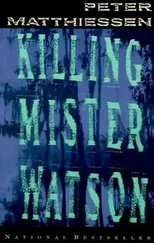
Peter Matthiessen's great American epic-Killing Mister Watson, Lost Man's River, and Bone by Bone-was conceived as one vast mysterious novel, but because of its length it was originally broken up into three books. In this bold new rendering, Matthiessen has cut nearly a third of the overall text and collapsed the time frame while deepening the insights and motivations of his characters with brilliant rewriting throughout. In Shadow Country, he has marvelously distilled a monumental work, realizing his original vision.
Inspired by a near-mythic event of the wild Florida frontier at the turn of the twentieth century, Shadow Country reimagines the legend of the inspired Everglades sugar planter and notorious outlaw E. J. Watson, who drives himself relentlessly toward his own violent end at the hands of neighbors who mostly admired him, in a killing that obsessed his favorite son.
Shadow Country traverses strange landscapes and frontier hinterlands inhabited by Americans of every provenance and color, including the black and Indian inheritors of the archaic racism that, as Watson's wife observed, "still casts its shadow over the nation."
Peter Matthiessen's lyrical and illuminating work in the Watson narrative has been praised highly by such contemporaries as Saul Bellow, William Styron, and W. S. Merwin. Joseph Heller said "I read it in great gulps, up each night later than I wanted to be, in my hungry impatience to find out more and more."
Shadow Country — читать онлайн бесплатно полную книгу (весь текст) целиком
Ниже представлен текст книги, разбитый по страницам. Система сохранения места последней прочитанной страницы, позволяет с удобством читать онлайн бесплатно книгу «Shadow Country», без необходимости каждый раз заново искать на чём Вы остановились. Поставьте закладку, и сможете в любой момент перейти на страницу, на которой закончили чтение.
Интервал:
Закладка:
“So you didn’t mind…?”
“Who, me ?” he squawked, loud and derisive. “Don’t bother me none at all!” Will’s boy had gone wrong, all right, he was stupid, hard, and vicious, but the law never bothered him about those nigras because the witnesses were frightened and anyway the sheriff, Dick Will Purvis, had known Leslie since a boy.
The Columbia City shooting was in early winter. Those amateur killers avoided each other until baseball came around again in early spring. Leslie pitched for the Tolen Team but stayed away from Sam, who was blaming their difficulties on Ed Watson’s influence.
One day Sam sent word through Coxes that if Ed would meet him in a public place, namely the J. R. Terry Grocery in Fort White, we could talk things over and patch up our differences. I was leery of the invitation because I happened to be scrapping with the Terrys.
My mother was Episcopalian and Minnie, too. Though Minnie’s three children had been baptized in St. James Episcopal, Lake City, the Collinses were Methodists, all but Billy, who got cranky in the last years of his life. He went over to the Baptist persuasion and attended Elim Baptist, over east of the Fort White Road, taking the kids with him. But pretty soon there was trouble with the Terrys because their mean dogs scared the Collins kids on their way to church. I went over there and warned ’em but they paid no attention, would not chain their dogs. So the following Sunday, I accompanied those kids, took my gun along, and shot those dogs dead as fast as they ran up. Terrys never forgave that, never forgot it. From that day on, I had to watch my back every time I went over to Fort White. Even gave up my Saturday lunch at the Sparkman Hotel, where I’d always enjoyed the lively conversation, mostly because I did most of the talking.
When word came to meet Tolen at the Terry store, I suspected this bunch was in cahoots, so I sent my boy Eddie over there to reconnoiter. Just you duck around the back, I told him, peek in the window. So Eddie snuck around the back and peered in through the spiderwebs and shadows. He could just make out a big old iron safe and the tools and harness hanging from the walls and the potbellied stove. What he didn’t see at first-and it gave him a bad start when he did-was the shape of a heavy man sitting on a nail keg with a shotgun across his lap, facing the door.
When Eddie rode home and reported that the armed man looked like Tolen, I decided Sam wasn’t sitting on a nail keg for the hell of it; he probably had some damn Terry in that room, hid in a corner. I no longer trusted anyone around Fort White and was jumping at shadows every time I rode along those roads. For the time being, I would be safer in the Islands.
1903
In early 1903 I replaced Green Waller as foreman with a man named Dyer whose wife Sybil had befriended me back in ’93 when I first passed through Fort Myers after my long horseback journey across the country.
Sybil worked for the local haberdasher and had made me my new clothes, coming to my room for all the fittings. Not long after that, she married Dyer, and a little boy they called Watson or Watt had come into the world while I was clearing my plantation at Chatham Bend. We renewed acquaintance briefly on my way north in 1903, and when she mentioned that her husband was out of work and was also a good carpenter, I hired him.
Fred Dyer was handy and did most of his work but found too many excuses to go off on the Gladiator . He drank a lot, he was gone a lot, and there were women. I learned this from my mean-mouthed skipper Erskine Thompson who did not wish anyone to get away with anything. Sometimes Fred failed to show up on the dock for the trip home, and his family might not know his whereabouts for the next fortnight. Even after my return, he went off with the schooner every chance he got, claiming we needed various stores and supplies, and I let him go because it suited me to have him elsewhere. Mis Sybil seemed to welcome the change as well.
Often we two sat on the screened porch on those long river evenings. Lucius was off at Everglade, in school, I missed Mandy and was lonely, so pretty Sybil was indeed a comfort. At Christmas, I brought her children presents from Key West. I brought Sybil some small things, too, but she said that as a married woman, she could not accept them. Finally I persuaded her that my gifts were not presents but practical things for household use. With the sewing machine, for example, she would soon be making all our clothes and sewing mosquito bars for every bed.
When Lucius returned to Chatham for his Christmas holiday, I embarrassed him. One evening, exasperated by the general torpor of the table conversation, I made a drunken declaration that Mis Sybil was the only soul worth talking to on the whole place. I think I needed her too much. I realize it probably wasn’t so, but at the time it seemed to me I was in love with Mrs. Dyer.
Anxious to mend my reputation, I did not want scandal any more than she did. Yet I couldn’t trust myself when drinking, which meant she couldn’t trust me either, so I bought her a small silver revolver for her own protection. After teaching her how to target-shoot (standing too close behind, I fear, while supporting her trembling arm at the elbow as she aimed), I urged her to bar her door to Edgar Watson even if he was out there hollering that her cabin was on fire. She laughed in protest at any such idea but I was serious, commanding her to shoot right through the door if I made any attempt to break it down.
Mis Sybil was horrified, thought I’d gone mad. She cried out, “Oh pshaw, Mr. Watson, I couldn’t even shoot a snake!” And I said, “Well, ma’am, you had better learn, and the sooner the better.”
Back in that summer of 1905, our friend Guy Bradley was murdered at Flamingo. By the time I heard the details from Gene Roberts, the story that
E. J. Watson was the killer had already spread, even though Guy had been my friend, and even though I was in Tampa on the day he died. As soon as folks heard I had been absent from the Bend, they concluded I was in Flamingo, where I murdered Bradley because he’d threatened to arrest me for plume hunting next time he saw me. This was nonsense, too. With so few birds left to hunt, I had not shot an egret in years.
Gene Roberts was the man who found Guy’s body in his boat, washed up on shore. Before Gene left for Chokoloskee the next morning, I sat him down with Lucius, made him tell my son the whole true story so that Lucius would know his Papa was innocent. Lucius said that he knew that already, and I said, “Well, son, I sure appreciate your attitude, but you’d better listen to Mr. Gene here all the same.” Here’s how Gene tells that story:
“Guy Bradley had a quarter mile of shore west of Flamingo, and us Robertses was the next section west, toward Sawfish Hole. We still had fair numbers of plume birds in our swamps but every place else, them birds was slaughtered out and the competition for ’em had grew deadly. The reddish and blues and blue-and-whites, they wasn’t worth much, but the white plumes brought thirty-two dollars an ounce, more than pure gold, and the rosy spoonbills brung good money, too.
“Before the rest of us, Guy seen there weren’t no future for the plume birds, said them white aigrets was bound to disappear same as them flamingos that give our Filly-mingo settlement that name.
“Them Audi-bones up in New York, they give Guy the idea to be the warden, said they would pay his salary. Guy took the job kind of reluctant. Told us more’n once, ‘Some riled-up sonofabitch is goin to take and shoot me.’ But Guy decided he would do it anyway, he was that kind. And he figured if he was supposed to be the warden, he would give it hell. Never had no uniform or nothin, just stuck a badge on his ol’ mattresstickin shirt and hitched his galluses and went right to it, makin life miserable for all his neighbors. Bein Guy, he never cared if you was friend or stranger; if he’d of caught his brother Lew, he’d of pinched him, too.
Читать дальшеИнтервал:
Закладка:
Похожие книги на «Shadow Country»
Представляем Вашему вниманию похожие книги на «Shadow Country» списком для выбора. Мы отобрали схожую по названию и смыслу литературу в надежде предоставить читателям больше вариантов отыскать новые, интересные, ещё непрочитанные произведения.











Обсуждение, отзывы о книге «Shadow Country» и просто собственные мнения читателей. Оставьте ваши комментарии, напишите, что Вы думаете о произведении, его смысле или главных героях. Укажите что конкретно понравилось, а что нет, и почему Вы так считаете.