Anne Enright - The Forgotten Waltz
Здесь есть возможность читать онлайн «Anne Enright - The Forgotten Waltz» весь текст электронной книги совершенно бесплатно (целиком полную версию без сокращений). В некоторых случаях можно слушать аудио, скачать через торрент в формате fb2 и присутствует краткое содержание. Жанр: Современная проза, на английском языке. Описание произведения, (предисловие) а так же отзывы посетителей доступны на портале библиотеки ЛибКат.
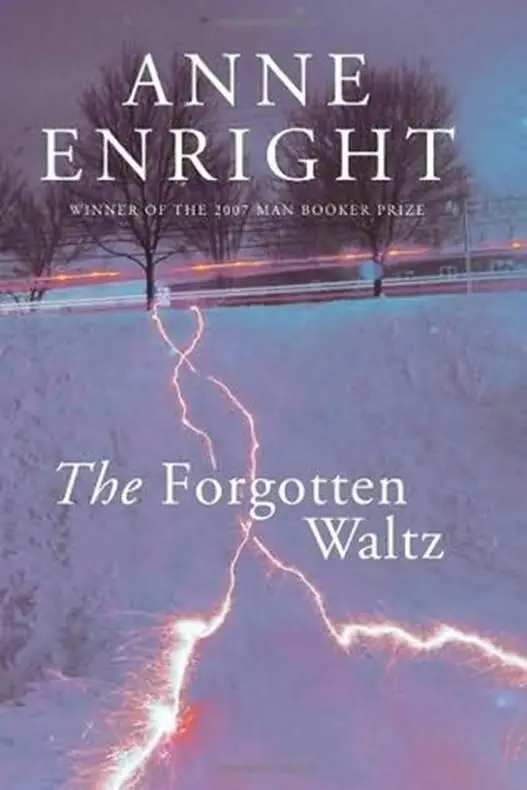
- Название:The Forgotten Waltz
- Автор:
- Жанр:
- Год:неизвестен
- ISBN:нет данных
- Рейтинг книги:4 / 5. Голосов: 1
-
Избранное:Добавить в избранное
- Отзывы:
-
Ваша оценка:
The Forgotten Waltz: краткое содержание, описание и аннотация
Предлагаем к чтению аннотацию, описание, краткое содержание или предисловие (зависит от того, что написал сам автор книги «The Forgotten Waltz»). Если вы не нашли необходимую информацию о книге — напишите в комментариях, мы постараемся отыскать её.
The Forgotten Waltz — читать онлайн бесплатно полную книгу (весь текст) целиком
Ниже представлен текст книги, разбитый по страницам. Система сохранения места последней прочитанной страницы, позволяет с удобством читать онлайн бесплатно книгу «The Forgotten Waltz», без необходимости каждый раз заново искать на чём Вы остановились. Поставьте закладку, и сможете в любой момент перейти на страницу, на которой закончили чтение.
Интервал:
Закладка:
And she couldn’t take her drink, so it was always a mess, she was always maundering on about her mother or her horrible father, who turned out to be a guy Seán knew, actually, and she was fighting with taxi men and roaring in the street, so she had him by the balls, this crazy woman, he couldn’t even sack her, he couldn’t take the risk. And when it was finally over, he thought: so that’s it. That was his chance, his fling. That was his big romance.
I waited for the next line.
‘Until I met you.’
And we made love for a second time. I was very upset, although I did not show it. I was upset because I felt so lonely, all the way through.
I had taken to ringing his home number at night, and this was a disastrous thing to do. Disastrous to want it so badly; the sound of his voice in the middle of a long fortnight, although it might not have been his voice exactly I was looking for. This was me ringing the landline to Enniskerry, the one I had seen nesting on the console table in the hall, and on the kitchen wall, and by the marriage bed. It was answered somewhere in the ordinary life of the house: Aileen with bleach foaming on her upper lip, Evie at the kitchen table, doing her homework, Seán, apparently, elsewhere. The second or third time, Aileen did not cut the connection. She waited, and the silences of her life filled the earpiece, as I heard the nearness of her breath, and she felt the nearness of mine.
I zipped my calves back into the boots, holding my legs high, one after the other, to avoid the fringe. Seán sat on the edge of the bed putting in his cufflinks. He was wearing a pink shirt, impossibly pale. His jacket was hung over the back of the chair. He did not mention the phone calls. He bent down to lace up his plain, black shoes.
He said, ‘You should never do this with someone – you should never expose yourself to someone like this – unless they have a lot to lose.’
I ran home to him that day. I ran home to my husband, to his wise brown eyes that were not, in fact, wise, and to his big, warm body that had not kept me from the cold.
On Saturday night I cracked open a bottle of wine and we watched ‘The Wire’ on box set, and after that we drank another bottle, despite which I was numb, in his arms, with the thought of all I had lost: the movement of his hand was just a movement, his tongue was an actual tongue. I had killed it; my best thing. The guilt, when it finally hit, was astonishing.
Dance Me to the End of Love
IN THE MIDDLE of April Seán was guest speaker at some motivational golfing weekend in Sligo and we had two days together – I can’t remember what lie I told before I got on the train – two days, and one whole night, to end the affair; to strangle it and beat it about the head, to throw it in a shallow grave and go home.
Seán picked me up at the station (Evie’s fluffy earmuffs abandoned on the back seat), and brought me out to a hotel, far from the golfers, on the outskirts of town.
The hotel was actually a converted asylum, massive, and grey. There were two Gothic chapels on either end of the car park, one smaller than the other.
‘Protestant and Catholic maybe,’ said Seán. Or staff and patients. But I said it was men one side and women the other. We looked at them when we got out of the car and thought about it: stolen glances across the forecourt. It was all there: the sackcloth, the raving, thwarted love.
‘Jesus,’ said Seán. ‘It’s the County Home.’
Then we walked into reception and found ourselves in the middle of two different hen parties, one in black T-shirts with magenta-coloured feather boas, another in white T-shirts with a pink slogan on the front. The slogan said: ‘Aunt Maggie is on the Farm’.
I turned to pull a face at Seán but he was gone. Disappeared. I couldn’t see him anywhere. In my foolishness I spun around in the hotel foyer, and then back again while the hen parties milled around in front of the desk. I finally pulled out my phone, to find a text that said, ‘Sign in. Send no, will fllw’.
Something, or someone, had spooked him. And so I queued, the only woman in the place who wasn’t wearing pink, and I panicked about my credit card, which had my name on it, which would, one day, turn into a credit-card bill, and I thought how resentment is the one true opposite of desire.
The room was impossible to find. I had to walk miles of corridor, go up in one lift, and down in a different one. The walls were hung with paintings done to match the carpet; an increasingly sickening series of abstracts in cream and maroon that looked like they came out of the same two pots of paint; the inmates’ revenge. The room was in fact in the old nurses’ quarters: a separate, modern building connected by a walkway to the main hotel, with the feeling along the length of it of going from madness to your dinner, and back again. I didn’t know if these ghosts were any easier to handle, as they crept with naggins of vodka in their white pockets to trysts with doctors or orderlies, or with patients who were handsome and sad. A swirl of magenta feathers danced over the carpet as I passed, while at the end of the corridor some ancient echo asked me what I thought I was doing out of bounds at that hour, and in those high heels.
When I got up to the room, Seán was already lurking by the door.
‘How did you manage that?’ I said.
‘Manage what?’ Apparently it was all easy to find, from the outside.
We made love as soon as we saw the bed and then wandered the rooms – it was actually a family suite with a living room and kitchenette: dark wood, stripy cushions. Seán looked different there, more domestic, and used.
It was the end, I knew that. I think we both knew.
That afternoon, we drove to Rosses Point and kissed on the beach. The tiny flesh of his lips in front of that great ocean and, when he opened his mouth, it was like diving in.
Driving back along the coast road, Seán swung in through the gates of a house with a For Sale sign outside.
‘Just curious,’ he said, as he went up the driveway, and we parked right in front of their lives, whoever these people were, in their eighties dormer with its lawn running down to the sea.
They had a trampoline in the garden, and a separate garage – it looked nicer than the house actually – with room for two cars.
A silhouette paused in front of the window: a woman, checking us out.
‘Do you want to buy it?’ I said.
‘Do I want to buy it?’ Which was another thing that annoyed me about him, the way he liked to deadpan what I just said. ‘Giving it the cold read’ as he called it.
‘Are you interested in buying the house?’
‘Always, my love,’ he said. ‘Always.’
My love .
We stayed for five long minutes, maybe more. At one stage he got out of the car and walked to the gap between the house and the garage, assessing the view down to the sea. Then he walked towards the car, backwards, checking the gutters as he came.
‘OK,’ he said.
And we left the woman with her trampoline and her swing set, that did not have the grass rubbed away beneath it, and to her life by the sea.
I kept checking my phone. No one knew where I was, and I felt cut loose – abandoned almost. I spent the entire time I was there, fantasising the call; the one I might get from Conor; the one from my mother’s mobile that I answer, only to hear a stranger’s voice at the other end. In fact, no one missed me, or wanted me; the phone stayed dead. It was just Sligo working its voodoo as we slid along the lost lanes, in the flat plain between Ben Bulben and the sea.
At Glencar Lake, he recited Yeats to me, ‘Come away oh human child, to the waters and the wild.’ Then we parked beyond the waterfall, and he pushed his seat back, and there was something about him, the expansive way he sat, I knew he wanted me to get up to some badness, that this would be a treat, what with the scenery and the poetry and the fact that we were in his very own, very nice car. And I thought, this can not be true. This man can not want me to blow him, in daylight, in a public car park. This man whoever he is .
Читать дальшеИнтервал:
Закладка:
Похожие книги на «The Forgotten Waltz»
Представляем Вашему вниманию похожие книги на «The Forgotten Waltz» списком для выбора. Мы отобрали схожую по названию и смыслу литературу в надежде предоставить читателям больше вариантов отыскать новые, интересные, ещё непрочитанные произведения.









Обсуждение, отзывы о книге «The Forgotten Waltz» и просто собственные мнения читателей. Оставьте ваши комментарии, напишите, что Вы думаете о произведении, его смысле или главных героях. Укажите что конкретно понравилось, а что нет, и почему Вы так считаете.