John Irving - Until I Find You
Здесь есть возможность читать онлайн «John Irving - Until I Find You» весь текст электронной книги совершенно бесплатно (целиком полную версию без сокращений). В некоторых случаях можно слушать аудио, скачать через торрент в формате fb2 и присутствует краткое содержание. Город: New York, Год выпуска: 2005, ISBN: 2005, Издательство: Random House, Жанр: Современная проза, на английском языке. Описание произведения, (предисловие) а так же отзывы посетителей доступны на портале библиотеки ЛибКат.
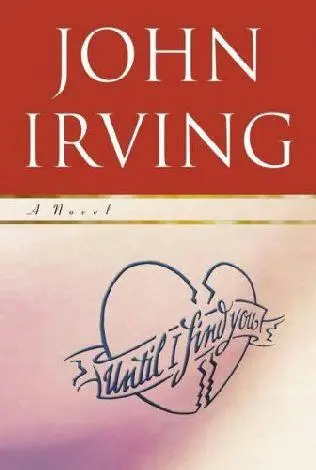
- Название:Until I Find You
- Автор:
- Издательство:Random House
- Жанр:
- Год:2005
- Город:New York
- ISBN:978-1400063833
- Рейтинг книги:5 / 5. Голосов: 1
-
Избранное:Добавить в избранное
- Отзывы:
-
Ваша оценка:
Until I Find You: краткое содержание, описание и аннотация
Предлагаем к чтению аннотацию, описание, краткое содержание или предисловие (зависит от того, что написал сам автор книги «Until I Find You»). Если вы не нашли необходимую информацию о книге — напишите в комментариях, мы постараемся отыскать её.
Alice and Jack abandon their quest, and Jack is educated at schools in Canada and New England — including, tellingly, a girls’ school in Toronto. His real education consists of his relationships with older women — from Emma Oastler, who initiates him into erotic life, to the girls of St. Hilda’s, with whom he first appears on stage, to the abusive Mrs. Machado, whom he first meets when sent to learn wrestling at a local gym.
Too much happens in this expansive, eventful novel to possibly summarize it all. Emma and Jack move to Los Angeles, where Emma becomes a successful novelist and Jack a promising actor. A host of eccentric minor characters memorably come and go, including Jack’s hilariously confused teacher the Wurtz; Michelle Maher, the girlfriend he will never forget; and a precocious child Jack finds in the back of an Audi in a restaurant parking lot. We learn about tattoo addiction and movie cross-dressing, “sleeping in the needles” and the cure for cauliflower ears. And John Irving renders his protagonist’s unusual rise through Hollywood with the same vivid detail and range of emotions he gives to the organ music Jack hears as a child in European churches. This is an absorbing and moving book about obsession and loss, truth and storytelling, the signs we carry on us and inside us, the traces we can’t get rid of.
Jack has always lived in the shadow of his absent father. But as he grows older — and when his mother dies — he starts to doubt the portrait of his father’s character she painted for him when he was a child. This is the cue for a second journey around Europe in search of his father, from Edinburgh to Switzerland, towards a conclusion of great emotional force.
A melancholy tale of deception,
is also a swaggering comic novel, a giant tapestry of life’s hopes. It is a masterpiece to compare with John Irving’s great novels, and restates the author’s claim to be considered the most glorious, comic, moving novelist at work today.
Until I Find You — читать онлайн бесплатно полную книгу (весь текст) целиком
Ниже представлен текст книги, разбитый по страницам. Система сохранения места последней прочитанной страницы, позволяет с удобством читать онлайн бесплатно книгу «Until I Find You», без необходимости каждый раз заново искать на чём Вы остановились. Поставьте закладку, и сможете в любой момент перейти на страницу, на которой закончили чтение.
Интервал:
Закладка:
When he saw Lucy again, in the waiting room of Dr. García’s office in Santa Monica, it was more than a year after he’d won the Oscar—April or May 2001. Lucy would have been eighteen. Jack didn’t recognize her, but she recognized him; everyone did. (A pretty girl—someone’s nanny, Jack had assumed.)
He’d long ago learned to expect and tolerate the stares of girls Lucy’s age, but Lucy’s eyes were riveted to his face, his hands, his every glance and movement. Her keen interest in him went far beyond overt flirtation or the groupie thing. Jack almost asked the receptionist if he could wait in another room. He didn’t know if there were other rooms—that is, other than a bathroom and a closet—but Lucy’s wanton obsession with him was distressing.
Then the problem appeared to go away; they overlapped only that one time in Dr. García’s waiting room. Jack completely forgot about the girl.
The reason Jack would remember the year and the season of his first reunion with Lucy, which (at the time) he didn’t know was a reunion, is that he was getting ready for a trip to Halifax—his first trip there since he’d crossed the Atlantic and landed in Nova Scotia in his mother’s womb. Dr. García had warned him against returning to his birthplace, which she viewed as a possible setback to his therapy. But Jack had other business in Halifax.
A not-very-good Canadian novelist and screenwriter, Doug McSwiney, and a venerable French director, Cornelia Lebrun, wanted him to play the lead in a movie about the Halifax Explosion in 1917. They probably couldn’t get adequate financing for the film without a movie star attached, and—given the off-center nature of McSwiney’s screenplay—not just any movie star would do. Because of the cross-dressing inclination of the main character, the movie star had to be Jack Burns.
The character Jack would play, a transvestite prostitute, loses his (or her) memory in the explosion, when all his clothes are blown off and he suffers second-degree burns over his entire body; then he falls in love with his nurse. At first, Jack’s character doesn’t remember that he’s a transvestite prostitute, but it wouldn’t be a movie if his memory didn’t return.
Jack had some issues with the screenplay, but he’d always been interested in the Halifax Explosion—and in seeing the city of his birth. It appealed to him to work with Cornelia Lebrun as a director, too. She was by far the more accomplished element in this collaboration, and when she proposed a meeting in Halifax—where she was working with McSwiney, urging him to improve his tortured script—Jack seized the opportunity to see his birthplace. He would also have a chance to put in his two cents regarding Doug McSwiney’s trivialization of the Halifax disaster.
After Jack had won the Oscar, he’d said no to an uncountable number of offers. Many of these were suggested adaptations. He’d read a lot of novels, looking for a possible adaptation that appealed to him. But ever since Jack had been telling the story of his life to Dr. García, the idea of writing any screenplay paled.
Jack Burns was back in the acting business, at least for the time being—or so he told Bob Bookman. But after the Oscar, Jack had been inclined to be picky about the acting opportunities, too. The thought of making a movie in Halifax, however, intrigued him. Who knows what so-called recovered memories he might unlock there? (Infant dreams and premonitions mainly, Jack imagined.)
That was his state of mind in June 2001, when he drove to Santa Monica for his appointment with Dr. García. It was a warm day; when he parked the Audi, he left all the windows open.
Jack had a number of reasons to be feeling positive. Three years after the fact, he had described his return trip to all but one of the North Sea ports of call—and Jack had discovered that he could tell Dr. García what had happened while managing to hold himself together. (In a few instances, Dr. García had looked in danger of losing it.)
Furthermore, Jack was looking forward to his trip to Halifax—no small part of the reason being that his going there was against Dr. García’s wishes. And last but not least, Jack had just heard from Michele Maher. This was all the more remarkable because he had not heard from her for well over a year—not even so much as a postcard congratulating him for the Academy Award.
Jack had concluded, of course, that the sort-of boyfriend had taken stronger possession of her; that the boyfriend had forbidden her to communicate with Jack Burns had also crossed Jack’s mind. Now came her long, most informative—if not overaffectionate—letter. Naturally, Jack showed Michele’s letter to Dr. García, but the doctor wasn’t pleased.
In Jack’s acceptance speech at the Academy Awards, his thanking Michele Maher for staying up late to watch him had backfired. It had prompted a heated discussion with her sort-of boyfriend—apparently on the subject of Michele’s commitment to him, or lack thereof. Michele had never lived with anyone. To her old-fashioned thinking, cohabitation meant marriage and children; living with someone wasn’t supposed to be an experiment. But because Jack mentioned her name—to an audience of millions—Michele’s sort-of boyfriend insisted that they live together. Michele gave in, though she stopped short of marriage and children.
He was a fellow doctor, an internist—a friend of a friend she’d known in medical school. They were very much (perhaps too much) alike, she wrote.
“Everything in Dr. Maher’s letter,” Dr. García said, when she’d finished reading it, “suggests a pragmatism unlike your approach to anything in this world, Jack.”
But Jack had come away with something a little different from Michele’s letter—for starters, it hadn’t worked out with the live-in boyfriend. (“ A year of commitment, in which I’ve never felt so un committed, ” as Michele put it.) She was living alone again; she had no boyfriend. She was finally free to congratulate Jack for winning the Oscar, and to suggest that—were he ever to find himself in the Boston area—they should meet for lunch.
“ I realize that you don’t get nominated for an Oscar every year, ” Michele wrote. “Moreover, should you ever go back to the Academy Awards, I wouldn’t expect you to consider asking me to go with you again. But, in retrospect, I might have spared myself an unhappy year by saying yes to you the first time.”
“There’s more than a hint of a come-on in the ‘in retrospect’ part, isn’t there?” Dr. García commented. (This was not phrased as a question she expected Jack to answer; this was simply Dr. García’s way of presuming his agreement.)
“ Später—vielleicht, ” Michele’s letter concluded.
“You’ll have to help me with the German,” Dr. García said, almost as an afterthought.
“ ‘Later—perhaps,’ ” Jack translated.
“Hmm.” (This was Dr. García’s way of downplaying the importance of something.)
“I could come back from Halifax via Boston,” he suggested.
“How old is Michele—thirty-five, thirty-six?” Dr. García asked, as if she didn’t know.
“Yes, she’s my age,” Jack replied.
“Most doctors are workaholics,” Dr. García said, “but, like any woman her age, Michele’s clock is ticking.”
He should have told Dr. García about Michele’s letter in chronological order, Jack was thinking, but he didn’t say anything.
“On the other hand, she doesn’t exactly sound like a star-fucker, does she?” Dr. García said.
“She was just suggesting lunch, ” Jack said.
“Hmm.”
There were no new photographs in Dr. García’s office; there hadn’t been any new photos in the three years he’d been her patient. But there wasn’t any room for new ones, not unless she threw some of the old ones away.
Читать дальшеИнтервал:
Закладка:
Похожие книги на «Until I Find You»
Представляем Вашему вниманию похожие книги на «Until I Find You» списком для выбора. Мы отобрали схожую по названию и смыслу литературу в надежде предоставить читателям больше вариантов отыскать новые, интересные, ещё непрочитанные произведения.





Обсуждение, отзывы о книге «Until I Find You» и просто собственные мнения читателей. Оставьте ваши комментарии, напишите, что Вы думаете о произведении, его смысле или главных героях. Укажите что конкретно понравилось, а что нет, и почему Вы так считаете.