Hermann Hesse - The Glass Bead Game
Здесь есть возможность читать онлайн «Hermann Hesse - The Glass Bead Game» весь текст электронной книги совершенно бесплатно (целиком полную версию без сокращений). В некоторых случаях можно слушать аудио, скачать через торрент в формате fb2 и присутствует краткое содержание. Год выпуска: 1969, Жанр: Современная проза, Социально-психологическая фантастика, на английском языке. Описание произведения, (предисловие) а так же отзывы посетителей доступны на портале библиотеки ЛибКат.
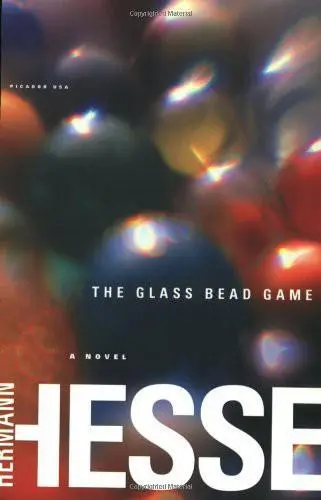
- Название:The Glass Bead Game
- Автор:
- Жанр:
- Год:1969
- ISBN:нет данных
- Рейтинг книги:4 / 5. Голосов: 2
-
Избранное:Добавить в избранное
- Отзывы:
-
Ваша оценка:
The Glass Bead Game: краткое содержание, описание и аннотация
Предлагаем к чтению аннотацию, описание, краткое содержание или предисловие (зависит от того, что написал сам автор книги «The Glass Bead Game»). Если вы не нашли необходимую информацию о книге — напишите в комментариях, мы постараемся отыскать её.
Something like chess but far more intricate, the game of Magister Ludi known as the Glass Bead Game is thought in its purest form, a synthesis through which philosophy, art, music and scientific law are appreciated simultaneously. The scholar-players are isolated within Castalia, an autonomous elite institution devoted wholly to the mind and the imagination…
The Glass Bead Game — читать онлайн бесплатно полную книгу (весь текст) целиком
Ниже представлен текст книги, разбитый по страницам. Система сохранения места последней прочитанной страницы, позволяет с удобством читать онлайн бесплатно книгу «The Glass Bead Game», без необходимости каждый раз заново искать на чём Вы остановились. Поставьте закладку, и сможете в любой момент перейти на страницу, на которой закончили чтение.
Интервал:
Закладка:
The young swimmer had looked back frequently and seen with satisfaction that the Magister had followed him into the water. Now he peered once again, no longer saw him, and became uneasy. He looked and called, then turned and swam rapidly back. He could not find him. Swimming and diving, he searched for the lost swimmer until his strength too began to give out in the bitter cold. Staggering, breathless, he reached land at last, saw the dressing gown lying on the shore, and picking it up began mechanically rubbing his body and limbs until the numbed skin warmed again. Stunned, he sat down in the sunlight and stared into the water, whose cool blue-green now blinked at him strangely empty, alien, and evil. He felt overpowered by perplexity and deep sorrow, for with the waning of his physical weakness, awareness and the terror of what had happened returned to him.
Oh! he thought in grief and horror, now I am guilty of his death. And only now, when there was no longer need to save his pride or offer resistance, he felt, in shock and sorrow, how dear this man had already become to him. And since in spite of all rational objections he felt responsible for the Master’s death, there came over him, with a premonitory shudder of awe, a sense that this guilt would utterly change him and his life, and would demand much greater things of him than he had ever before demanded of himself.
JOSEPH KNECHT’S POSTHUMOUS WRITINGS
THE POEMS OF KNECHT’S STUDENT YEARS
Lament
No permanence is ours; we are a wave
That flows to fit whatever form it finds:
Through day or night, cathedral or the cave
We pass forever, craving form that binds.
Mold after mold we fill and never rest,
We find no home where joy or grief runs deep.
We move, we are the everlasting guest.
No field nor plow is ours; we do not reap.
What God would make of us remains unknown:
He plays; we are the clay to his desire.
Plastic and mute, we neither laugh nor groan;
He kneads, but never gives us to the fire.
To stiffen into stone, to persevere!
We long forever for the right to stay.
But all that ever stays with us is fear,
And we shall never rest upon our way.
A Compromise
The men of principled simplicity
Will have no traffic with our subtle doubt.
The world is flat, they tell us, and they shout:
The myth of depth is an absurdity!
For if there were additional dimensions
Beside the good old pair we’ll always cherish,
How could a man live safely without tensions?
How could he live and not expect to perish?
In order peacefully to coexist
Let us strike one dimension off our list.
If they are right, those men of principle,
And life in depth is so inimical,
The third dimension is dispensable.
But Secretly We Thirst…
Graceful as dancer’s arabesque and bow,
Our lives appear serene and without stress,
A gentle dance around pure nothingness
To which we sacrifice the here and now.
Our dreams are lovely and our game is bright,
So finely tuned, with many artful turns,
But deep beneath the tranquil surface burns
Longing for blood, barbarity, and night.
Freely our life revolves, and every breath
Is free as air; we live so playfully,
But secretly we crave reality:
Begetting, birth, and suffering, and death.
Alphabets
From time to time we take our pen in hand
And scribble symbols on a blank white sheet.
Their meaning is at everyone’s command;
It is a game whose rules are nice and neat.
But if a savage or a moon-man came
And found a page, a furrowed runic field,
And curiously studied lines and frame:
How strange would be the world that they revealed.
A magic gallery of oddities.
He would see A and B as man and beast,
As moving tongues or arms or legs or eyes,
Now slow, now rushing, all constraint released,
Like prints of ravens’ feet upon the snow.
He’d hop about with them, fly to and fro,
And see a thousand worlds of might-have-been
Hidden within the black and frozen symbols,
Beneath the ornate strokes, the thick and thin.
He’d see the way love burns and anguish trembles,
He’d wonder, laugh, shake with fear and weep
Because beyond this cipher’s cross-barred keep
He’d see the world in all its aimless passion,
Diminished, dwarfed, and spellbound in the symbols,
And rigorously marching prisoner-fashion.
He’d think: each sign all others so resembles
That love of life and death, or lust and anguish,
Are simply twins whom no one can distinguish…
Until at last the savage with a sound
Of mortal terror lights and stirs a fire,
Chants and beats his brow against the ground
And consecrates the writing to his pyre.
Perhaps before his consciousness is drowned
In slumber there will come to him some sense
Of how this world of magic fraudulence,
This horror utterly behind endurance,
Has vanished as if it had never been.
He’ll sigh, and smile, and feel all right again.
On Reading an Old Philosopher
These noble thoughts beguiled us yesterday;
We savored them like choicest vintage wines.
But now they sour, meanings seep away,
Much like a page of music from whose vines
The clefs and sharps are carelessly erased:
Take from a house the center of gravity,
It sways and falls apart, all sense debased,
Cacophony what had been harmony.
So too a face we saw as old and wise,
Loved and respected, can wrinkle, craze,
As, ripe for death, the mind deserts the eyes,
Leaving a pitiful, empty, shriveled maze.
So too can ecstasy stir every sense
And barely felt can quickly turn to gall,
As if there dwelt within us cognizance
That everything must wither, die, and fall.
Yet still above this vale of endless dying
Man’s spirit, struggling incorruptibly,
Painfully raises beacons, death defying,
And wins, by longing, immortality.
The Last Glass Bead Game Player
The colored beads, his playthings, in his hand,
He sits head bent; around him lies a land
Laid waste by war and ravaged by disease.
Growing on rubble, ivy hums with bees;
A weary peace with muted psalmody
Sounds in a world of aged tranquility.
The old man tallies up his colored beads;
He fits a blue one here, a white one there,
Makes sure a large one, or a small, precedes,
And shapes his Game ring with devoted care.
Time was he had won greatness in the Game,
Had mastered many tongues and many arts,
Had known the world, traveled in foreign parts — —
From pole to pole, no limits to his fame.
Around him pupils, colleagues always pressed.
Now he is old, worn-out; his life is lees.
Disciples come no longer to be blessed,
Nor masters to invite an argument.
All, all are gone, and the temples, libraries,
And schools of Castalia are no more. At rest
Amid the ruins, the glass beads in his hand,
Those hieroglyphs once so significant
That now are only colored bits of glass,
He lets them roll until their force is spent
And silently they vanish in the sand.
A Toccata by Bach
Интервал:
Закладка:
Похожие книги на «The Glass Bead Game»
Представляем Вашему вниманию похожие книги на «The Glass Bead Game» списком для выбора. Мы отобрали схожую по названию и смыслу литературу в надежде предоставить читателям больше вариантов отыскать новые, интересные, ещё непрочитанные произведения.




Обсуждение, отзывы о книге «The Glass Bead Game» и просто собственные мнения читателей. Оставьте ваши комментарии, напишите, что Вы думаете о произведении, его смысле или главных героях. Укажите что конкретно понравилось, а что нет, и почему Вы так считаете.