Nick Hornby - Juliet, Naked
Здесь есть возможность читать онлайн «Nick Hornby - Juliet, Naked» весь текст электронной книги совершенно бесплатно (целиком полную версию без сокращений). В некоторых случаях можно слушать аудио, скачать через торрент в формате fb2 и присутствует краткое содержание. Город: New York, Год выпуска: 2009, ISBN: 2009, Издательство: Riverhead Books, Жанр: Современная проза, на английском языке. Описание произведения, (предисловие) а так же отзывы посетителей доступны на портале библиотеки ЛибКат.
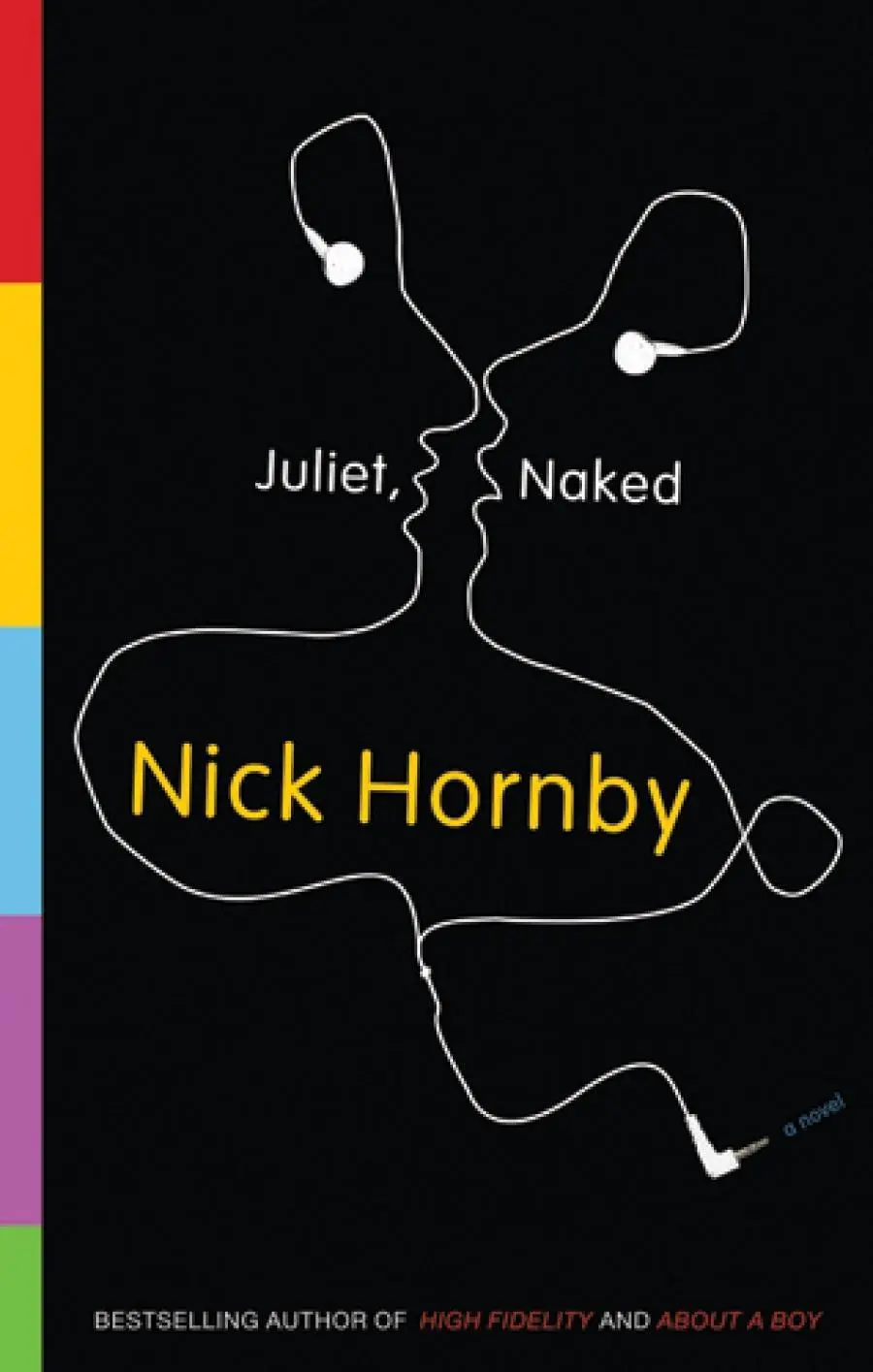
- Название:Juliet, Naked
- Автор:
- Издательство:Riverhead Books
- Жанр:
- Год:2009
- Город:New York
- ISBN:978-1-59448-887-0
- Рейтинг книги:4 / 5. Голосов: 1
-
Избранное:Добавить в избранное
- Отзывы:
-
Ваша оценка:
Juliet, Naked: краткое содержание, описание и аннотация
Предлагаем к чтению аннотацию, описание, краткое содержание или предисловие (зависит от того, что написал сам автор книги «Juliet, Naked»). Если вы не нашли необходимую информацию о книге — напишите в комментариях, мы постараемся отыскать её.
About a Boy
High Fidelity Nick Hornby returns to his roots—music and messy relationships—in this funny and touching new novel which thoughtfully and sympathetically looks at how lives can be wasted but how they are never beyond redemption. Annie lives in a dull town on England’s bleak east coast and is in a relationship with Duncan which mirrors the place; Tucker was once a brilliant songwriter and performer, who’s gone into seclusion in rural America—or at least that’s what his fans think. Duncan is obsessed with Tucker’s work, to the point of derangement, and when Annie dares to go public on her dislike of his latest album, there are quite unexpected, life-changing consequences for all three.
Nick Hornby uses this intriguing canvas to explore why it is we so often let the early promise of relationships, ambition and indeed life evaporate. And he comes to some surprisingly optimistic conclusions about the struggle to live up to one’s promise.
Juliet, Naked — читать онлайн бесплатно полную книгу (весь текст) целиком
Ниже представлен текст книги, разбитый по страницам. Система сохранения места последней прочитанной страницы, позволяет с удобством читать онлайн бесплатно книгу «Juliet, Naked», без необходимости каждый раз заново искать на чём Вы остановились. Поставьте закладку, и сможете в любой момент перейти на страницу, на которой закончили чтение.
Интервал:
Закладка:
“I hope so. I’m pretty sure I’m having a heart attack.”
There are all sorts of causes of ripples of movement across continents: floods and famine, revolution, large international sports events. In this case, however, the trigger was the sudden illness of one middle-aged man. Telephones rang in houses and apartments across the U.S. and Europe, and they were answered by attractive, still-slender women in their thirties and forties and early fifties. Hands were clapped to mouths, more phone calls were made, reassurances were given by careful soft voices. Flights were booked, passports were found, arrangements were canceled. The wives and children of Tucker Crowe were on their way to see him.
It was all Lizzie’s idea. In real life, she was a sentimental young woman, frequently moved to tears by pets and children and romantic comedies; but life with Tucker wasn’t real life, not least because there was so little of it, and the time she had with him always became overwhelmed by the time she had never had. How could it not? It wasn’t a fair fight. Just the sight and sound of him made her shrill and resentful: she hated the way her voice rose by an octave when they talked. But when she went to see him in his hospital room, he was asleep, sedated and helpless, and she didn’t feel angry anymore. She could be a dutiful and loving daughter, as long as he just lay there. When he awoke, she was determined to talk to him in the same voice she used for the people she loved.
She’d been told that he wouldn’t die, but that wasn’t the point: they had to seize the moment. If she felt more goodwill toward Tucker than she had ever managed to muster before, then surely everyone else was feeling it, too? And she couldn’t help believing that some kind of gathering, some attempt to connect a previously incoherent family, is what he would want. It wasn’t her fault that she didn’t know him at all.
In the early days of his career, Tucker had collected stories of musicians’ bad behavior as if they were baseball cards. They fascinated him not because he wanted to emulate the musicians concerned, but because he was a moralist, and the stories were so unambiguously appalling that they served as a useful piloting guide: in his line of work, it didn’t take much to gain a reputation as a decent human being. As long as you didn’t hurl a girl out of a window when you’d finished with her, people thought you were Gandhi. He’d even got into fights a couple of times, in a pompous attempt to protect somebody’s honor—a girl, a roadie, a motel receptionist. Once, when he’d punched the obnoxious bassist of an indie-rock band that ended up filling stadiums, he was asked who’d died and made him fucking king. The question was rhetorical, of course, but he’d ended up thinking about it. Why couldn’t he let these young men behave like young men? Musicians had been assholes since the day the lute was invented, so what did he think he was going to achieve by pushing a couple around when they’d had a drink? For a while, he blamed the kind of novels he read, and he blamed the decency of his parents, and he blamed his brother, who had managed to kill himself by driving into a wall when he was drunk. Books and parents and a tragic fuckup brother, he felt, had given him a solid ethical grounding. He could see now that he’d always been heading for a fall. It turned out that he was the kind of moralist who abhorred the behavior of others because he was so scared of his own weakness; the more he whipped himself into a frenzy of disapproval, the harder it would be to cave in without losing face. He was certainly right to be afraid. When he met Julie Beatty, he discovered that there wasn’t very much to him aside from weakness.
When he woke up that morning, Tucker Crowe had no idea that he would end the day by walking out on his own life, but, if he’d known, he wouldn’t have minded much, because he was sick of it. If you’d asked him what the problem was… Well, if you had asked him, he wouldn’t have said anything, because he liked to remain laconic, cryptic and gently satirical at all times, because it was cooler that way. Who are you, to be asking Tucker Crowe questions? Some fucking rock journalist? Or, even worse, a fan? But if he’d asked himself—which he did, sometimes, when he wasn’t drunk or asleep—he’d tell himself (exclusively) that what made him unhappiest on a daily basis was this: he had come to the inescapable and unhappy conclusion that Juliet , the album he was currently promoting every night onstage, was utterly inauthentic, completely phony, full of melodrama and bullshit and he hated it.
This wasn’t necessarily a problem. Bands were always promoting product that they didn’t like very much, and presumably actors and writers did the same: something had to be your worst piece of work. But Juliet was different, because it was the only record Tucker had ever made that people seemed to like. It hadn’t sold many copies, but over the last few months credulous college kids who’d never read or heard anything containing real pain, let alone experienced it firsthand, were turning up at shows in the hundreds and singing along to every word of every song. They swallowed Tucker’s portentous, self-righteous, whiny rage whole, as if it meant something to them, and the only way he could deal with them was to close his eyes and aim his voice somewhere just over their heads. (This coping mechanism, inevitably, had led a reviewer to describe him as “still lost in his pain.”) It wasn’t as though he thought the songs were entirely without merit. Musically, they were pretty good, and he and the band had got better at playing them, too; most nights they built up a pretty ferocious head of steam. “You and Your Perfect Life,” which closed the show every night, was a real tour de force now, and in the midsection of the song, right before the guitar solo, Tucker had taken to incorporating fragments of other famous love songs from an earlier time: “When Something Is Wrong with My Baby” one night; “I’d Rather Go Blind” the next. Sometimes he dropped down on one knee to sing them, and sometimes audiences rose to their feet, and sometimes he felt as though he were a proper entertainer, someone whose job it was to make extravagant emotional gestures to help people feel. And the lyrics for “You and Your Perfect Life” weren’t too shabby either, even if they were his. He’d dressed up his rejection by Julie Beatty in some pretty fancy clothes, he thought.
No, the trouble was with Julie Beatty herself. She was an idiot, an airhead, a shallow, vain and uninteresting model who happened to be awfully pretty, and Tucker had discovered this shortly after a collection of hymns to her mystery and power had been presented to an apparently awestruck public. When she first heard the album, she was so moved by Tucker’s misery that she promptly left her husband for a second time—the poor guy must have had a crick in his neck by then, from watching his wife running up and down their stairs with a suitcase—and offered herself up to Tucker like a gaudily wrapped present; after three days holed up with her in a hotel room, it became apparent to him that he’d have more in common with a sixteen-year-old Nebraskan cheerleader. She didn’t read, didn’t talk, didn’t think, and she was the vainest human being he’d ever met. What had he been thinking? He’d been drunk when he met her the first time around, and then there’d been the whole sneaking-around drama of it, which in Tucker’s experience always added another level of intensity; but it wasn’t just that. He had wanted to live in her world. He wanted to know the people she knew; it was his right to go over to Faye Dunaway’s house for dinner. He was owed that. He had the talent, but he didn’t have the lifestyle that he felt should accompany that talent. In other words, he’d behaved like an asshole, and Juliet was going to serve as some kind of permanent reminder of his embarrassment and shame.
Читать дальшеИнтервал:
Закладка:
Похожие книги на «Juliet, Naked»
Представляем Вашему вниманию похожие книги на «Juliet, Naked» списком для выбора. Мы отобрали схожую по названию и смыслу литературу в надежде предоставить читателям больше вариантов отыскать новые, интересные, ещё непрочитанные произведения.







Обсуждение, отзывы о книге «Juliet, Naked» и просто собственные мнения читателей. Оставьте ваши комментарии, напишите, что Вы думаете о произведении, его смысле или главных героях. Укажите что конкретно понравилось, а что нет, и почему Вы так считаете.