Mo Yan - Sandalwood Death
Здесь есть возможность читать онлайн «Mo Yan - Sandalwood Death» весь текст электронной книги совершенно бесплатно (целиком полную версию без сокращений). В некоторых случаях можно слушать аудио, скачать через торрент в формате fb2 и присутствует краткое содержание. Город: Norman, Год выпуска: 2013, ISBN: 2013, Издательство: University of Oklahoma Press, Жанр: Современная проза, на английском языке. Описание произведения, (предисловие) а так же отзывы посетителей доступны на портале библиотеки ЛибКат.
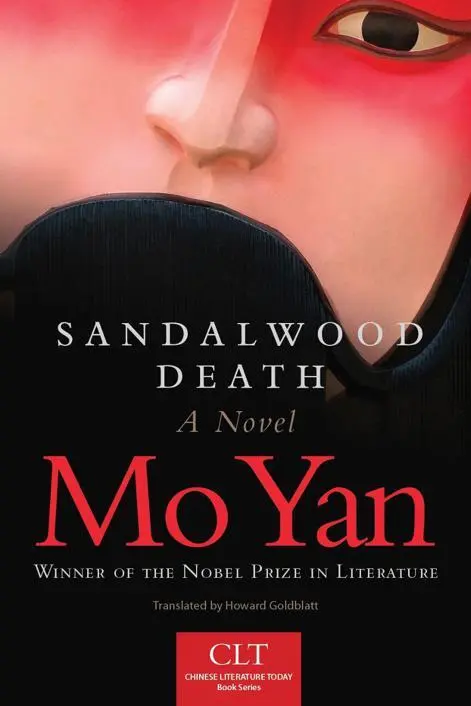
- Название:Sandalwood Death
- Автор:
- Издательство:University of Oklahoma Press
- Жанр:
- Год:2013
- Город:Norman
- ISBN:978-0-8061-4339-2
- Рейтинг книги:3 / 5. Голосов: 1
-
Избранное:Добавить в избранное
- Отзывы:
-
Ваша оценка:
Sandalwood Death: краткое содержание, описание и аннотация
Предлагаем к чтению аннотацию, описание, краткое содержание или предисловие (зависит от того, что написал сам автор книги «Sandalwood Death»). Если вы не нашли необходимую информацию о книге — напишите в комментариях, мы постараемся отыскать её.
Sandalwood Death Filled with the sensual imagery and lacerating expressions for which Mo Yan is so celebrated
brilliantly exhibits a range of artistic styles, from stylized arias and poetry to the antiquated idiom of late Imperial China to contemporary prose. Its starkly beautiful language is here masterfully rendered into English by renowned translator Howard Goldblatt.
Sandalwood Death — читать онлайн бесплатно полную книгу (весь текст) целиком
Ниже представлен текст книги, разбитый по страницам. Система сохранения места последней прочитанной страницы, позволяет с удобством читать онлайн бесплатно книгу «Sandalwood Death», без необходимости каждый раз заново искать на чём Вы остановились. Поставьте закладку, и сможете в любой момент перейти на страницу, на которой закончили чтение.
Интервал:
Закладка:
When the early birds had exhausted their songs, all the many heroic warriors, in twos and threes, mustered at the bridgehead, as if on their way to market. General Yue was disappointed in the sloppy way they answered the call, but upon further consideration, he decided not to punish them, as he might have done. Ten days earlier, after all, they had been farmers, used to being carefree and undisciplined, and joining him now, during a holiday season between crops, spoke well of them. In fact, some of the more committed individuals had actually shown up before him.
General Yue looked up into the misty sky. Though he could not see the sun, he figured it must be mid-morning. He had wanted to surprise the Germans in their beds, but it was too late for that. The plan to attack, however, would not be affected, given the difficulty in bringing together so many people at one time. The good news was that enthusiasm was running high. The men were talking and laughing, unlike the days soon after the massacre, when so many families had lost loved ones. After conferring with his two guardians, General Yue decided to start without delay by performing rites before the altar and the flags.
Sixi, the youngster in the cat-skin cap, who had been assigned to transmit General Yue’s orders, raised a ferocious beat on his gong to quiet the noisy gathering of warriors. The General jumped onto a bench and issued his orders:
“Find your contingents and squads, then line up to pay your respects at the divine altar.”
Following a brief commotion, they managed to fall in line, all sporting red turbans and red sashes. Some of them—descendants of men trained in martial arts, families in possession of weapons of war—carried spears; others held cleavers, and still others had shown up with tiger-tail whips. Far more men had arrived with ordinary tools: shovels, pitchforks, double-sided hooks, and manure rakes. But there is strength in numbers, and seven or eight hundred men made a force to be reckoned with. General Yue’s excitement was palpable, for he knew that only by being fired in a furnace does iron become steel, and only by the baptism of battle does a group of men become a fighting force. Transforming a bunch of farmers into the assemblage before him in a mere ten days was nothing short of miraculous. Having no experience in the business of organizing and deploying forces, he had relied on instructions passed quietly to him by Zhu Bajie, who had put in time as a soldier at a small military center in Tianjin, where he had received training in modern drilling, and had even had the privilege of seeing the famous Yuan Shikai, who was overseeing training at the center.
“Pay respects at the altar!” General Yue ordered. “And to the flags!”
The so-called divine altar was in reality an octagonal table with an incense burner. A pair of flags on fresh, unstripped willow branches had been planted in the ground behind the table, one white, the other red. The red flag was the altar banner, with the seven stars of the Big Dipper embroidered in white. The white flag was the commander’s banner, with a large “Yue” embroidered in red. The needlework was the contribution of two nimble-fingered unmarried daughters of tailor Du. Married women were not permitted to do this work, since the hands of married women are considered dirty and would break the spell.
A drizzle began to fall while they were paying their respects to the flags; there was no wind. Both flags hung limply. A flag that did not wave spoiled an otherwise perfect scene, but that could not be helped. On the other hand, the red turbans were resplendent against the overcast sky and in the light drizzle. The red wetness filled General Yue’s eyes and raised his excitement to a fever pitch.
In his role as the young hero Ai Hu in the novel The Seven Heroes and Five Gallants , Sixi raised an ear-splitting din on his gong; he had been banging it so hard over a period of days that he had nearly destroyed the brass instrument and had broken the skin on the hand that was holding it, which was now wrapped in white cloth. The urgent beat of the gong focused the men’s minds and bodies on the task before them. A solemn, reverential mood settled heavily over the assemblage; a mystical aura grew in intensity. Sun Wukong and Zhu Bajie lifted a lamb with its legs bound onto the octagonal table. The animal struggled, raising its head up off the table, and rolled its eyes as it pierced the air with a fearful bleat, a cry that wound its way around the men’s hearts and aroused sympathy for the animal. But sympathy was an emotion that had no place at that moment. War entails sacrifice. Before taking on the foreign devils, it was important to first sacrifice a lamb in anticipation of auspicious results. Sun Wukong pressed the lamb hard onto the table and stretched out its neck; Zhu Bajie picked up a hay-chopping knife and gripped the handle with both hands after spitting in them. He then took two steps backward, raised the knife over his head, and, with a shout, chopped the lamb’s head off. Sun Wukong held the severed head up to show everyone as a fountain of blood spewed from the animal’s truncated neck.
General Yue, a grave look frozen on his face, caught some of the blood in his hands and splashed it onto the limp flags, then got down on his knees and kowtowed. His men fell to their knees. After the General was back on his feet, he splashed the remaining blood over the heads of the people; there were far too many people and too little blood to reach more than a few of those nearest to him, who were thrilled to have been so honored. As he released the blood in his hands, the General chanted something, a request to all the spirits, since, as he had made clear to all, there would not be enough time to invite each and every spirit to attach itself to one of the men’s bodies. And so General Yue assumed the task of inviting all the spirits. “If you are pure of heart, the spirits will come,” he had said. Now he told them to call up their individual spirits in their minds and to enter a semi-hypnotic state. After the passage of some time, the General intoned loudly:
“Spirits of Heaven, spirits of the Earth, I respectfully invite you patriarchs to make your presence known. First, the Tang monk Tripitaka and Zhu Bajie; second, Sandy the Monk and Monkey Sun Wukong; third, Liu Bei and Zhuge Liang; fourth, Guan Gong and Zhao Zilong; fifth, Ji Dian, the Buddha; sixth, Li Kui, the Black Whirlwind; seventh, Shi Qian and Yang Xiangwu; eighth, Wu Song and Luo Cheng; ninth, Bianque, curer of maladies; and tenth, I invite the Heavenly King Natha and his three sons—Jinzha, Muzha, and Nazha—to lead a hundred thousand celestial soldiers down to earth to help exterminate the foreign army, for when that is done, the world will be at peace. I beseech the Jade Emperor to urgently give the command——”
The response was immediate, as a rush of extraordinary power infused the body of every man there; blood vessels dilated, energy levels rose, muscles grew taut—they were bursting with strength. A chorus of shouts rent the sky as they leaped and jumped, like big, predatory cats; they frothed at the mouth and glared in anger, flexing arms and kicking legs, every one of them assuming a superhuman pose.
General Yue issued his command:
“We march!”
The General, club in hand, set out on his horse. Sun Wukong, with the red altar flag, Zhu Bajie, with the white commander’s flag, and the little hero, Ai Hu, the gong beater, were hard on his heels. The spirited army marched behind them shouting out a cadence.
Masang Township had been built on the bank of the river; its southern boundary was the great Masang River levee, while a seemingly endless plain marked its northern end. A semicircular defensive wall, with a western, an eastern, and a northern gate, had been built to keep roving bandits at bay. The wall, as tall as an average man, was fronted by a moat with a drawbridge.
Читать дальшеИнтервал:
Закладка:
Похожие книги на «Sandalwood Death»
Представляем Вашему вниманию похожие книги на «Sandalwood Death» списком для выбора. Мы отобрали схожую по названию и смыслу литературу в надежде предоставить читателям больше вариантов отыскать новые, интересные, ещё непрочитанные произведения.


Обсуждение, отзывы о книге «Sandalwood Death» и просто собственные мнения читателей. Оставьте ваши комментарии, напишите, что Вы думаете о произведении, его смысле или главных героях. Укажите что конкретно понравилось, а что нет, и почему Вы так считаете.