Mo Yan - Sandalwood Death
Здесь есть возможность читать онлайн «Mo Yan - Sandalwood Death» весь текст электронной книги совершенно бесплатно (целиком полную версию без сокращений). В некоторых случаях можно слушать аудио, скачать через торрент в формате fb2 и присутствует краткое содержание. Город: Norman, Год выпуска: 2013, ISBN: 2013, Издательство: University of Oklahoma Press, Жанр: Современная проза, на английском языке. Описание произведения, (предисловие) а так же отзывы посетителей доступны на портале библиотеки ЛибКат.
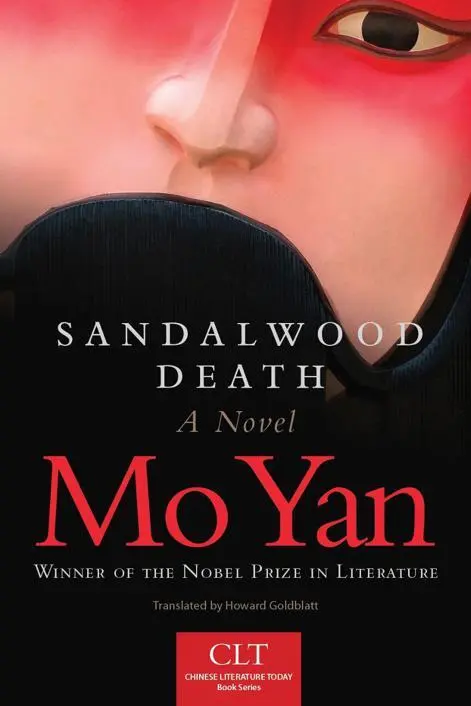
- Название:Sandalwood Death
- Автор:
- Издательство:University of Oklahoma Press
- Жанр:
- Год:2013
- Город:Norman
- ISBN:978-0-8061-4339-2
- Рейтинг книги:3 / 5. Голосов: 1
-
Избранное:Добавить в избранное
- Отзывы:
-
Ваша оценка:
Sandalwood Death: краткое содержание, описание и аннотация
Предлагаем к чтению аннотацию, описание, краткое содержание или предисловие (зависит от того, что написал сам автор книги «Sandalwood Death»). Если вы не нашли необходимую информацию о книге — напишите в комментариях, мы постараемся отыскать её.
Sandalwood Death Filled with the sensual imagery and lacerating expressions for which Mo Yan is so celebrated
brilliantly exhibits a range of artistic styles, from stylized arias and poetry to the antiquated idiom of late Imperial China to contemporary prose. Its starkly beautiful language is here masterfully rendered into English by renowned translator Howard Goldblatt.
Sandalwood Death — читать онлайн бесплатно полную книгу (весь текст) целиком
Ниже представлен текст книги, разбитый по страницам. Система сохранения места последней прочитанной страницы, позволяет с удобством читать онлайн бесплатно книгу «Sandalwood Death», без необходимости каждый раз заново искать на чём Вы остановились. Поставьте закладку, и сможете в любой момент перейти на страницу, на которой закончили чтение.
Интервал:
Закладка:
Sun Bing disbanded the opera troupe. Since he’d already had an intimate relationship with Little Peach, an orphan who sang the female leads, he went ahead and married her. They seemed well suited to one another, despite the substantial difference in age. With the silver given by Magistrate Qian, they bought a compound that faced the street, made some modifications, and opened the Sun Family Teashop. In the spring, Little Peach delivered twins, a boy and a girl, which made him deliriously happy. Magistrate Qian sent a congratulatory gift, a pair of silver necklaces, each weighing an ounce. The news spread like a thunderclap through Northeast Gaomi Township. Congratulations arrived from so many township residents that a banquet consisting of forty tables was necessary as an expression of appreciation. In their private conversations, people began referring to Magistrate Qian as Sun Bing’s semi-son-in-law and to Sun Meiniang as a semi-Magistrate. When this talk reached Sun Bing’s ears, he was, of course, mortified, but as time passed, apathy set in. Now that he had a smooth chin, like a wild horse shorn of its mane and tail, he had lost the air of intimidation and was no longer so easy to anger. A nearly permanent scowl was replaced by a gentle, mellow look. Life was good for the new Sun Bing. His face had regained its color, he was at peace with the world, and he had become a country squire.
————
3
————
At mid-morning, customers filled the teashop. Sun Bing, who was wearing only a thin jacket with a towel draped over his shoulder, was sweating as he went from table to table with a long-nosed brass teapot to fill people’s glasses. As a one-time singer of old men’s roles in opera, he had a sonorous voice with a tragic air, a talent he put to use in his business, shouting out orders as he worked, rhythmical and cadenced. He moved quickly and poured with great accuracy, his hands and feet in perfect harmony with a distinct tempo. His ears seemed always to echo with the enchanting sounds of Maoqiang drumbeats, the strumming of a Maoqiang zither, a lute, and flutes: Lin Chong Flees at Night. Xu Ce Runs to the City Wall. Three Kingdoms Operas: The Wind and Wave Pavilion, Wang Han Borrows Money at Year’s End, Chang Mao Cries over His Cat… As he made his rounds with the teapot, those operas drove out thoughts of his past and concerns for the future, keeping him focused on the joy that his work brought him. A kettle whistled in the yard out back. He ran out to replenish his teapot with boiling water. There his helper, Stone, stood by the fire, ashes in his hair and soot on his face, which made his teeth look snowy white. He reacted to the appearance of the shopkeeper by redoubling his efforts with the bellows beneath a four-burner stove on top of which sat four brass teapots. The fire blazed and crackled as drops of boiling water splashed onto the flames and turned to white, fragrant steam. Little Peach was holding a toddler in each arm, on her way to the Masang Market to take in the sights. The children’s laughing faces were like bright, shiny flowers.
“Bao’er, Yun’er, say hello to Dieh-dieh,” she said to them.
Together they slurred a greeting. Sun Bing set down his teapot, wiped his hands on his sleeves, and picked them up, one in each arm; and as he affectionately touched their tender little faces with his scarred chin, he breathed in their delightful milk smell. They giggled from the tickly feeling, which all but melted his heart, like soft candy, the sweetness reaching a peak before turning slightly sour. Now he moved more quickly and nimbly in the shop; his voice had more of a ring than ever as he responded to his customers. He was all smiles, and even the dullest among them could tell that he was a happy man.
Managing to steal a minute out of the busy morning, he leaned against the counter, lit his pipe, and breathed in deeply. Looking out through the double door, he watched his wife and children mingle with the crowd as they headed to the market.
A rich man with big ears was sitting at the window table. His family name was Zhang, and while he had both a formal name—Haogu—and a style name—Nianzu—everyone called him Second Master. For a man in his early fifties, he had a healthy, ruddy complexion. Perched atop his rounded head was a black satin skullcap into which a rectangular piece of green jade had been sewn. Second Master was Northeast Gaomi Township’s preeminent scholar, a man who had purchased an appointment to the Imperial College. Having traveled south to the Yangtze Valley and north beyond the Great Wall, he told of spending a night with Sai Jinhua, the notorious courtesan of Peking. No one who started a conversation with him ever found him unworthy of bringing it to an end. A regular at the Sun Family Teashop, he monopolized every conversation for as long as he sat there. Picking up his glazed porcelain teacup, he removed the lid with three fingers and made the leaves on top swirl a bit before blowing on the surface and taking a sip.
“Proprietor,” he called out after smacking his lips, “why is this tea so bland? It has hardly any taste.”
After hurriedly knocking the ashes out of his pipe, Sun Bing trotted over and, with a bit of bowing and scraping, said:
“Second Master, it’s the same tea you always drink—the best Dragon Well.”
Second Master took a second sip.
“No, it still lacks taste.”
“Why don’t I make some in a gourd?” Sun Bing said, anxious to please.
“Scorch it ever so slightly.”
Sun ran back behind the counter, where he stuck a silver needle into an opium pill and held it over a bean-oil lantern that burned all day long, turning it round and round. A peculiar odor spread throughout the shop.
After drinking half a cup of the strong, opium-infused tea, Second Master was clearly invigorated. His gaze swept the faces of the other customers like a pair of lively fish, and Sun Bing knew that he was about to launch into one of his voluble monologues. Gaunt, sallow-faced Young Master Wu Da opened his mouth to reveal teeth stained black by tea and tobacco.
“Second Master,” he said, “any news of the railway?”
Second Master put down his teacup, puckered his upper lip, emitted an audible snort, and, having formed a response, declaimed:
“Of course there is. I have told you people about our family friend Jiang Runhua of the Wandong District, the lead editorial writer for the Globe , who has installed two teletypes to receive the latest news from Japan and the West. Well, yesterday he received an urgent message that the Old Buddha Cixi received Kaiser Wilhelm’s special envoy in the Longevity Hall of the Summer Palace to discuss the construction of the rail line between Qingdao and Jinan.”
Young Master Wu clapped his hands.
“Second Master,” he said, “don’t tell me, let me guess.”
“Go ahead, guess,” Second Master said. “If you’re right, yours truly will pay for everyone’s tea.”
“Second Master is a forthright man who is unafraid to show his emotions,” Young Master Wu said. “No wonder the people all love him. Here is my guess: Our mass petition worked. They are going to alter the planned route.”
“Glory be! Great news!” muttered an old man with a white beard. “The Old Buddha is wise, truly wise.”
But Second Master shook his head and said with a sigh:
“Sorry, gentlemen, but today you will have to pay for your own tea.”
“They’re not going to change it?” Young Master Wu said, his hackles rising. “Our mass petition was a waste of time, is that it?”
“Your mass petition was probably used by some official as toilet paper,” Second Master said resentfully. “Just who do you think you are? The Old Buddha said, ‘We can alter the course of the Yellow River, but not the course of the Jiaozhou-Jinan rail line.’ ”
Читать дальшеИнтервал:
Закладка:
Похожие книги на «Sandalwood Death»
Представляем Вашему вниманию похожие книги на «Sandalwood Death» списком для выбора. Мы отобрали схожую по названию и смыслу литературу в надежде предоставить читателям больше вариантов отыскать новые, интересные, ещё непрочитанные произведения.

Обсуждение, отзывы о книге «Sandalwood Death» и просто собственные мнения читателей. Оставьте ваши комментарии, напишите, что Вы думаете о произведении, его смысле или главных героях. Укажите что конкретно понравилось, а что нет, и почему Вы так считаете.