Monika Fagerholm - The Glitter Scene
Здесь есть возможность читать онлайн «Monika Fagerholm - The Glitter Scene» весь текст электронной книги совершенно бесплатно (целиком полную версию без сокращений). В некоторых случаях можно слушать аудио, скачать через торрент в формате fb2 и присутствует краткое содержание. Город: New York, Год выпуска: 2011, ISBN: 2011, Издательство: Other Press, Жанр: Современная проза, на английском языке. Описание произведения, (предисловие) а так же отзывы посетителей доступны на портале библиотеки ЛибКат.
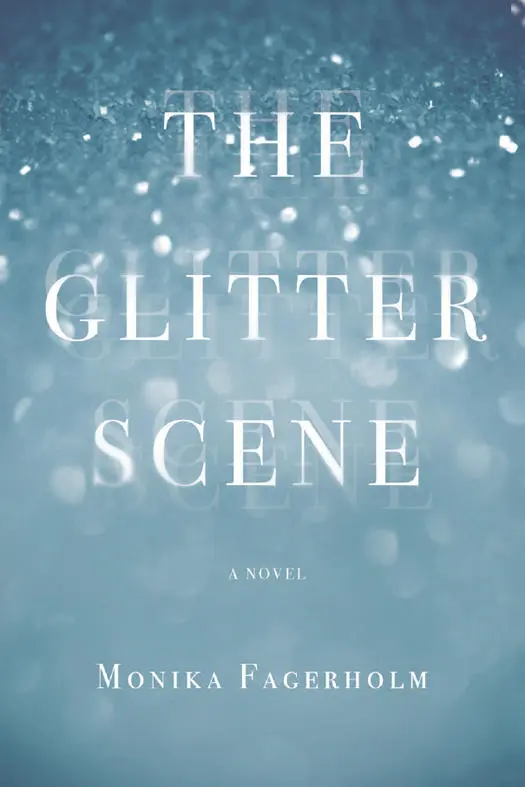
- Название:The Glitter Scene
- Автор:
- Издательство:Other Press
- Жанр:
- Год:2011
- Город:New York
- ISBN:1590513053
- Рейтинг книги:4 / 5. Голосов: 1
-
Избранное:Добавить в избранное
- Отзывы:
-
Ваша оценка:
The Glitter Scene: краткое содержание, описание и аннотация
Предлагаем к чтению аннотацию, описание, краткое содержание или предисловие (зависит от того, что написал сам автор книги «The Glitter Scene»). Если вы не нашли необходимую информацию о книге — напишите в комментариях, мы постараемся отыскать её.
It isn’t until Ulla tells her the local lore about the American girl and the tragedy that took place more than thirty years before that Johanna begins to question how her parents fit into the story. She sets out to unravel her family history, the identity of her mother, and the dark secrets long buried with her father.
In the process of opening closed doors, others in the community reflect back on the town’s history, on their youth, and on the dreams that play in their minds. Soon a new story emerges, that stirs up Johanna’s greatest fears, but ultimately leads to the answers she is searching for.
The Glitter Scene
The Glitter Scene — читать онлайн бесплатно полную книгу (весь текст) целиком
Ниже представлен текст книги, разбитый по страницам. Система сохранения места последней прочитанной страницы, позволяет с удобством читать онлайн бесплатно книгу «The Glitter Scene», без необходимости каждый раз заново искать на чём Вы остановились. Поставьте закладку, и сможете в любой момент перейти на страницу, на которой закончили чтение.
Интервал:
Закладка:
In the silence of the parlor this afternoon: the sound of darts hitting the dartboard on the wall of the barn. Plonk, plonk . Rugs being beaten: damp, damp . The voices in the yard. I can’t make out what they’re saying, but ordinary voices, no particular energy or excitement in them, but not anything else either.
All of this which is going to disappear. I don’t know that yet. But still, I know it, right in this moment. The saturation of summer, the completion. Me in the parlor, off to the side. Sweaty bills in my underpants, but suddenly in my head, me, so exactly in the middle. Everyone who is suddenly looking at me, clapping their hands loudly. The cousin’s papa too, he isn’t impossible either really, Rita and Bengt and the cousin’s papa, in the yard. They’re even laughing at something together, a dart that lands in a funny way with the feathered side first on the dart board. Bonk . Ends up on the ground.
At the same time. Exactly because of that. The moment that will follow, unavoidable. The summer that throws you away. The ordinary time that disappears. And that is now.
The cousin’s papa has turned around and thrown a hasty glance at the cousin’s house. Looks in my direction. Doesn’t see me, it is impossible anyway. Turns toward the dartboard again, throws the dart toward the barn, it strikes the ring, right in the bull’s-eye.
An omen that nothing can become like it is now.
I’m back out in the yard again. Same day, in the afternoon. Money in my pants. What now?
Alone at the cousin’s property. I shilly-shally up toward the mailbox where there are rarely any letters addressed to me, except when I got the Lifeguard’s Medal from the Lifeguards’ Club a few years ago, in the winter after the summer I rescued Susette Packlén from drowning at the public beach on the Second Cape—a registered letter that required the signature of the addressee, so the postal worker drove onto the property and came up and knocked on the door to the cousin’s house and I got to sign myself and confirm the delivery. I who had been Solveig in the blue swimsuit, Sister Blue, during the summer.
Everyone has gone inside except Rita and Bengt who have disappeared off somewhere else. Bengt to the Second Cape probably, where he is spending more and more time together with the American girl Eddie de Wire, especially on the days that Björn is at work. Rita to our cottage, maybe to look for me. “Where’s Solveig?” she had shouted out in the yard while I was still inside the parlor. To the cottage; she thought I was there.
I stand in the yard and think about my plan. Brilliant. And if you have a brilliant plan then you shouldn’t shout it from the rooftops, everywhere.
The problem is simply this: money in my pants, I realize right here in the yard, that I don’t have a plan.
So now what?
Go straight to the cousin’s mama? No, not that. There would just be trouble. The cousin’s mama is the police commissioner’s daughter and understands the difference between right and wrong—all of these old magazines, True Crimes .
“HAVE YOU, Solveig?” The cousin’s mama would ask and all the sun cats would disappear, smack, because when the cousin’s mama looks at you in a certain way then you can’t lie.
“Now you go and return that money to the cousin’s papa and then you say you’re sorry.”
The cousin’s mama would say that too. Regardless of whether or not all hell would break loose because of it, regardless of the intention and the goal.
“Cat got your tongue?”
But there comes someone driving home on his moped.
It’s Björn, who is shouting.
No not that!
Suddenly this power inside me, deliverance, how I become happy! Björn and me: the two of us, we’re the ones who will. There it comes, like a letter in the mail, in just that moment it feels like I’ve known it the whole time. Björn and me. And everything falls into place inside my head.
“I have something…” I mumble, pulling Björn after me inside the barn where I initiate him in a plan I don’t really have. Afterward it’s uncertain what is said and actually what is agreed upon, if anything at all. I don’t think about that then, I’m just so relieved.
Not many words are exchanged: Björn is not someone with whom you sit and discuss, so to speak. And I am too shy: suddenly there in the barn with all of that happiness I get the idea that I have a crush on him. That love comes up right then and exactly in that second: maybe we will get married when we grow up. Despite the fact that we’re cousins, we aren’t blood relations and it’s rarely the case that your first love lasts a lifetime. If you lose one you get another thousand! And suddenly I’m one of these thousand, maybe downright already the second one, or the third one, and besides I also have a pretty hard time in a discreet way, back turned toward Björn in the darkness of the barn, getting those damp-with-sweat-bills out of my clothes.
But something is decided, with the plan, that is to say. For example, Björn’s surprise when he sees the money and when I tell him where it came from and how I found it. And about the cousin’s papa, the cousin’s mama. Doris Flinkenberg. I’m just about to tell him about the parlor too, in a general kind of way, about my own special place that is just mine and no one else’s. Initiate him in the secret too, like when the words can start pouring out of someone who is otherwise taciturn like Bengt with the American girl because you’ve fallen in love.
But then suddenly before I’ve even gotten started, Björn’s instant surprise about the money and the entire story about the cousin’s mama and the cousin’s papa and Doris Flinkenberg is gone and it turns into pure and simple rage and shortly thereafter the American girl arrives.
“That idiot,” Björn has time to utter, so furious in the midst of everything, like I have never heard him before. Under ordinary circumstances when Björn gets angry he goes off on his own and comes back after a while and then everything is normal again. “That idiot,” he spits out again and that it can’t go on like this and that’s saying a lot coming from Björn but then both of us see the American girl Eddie de Wire come strolling across the yard in the direction of the barn and there is no opportunity to say anything more at all but he has time to take the money and say, I think, we are going to take care of the matter and that this will stay between the two of us and that neither of us is going to say anything to anyone—and we shake on it.
Then Eddie de Wire comes.
“Hey, girl!” she says to me as I’m leaving all excited and almost rush right into her arms. “Don’t run away.”
Lights a cigarette. Björn also gets out his pack and lighter.
I don’t run away. So then I’m there for a while, in the opening of the barn, at the cousin’s property, Solveig, with two teenagers, the three of us together.
The time it takes for a teenager to smoke a cigarette: that is what I experience of the American girl Eddie de Wire while she is still alive. Eddie, in white pants, white blouse, and a light blue sweater. All three of us sitting in the opening of the barn, silent. Björn and Eddie next to each other, me a little bit farther down on the steps. Eddie is humming a song. Not the song like the messed-up song that Doris and Sandra start singing much later. Just an ordinary one. Ordinary pop music, the kind that’s popular back then. Björn puts his arm around her. They giggle. Not meanly toward me or anyone else, because they aren’t talking about anything in particular, just giggling. The way two teenagers do, quite simply, together; two who like each other in a normal way too. Naturally I understand exactly during those minutes that I’m not going to marry Björn later either, he’s just way too old for me, so I giggle a little bit too.
Читать дальшеИнтервал:
Закладка:
Похожие книги на «The Glitter Scene»
Представляем Вашему вниманию похожие книги на «The Glitter Scene» списком для выбора. Мы отобрали схожую по названию и смыслу литературу в надежде предоставить читателям больше вариантов отыскать новые, интересные, ещё непрочитанные произведения.












Обсуждение, отзывы о книге «The Glitter Scene» и просто собственные мнения читателей. Оставьте ваши комментарии, напишите, что Вы думаете о произведении, его смысле или главных героях. Укажите что конкретно понравилось, а что нет, и почему Вы так считаете.