Selma Dabbagh - Out of It
Здесь есть возможность читать онлайн «Selma Dabbagh - Out of It» весь текст электронной книги совершенно бесплатно (целиком полную версию без сокращений). В некоторых случаях можно слушать аудио, скачать через торрент в формате fb2 и присутствует краткое содержание. Город: London, Год выпуска: 2011, ISBN: 2011, Издательство: Bloomsbury Publishing, Жанр: Современная проза, на английском языке. Описание произведения, (предисловие) а так же отзывы посетителей доступны на портале библиотеки ЛибКат.
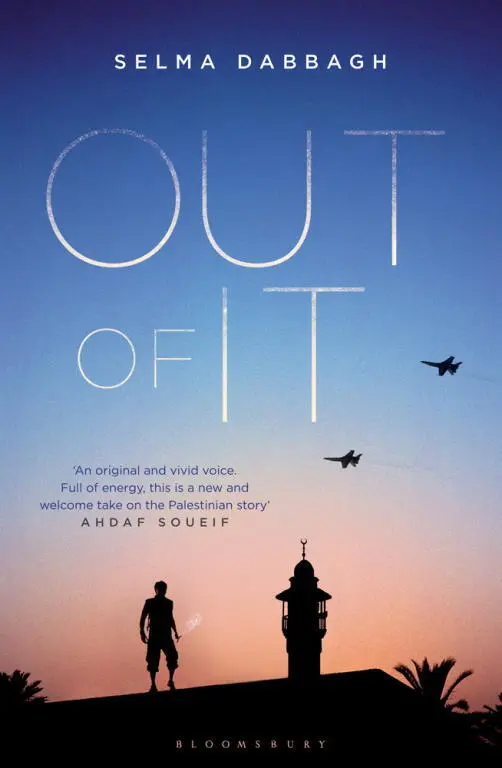
- Название:Out of It
- Автор:
- Издательство:Bloomsbury Publishing
- Жанр:
- Год:2011
- Город:London
- ISBN:978-1-4088-2430-6
- Рейтинг книги:5 / 5. Голосов: 1
-
Избранное:Добавить в избранное
- Отзывы:
-
Ваша оценка:
Out of It: краткое содержание, описание и аннотация
Предлагаем к чтению аннотацию, описание, краткое содержание или предисловие (зависит от того, что написал сам автор книги «Out of It»). Если вы не нашли необходимую информацию о книге — напишите в комментариях, мы постараемся отыскать её.
Meanwhile Sabri, the oldest brother of this disparate Palestinian family works on a history of Palestine from his wheelchair as their mother pickles vegetables and feuds with their neighbours.
Written with extraordinary humanity and humour, and moving between Gaza London and the Gulf, Out of It is a tale that redefines Palestine and its people. It follows the lives of Rashid and Iman as they try to forge paths for themselves in the midst of occupation, religious fundamentalism and the divisions between Palestinian factions. It tells of family secrets, unlikely love stories and unburied tragedies as it captures the frustrations and energies of the modern Arab world.
Out of It — читать онлайн бесплатно полную книгу (весь текст) целиком
Ниже представлен текст книги, разбитый по страницам. Система сохранения места последней прочитанной страницы, позволяет с удобством читать онлайн бесплатно книгу «Out of It», без необходимости каждый раз заново искать на чём Вы остановились. Поставьте закладку, и сможете в любой момент перейти на страницу, на которой закончили чтение.
Интервал:
Закладка:
You would not. You could not.
She found herself cajoling him, teasing him in her head, the sound of the words falling with her feet against the hard sandy surface she had now reached. You would not! You could not! You would… But that was probably a big part of it. Of why he would. She could not say that. She had to say something else when she stopped him (because of course she would stop him). She would say, ‘It’s enough that you tried,’ or, ‘You were ready to do it. That’s enough.’ The last one was better and she could say, ‘He can look after himself,’ but that didn’t convince even her and she found that she had to stop, because her breathing was too heavy, her head was full of blood and she didn’t know what she wanted ( who she wanted?) any more and a sick, hateful part of her wanted it done with, so that it was no longer her responsibility to act. Go on, kill yourself, you fool . I don’t care. Her face was wet, wet, wet. Enough. She had had enough.
She started running again, but in a way it was more like a running fall, stumbling over the earth somehow, anyhow, and she was still running when she heard the car start on the main road and the thing explode like a meteor hitting the earth, flames leaping up to lick at the sky behind the buildings just there, right there in front of her.
Chapter 50
Although the course of his family’s life had largely been determined by them and despite the fact that he had seen more of them and listened to more of them than most people would ever care to, Rashid had never actually used a gun. He released the safety catch of the one he now had (he knew that much from television), and put the leather strap across the back of his neck, since the sound behind him ( click! click! there it was again), or possibly above him, had started. His finger was in place, and surely the rest, he thought, was obvious, just a question of applying pressure.
A plane passed and then the street was completely silent again: no televisions, no babies, and no clicking sounds. And with the silence came the smells of rotting rubbish and cooked rice.
‘Hey! Ayyoubi!’ the voice had called out from the shadows at the side of the wall. ‘Hey!’
Whoever it was shouting was not more than two steps behind him. The voice was croaky but young. Rashid was further from the street lamp now, at least half his face would be in the shadows. He stopped and turned slightly. The boy stepped out into the centre of the road, the lamplight coming in behind him. He was wearing Sabri’s shoes on his sockless feet. A phone hung around his neck like a security tag.
Rashid could (and he was still holding himself back against the wall where it was darker) make a run for the car. He could shoot the boy, as he didn’t appear to be armed, but the boy was unlikely to be alone. But if he could shoot one, then another surely could not be so hard. He had not anticipated anyone; he had imagined that his choice, and not the execution of it, would be the hardest bit. But the boy was someone who could screw it all up. He could not do it; he could not shoot this boy while he was able to see Sabri’s unlaced brogues on those sockless feet. Rashid closed his eyes and moved the gun in front of him, but the boy must have just stepped away from the line of fire, towards him because his voice was now very close, next to Rashid’s face.
‘Hey. I thought there was something odd. I didn’t think you were walking like a man who had been shot,’ the boy said pleased at his own deduction. ‘What are you doing here? What are you doing in Ayyoubi’s clothes, with his gun? Where’s Ayyoubi?’
Rashid lowered the gun. Hopeless, even in this, he had failed.
‘You could get yourself killed, walking around like that.’
‘That was the point,’ Rashid said. ‘That was the point.’
The boy laughed and started cleaning at his teeth with a fingernail. ‘Easier ways to kill yourself; you don’t have to dress up in someone else’s clothes to do it.’ The kid chewed at the side of his mouth, trying to evaluate the extent of Rashid’s deception.
‘The point was to let him live,’ Rashid said, ‘as me.’
The boy laughed again. Ha! a cruel stupid laugh. ‘Why would you want to do that?’
‘It’s important that he lives. No one should be trying to get rid of him, particularly not one of us.’
‘They say he’s a traitor.’ The boy hawked out a large bolus of saliva from the back of his throat and propelled it out against the wall with his tongue. ‘Where is he, anyway?’
‘He’s not a traitor.’ Rashid was not sure how much the boy would understand, for however bright and darty the kid’s eyes were, he and the boy came from very different worlds on the same tiny piece of land. ‘Ayyoubi is a hero. He’s a leader, see? The only reason the others want him gone is because he made them look bad. He was trying to stop some of the others from stealing the people’s money for themselves.’
The boy was looking at Rashid curiously, his finger itching at the entrance of one nostril, one leg lifted up to scratch the other leg. Rashid stepped back a little. Probably the boy had fleas.
‘What’s it to you?’ Rashid continued. He felt a great urgency in the execution of his plan. He had to do this, end like this. It would cancel out everything else. A boy, the carrot boy, could not thwart it. He would not let him. ‘Listen, I die. They think Ayyoubi dies. Ayyoubi lives as me, goes away, comes back and saves Palestine. What’s it to you? You can pretend you never saw me. You can say, “Hey, yes. It was Ayyoubi. I saw him. He’s dead. Job done.” Ask them to give you a promotion or payment or whatever it is that you need from them. See? It’s easy.’ But if he could not trust this boy, there was little point in him going ahead.
The boy continued to watch Rashid who put his hand into his back pocket making the boy pull out his gun and aim it at Rashid’s body.
‘What are you doing?’ The boy had something cruel in him now. Rashid acted as though he had not seen either the look or the gun.
‘Calm down, calm down,’ Rashid said, bringing his hands in front of him. ‘You know, it’s good I saw you because I’ve got something for you. I was hoping to see you, but then this came up, so it was not going to be possible. Here.’
He handed over the dry-cleaning slip to the boy, who turned it over suspiciously.
‘What’s that?’
‘The ticket to a suit of great beauty,’ Rashid replied. ‘It’s being cleaned at Abu Faris’ and will be ready tomorrow. You take it. You pick it up. It goes with the shoes.’
‘Suit? What kind of suit?’ The boy looked at the ticket under the light. It had a stamped number on it, a perforated edge and nothing else.
‘How can I explain? It’s in the style of what I would call “American Gangster”,’ Rashid said, catching himself thinking how much he would have enjoyed telling Khalil about this scene. Khalil would have loved the whole set-up, loved it so much that Rashid was no longer certain that he wanted to do anything that robbed him of the chance of telling Khalil about the way things had gone.
‘American gangster?’ the boy smiled. It was a great term, and Rashid hung the gun over his head so that he could use his hands.
‘Ah, American gangster. You don’t know this style? Well, the shoulders are hayk, like this, broad, at the shoulders with white lines on the fabric coming down and the lining is red silk.’ Rashid rubbed his fingers together. ‘So soft,’ and then he added, ‘it was made in Paris, by a very high-class tailor.’
‘Paris?’ the boy smiled lopsidedly like they were sharing a dirty joke.
‘Paris.’ Rashid nodded. ‘You know, it’s very lucky that I met you like this, because I thought it was really your thing.’
Читать дальшеИнтервал:
Закладка:
Похожие книги на «Out of It»
Представляем Вашему вниманию похожие книги на «Out of It» списком для выбора. Мы отобрали схожую по названию и смыслу литературу в надежде предоставить читателям больше вариантов отыскать новые, интересные, ещё непрочитанные произведения.








Обсуждение, отзывы о книге «Out of It» и просто собственные мнения читателей. Оставьте ваши комментарии, напишите, что Вы думаете о произведении, его смысле или главных героях. Укажите что конкретно понравилось, а что нет, и почему Вы так считаете.