Selma Dabbagh - Out of It
Здесь есть возможность читать онлайн «Selma Dabbagh - Out of It» весь текст электронной книги совершенно бесплатно (целиком полную версию без сокращений). В некоторых случаях можно слушать аудио, скачать через торрент в формате fb2 и присутствует краткое содержание. Город: London, Год выпуска: 2011, ISBN: 2011, Издательство: Bloomsbury Publishing, Жанр: Современная проза, на английском языке. Описание произведения, (предисловие) а так же отзывы посетителей доступны на портале библиотеки ЛибКат.
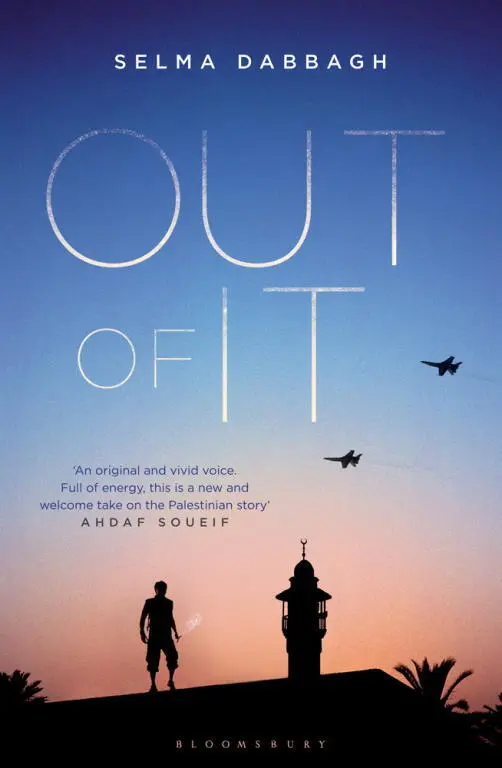
- Название:Out of It
- Автор:
- Издательство:Bloomsbury Publishing
- Жанр:
- Год:2011
- Город:London
- ISBN:978-1-4088-2430-6
- Рейтинг книги:5 / 5. Голосов: 1
-
Избранное:Добавить в избранное
- Отзывы:
-
Ваша оценка:
Out of It: краткое содержание, описание и аннотация
Предлагаем к чтению аннотацию, описание, краткое содержание или предисловие (зависит от того, что написал сам автор книги «Out of It»). Если вы не нашли необходимую информацию о книге — напишите в комментариях, мы постараемся отыскать её.
Meanwhile Sabri, the oldest brother of this disparate Palestinian family works on a history of Palestine from his wheelchair as their mother pickles vegetables and feuds with their neighbours.
Written with extraordinary humanity and humour, and moving between Gaza London and the Gulf, Out of It is a tale that redefines Palestine and its people. It follows the lives of Rashid and Iman as they try to forge paths for themselves in the midst of occupation, religious fundamentalism and the divisions between Palestinian factions. It tells of family secrets, unlikely love stories and unburied tragedies as it captures the frustrations and energies of the modern Arab world.
Out of It — читать онлайн бесплатно полную книгу (весь текст) целиком
Ниже представлен текст книги, разбитый по страницам. Система сохранения места последней прочитанной страницы, позволяет с удобством читать онлайн бесплатно книгу «Out of It», без необходимости каждый раз заново искать на чём Вы остановились. Поставьте закладку, и сможете в любой момент перейти на страницу, на которой закончили чтение.
Интервал:
Закладка:
The army had come one night months ago to destroy their area. They had demolished the neighbourhood’s structures, pulled out its roots, and dug up its foundations. Soldiers had rollicked over their mess in yellow bulldozers, chasing the newly homeless. The trees had burnt for days.
Iman’s neighbours’ tents did not have groundsheets. Triangular constructions pulled to by wooden sticks, they sprouted limbs and blanket corners. That morning the Mujaheds’ home, standing alone among the tents, seemed to protest that it was the bit that had been forgotten. Knock me down with my friends. Let me lie with them. Bougainvillaea bulged over the wall. The one remaining olive tree stood like a fig leaf across the door . Not even buildings should be singled out for survival.
Iman tried not to look too eager to cross the threshold into her building. It was essential that she concealed her desire to put a gate, a path and two metal doors between her and the mess outside, out of respect to those who were forced to live there. She strained to talk to the neighbours, to ask after their children, and to find something to chat about with those who were open to it. She could not offer help, she kept telling herself, because if she did, there was no knowing where it would end. But whatever she did, they always watched her and she always heard them in her head, commenting on her clothes, her foreignness, her virginity, her marriageability, or her lack thereof.
And then she was through. The gate would close and she could forget them and their mile-long walks for water (the Mujaheds’ own supply was too intermittent to be shared), their haggling for cement and building materials, their tempers lost on bored, hungry children. She could close the gate behind her and walk down the stretch of tiles leading through the narrow, underutilised garden, past the entrance to Abu Omar’s apartment and upstairs into her own home with its smells of jasmine air freshener, cardamom, bleach and cigarette smoke.
But today one of them had got in. There was someone from out there inside the gate: a bundle of an old woman with a tattooed leathery chin sat on their doorstep. She had pushed back a clump of vegetation to find the parts of the tiles that were still coloured and was running her finger over the traces of patterns on the Nablus tiles, proprietarily almost, it seemed to Iman. She was stroking them.
The woman stood as Iman entered, but standing made little difference to her. She was still bent and lumpy. There was so much stuffed into the internal chest pocket of her thoub that it looked as though her breasts were distended well below her string-tied waist.
‘You’re back,’ the woman said, as though it was not just a matter of fact, but an acknowledgment of an achievement. ‘I have been waiting,’ she continued. ‘I’m the aunt of Raed and your student Taghreed. You need to come with me.’
Chapter 5
Something wild had taken over his arms, an energy that translated itself in his brain into a desire to spin his brother around and around right there where he sat. But as Rashid’s hands pulled back on the wheelchair handles, he felt the resistance of its brakes (the radio was on: The bomber has now been identified as coming from the Hajjar family… ), saw the cup in his brother’s hand, realised the spill that would follow, heard Sabri’s voice over the broadcast, ‘Stop it! Stop it! What are you trying to do? What the hell?’ and felt his brother’s hands pushing his away from the chair. ‘Did they say Hajjar?’ Sabri wiped at the coffee on his desk with tissues, dabbed at the splatterings of it on his small lap. ‘Was that Hajjar?’
‘I think so. Yes. Sorry, ya akhi , brother , but Sabri—’
‘Why did they choose a Hajjar? It was Hajjar they said, wasn’t it?’
‘Yes, I think so, Sabri—’
‘What is it? You got the scholarship, did you?’ Sabri tossed a sopping coffee-filled tissue across the room.
‘The whole thing. Accommodation, fees—’
‘And Professor Myres is retired or not?’
‘Semi-retired, but he wants to do the thesis with me. I’ll be living somewhere in North London.’
‘He’s still going then. Must be well into his seventies by now. I suppose I should give you some of his work.’ Sabri started pulling out books from his shelves; not just books, tomes – one looked over a thousand pages long – slamming them on to his desk before ordering them by date of publication.
Rashid waited by the window. There was a better view of the town from there; the smoke from the hospital was strong, darker than the rest. Downstairs, their mother was haranguing Abu Omar again – in the man’s own garden too. His mother wanted their neighbour’s garden. She coveted it and regularly demanded it from its owner. She also asked for his apartment. She had been proposing that they exchange apartments ever since Sabri had lost his legs over fifteen years previously (‘So that the boy can get out on his own, so we don’t have to carry him down those stairs.’). She was now, in a protest gesture of sorts, kicking at the bare soil, which flew up around them. There was no need to actually hear it. Rashid knew what she would be saying. It would be along the lines of: ‘You do nothing with your land, nothing , whereas I could grow tomatoes, I could plant thyme, potatoes…’
Abu Omar was not saying anything. He was feeling for the sunspots and moon craters on the back of his head. Rashid silently urged him on, Come on, man, stand up to her, you tell her, but Abu Omar’s fingers continued to trace around the indentations on his head as though they were pads upon which he could transmit a message for outside intervention. With the edge of a sandal he tried to rub the kicked-up dust into the tiles that they stood on. He was saying something now, something worthless, no doubt. It would be along the lines of: ‘You know I care for the boy as if he was my own, but how can I give up the apartment of my father?’ To which she would reply, ‘So he can wheel himself out, sit here, take his morning coffee in the sun; for shame, just a little fresh air for the boy…’ ( He’s nearly forty , thought Rashid, he’s no boy .) ‘…rotting up there, writing his books.’ Abu Omar raised his head and Rashid willed for a retort – Come on, this time you tell her. Go on! Where’s the fight in you? – but the man’s grandson ran out to hug at his grandfather’s waist and have his hair pulled at by the man’s feeble hand. All Abu Omar could then do before he slunk off inside was to tenuously smile as though he had dribbled involuntarily.
Rashid’s mother continued to stand in their neighbour’s garden, her hands on her waist. Then she leant down and ran her fingers through the soil, weighing it carefully, as though touching the fabric of a dress she knew she would never be able to afford.
Rashid looked up at the smoke from the hospital generators, so black and so much of it, like an oil field ablaze. Endless.
‘He bought a new car,’ Sabri said.
Sabri was going bald; this was probably not a new thing but Rashid had not registered it before. If he had been asked to physically describe his brother, he would have said that he had large sideburns and hair like someone on the cover of a Motown album. But that was the old Sabri; the Sabri he was now looking at was a middle manager character with (specially ordered) frameless glasses halfway down his nose and a broad dome of a head that was becoming increasingly visible. The middle manager was making some loaded statement about a car.
‘He bought a new car,’ Sabri repeated.
‘Who?’
‘Abu Omar.’
‘I know. Red. I was watching him cleaning it last night.’
Читать дальшеИнтервал:
Закладка:
Похожие книги на «Out of It»
Представляем Вашему вниманию похожие книги на «Out of It» списком для выбора. Мы отобрали схожую по названию и смыслу литературу в надежде предоставить читателям больше вариантов отыскать новые, интересные, ещё непрочитанные произведения.








Обсуждение, отзывы о книге «Out of It» и просто собственные мнения читателей. Оставьте ваши комментарии, напишите, что Вы думаете о произведении, его смысле или главных героях. Укажите что конкретно понравилось, а что нет, и почему Вы так считаете.