Selma Dabbagh - Out of It
Здесь есть возможность читать онлайн «Selma Dabbagh - Out of It» весь текст электронной книги совершенно бесплатно (целиком полную версию без сокращений). В некоторых случаях можно слушать аудио, скачать через торрент в формате fb2 и присутствует краткое содержание. Город: London, Год выпуска: 2011, ISBN: 2011, Издательство: Bloomsbury Publishing, Жанр: Современная проза, на английском языке. Описание произведения, (предисловие) а так же отзывы посетителей доступны на портале библиотеки ЛибКат.
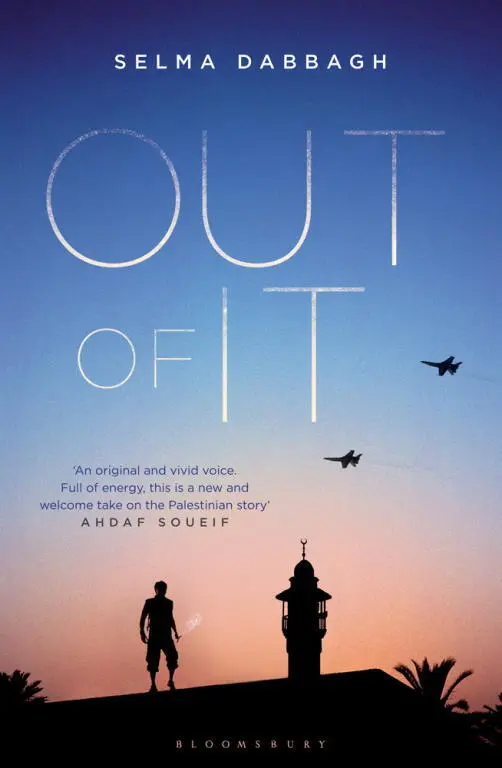
- Название:Out of It
- Автор:
- Издательство:Bloomsbury Publishing
- Жанр:
- Год:2011
- Город:London
- ISBN:978-1-4088-2430-6
- Рейтинг книги:5 / 5. Голосов: 1
-
Избранное:Добавить в избранное
- Отзывы:
-
Ваша оценка:
Out of It: краткое содержание, описание и аннотация
Предлагаем к чтению аннотацию, описание, краткое содержание или предисловие (зависит от того, что написал сам автор книги «Out of It»). Если вы не нашли необходимую информацию о книге — напишите в комментариях, мы постараемся отыскать её.
Meanwhile Sabri, the oldest brother of this disparate Palestinian family works on a history of Palestine from his wheelchair as their mother pickles vegetables and feuds with their neighbours.
Written with extraordinary humanity and humour, and moving between Gaza London and the Gulf, Out of It is a tale that redefines Palestine and its people. It follows the lives of Rashid and Iman as they try to forge paths for themselves in the midst of occupation, religious fundamentalism and the divisions between Palestinian factions. It tells of family secrets, unlikely love stories and unburied tragedies as it captures the frustrations and energies of the modern Arab world.
Out of It — читать онлайн бесплатно полную книгу (весь текст) целиком
Ниже представлен текст книги, разбитый по страницам. Система сохранения места последней прочитанной страницы, позволяет с удобством читать онлайн бесплатно книгу «Out of It», без необходимости каждый раз заново искать на чём Вы остановились. Поставьте закладку, и сможете в любой момент перейти на страницу, на которой закончили чтение.
Интервал:
Закладка:
Abu Omar’s family left only a few days after you and Iman. It became apparent that Abu Omar was fairly high up in the ranks, if collaborators can be considered to have ranks, and must have provided some extremely useful information to the enemy about very important resistance leaders on our side…
Why had Sabri underlined this? Was Sabri hinting that these were leaders that they knew? He didn’t know any leaders. The man who looked like him, Ziyyad Ayyoubi, the man who had arrested Abu Omar, was a leader; could he have been targeted by Abu Omar in the past? Was Abu Omar’s arrest connected to that, was it a revenge arrest? The obliqueness was annoying as hell and just so typical of Sabri.
…because his family were taken out of Gaza to a camp in Israel for the families of people of his ‘stature’. We have been given to understand (his wife, Umm Omar, told Mama) that he has been working in the service of our enemies for over fifteen years. You know how these things start. First they asked him for petty information about student elections in exchange for a permit that was required for him to take his mother to a Jerusalem hospital. Apparently, or so the man claims, Abu Omar’s brother in the States urged him to provide the information to our enemies for the sake of his mother. Of course, once he had provided this information there was no way back. The man chose his family over his people and for that he is now paying the price.
Before she left, Umm Omar paid us a visit and gave Mama the key for their apartment (they have no other relatives in Gaza, you understand), asking her to look after it and saying that we should live in it while they were away. I always thought Umm Omar had a good heart, God only knows what life lies ahead of her and her family. They should not be cursed for the sins of Abu Omar, but of course it seems unlikely that they will ever be able to escape them. Needless to say, Umm Omar’s family have benefitted considerably and materially for years, which should be a factor we bear in mind before we displace too much pity in their direction.
Mama and I decided that it would be best to move downstairs and have brought all of our belongings with us. Mama is, of course, far more excited than she will allow anyone to see. She has dug up half that ring of soil around the tiles already and planted tomatoes, thyme, potatoes and mint.
I say that Abu Omar’s family left, but one of them chose not to. The middle grandson, Wael, apparently refused to leave and says that this is his place and he will not set foot on enemy territory. We have therefore decided to take the boy under our wing and to treat him as one of the family.
Wasn’t Wael that lanky teenager with the large nostrils and the bum fluff for a moustache, the one with the greenish skin around his mouth? Was Sabri telling him that they had decided to adopt that devious little shit? No, worse, that that devious little shit was so noble as to choose country over both self and family?
In the circumstances, we couldn’t just leave our flat empty upstairs. Mama and I decided it best to arrange a rota for our neighbours who are still in tents to get a roof over their heads. We can’t house all of them so we have arranged for stays in two-week shifts per family per room and have formed a small residents’ committee to supervise this. It’s working fine at the moment. I just hope that as the weather gets colder, tempers don’t rise when we have to ask people to leave at the end of their two-week sojourn.
Politically, you will have seen the news, it’s not as bad as it has been, but the signs are not good.
Wishing you the best, Rashid. I trust that this year will help you in your quest to find your own role in our struggle for justice and understanding in the world.
Your brother, Sabri Jibril MujahedChapter 19
When Professor Myres opened a book he would automatically open his mouth at the same time. His tongue would widen across the base of his mouth, loll out, and then the tip would touch his upper lip as he found the point he was looking for.
‘Yes, yes that’s it. That’s the one.’
Myres soothed the book, verbally patting it for its loyal delivery of information. The apartment smelt of wet dog. The coffee was wet dog. Rashid’s essays came back after supervision as though they had been rolled upon by wet dog. Rashid drew himself closer to the geraniums. Their dried-out odour reminded him of a relative’s courtyard he’d been in as a child – Amman or Damascus, perhaps? Or that aunt in Alexandria?
‘Yes, yes, these accounts, you see, show how some of these early Jewish immigrants to Palestine were absolutely shocked. There they were, just escaped from the jaws of hell in Nazi Germany or elsewhere in Europe. They’ve arrived in Palestine, this Holy Sacred Land, this place of new beginnings, where they soon find themselves witnessing the same tactics being used by their people against the Arabs – the Palestinians – as had been used against them. Just three years. It’s nothing in an adult’s life. Some of them left Germany as late as 1945 and by 1948 they are being asked to join people – their fellow Jews – who are blindfolding men, bundling them into trucks and dumping them across borders. These accounts are important. There aren’t many of them, but they are the ones that interest me, not the ones where the Jews complain about their own treatment by the British, but the ones where they consider how they are treating the ‘Other’ the Arabs. Many of them chose not to see them at all. They still don’t.’
Professor Myres’ mouth widened again, the tongue drawn back waiting for its next find. Unsuccessful, it fell back into place on the floor of his mouth. Eyebrows raised, Myres looked over at Rashid. ‘Not pretty, discrimination, bad treatment. Always makes people rather vicious, doesn’t it? Vicious and ugly. That old adage about the repressed of yesterday and what not.’
Rashid thought of the accounts of their Authority using Israeli torture methods against their own people. ‘It’s made us ugly, too.’ Rashid conceded national flaws easily to Professor Myres. He would not have done so with Ian.
‘Ah, yes. Ah, yes, but everything can be changed, everything. Nothing ugly about you, at any rate. Fine-looking young man. Shall I make us some coffee?’ Myres marked the book with a strip of paper covered in intricate pencilled script. The book joined the others on the pile prepared for Rashid, forming a rustling cascade of scrawly paper tongues.
‘You’ve always worked on Palestine?’ Rashid asked. He wondered what he would have done if Palestine had played no part in his life. Film, he thought, or music. The only time he had heard the word ‘talent’ being used in connection with him was when he had had piano lessons. He had been about twelve. That was in Beirut and then they had moved to Paris, and couldn’t start them again because Paris was only ‘temporary’ (everywhere was temporary but Paris, for some reason, had been known to be temporary from the day they arrived; for the next two years, they had only unpacked two boxes to show quite how fleeting it all was). They had just decided to unpack the rest of them when one of their representatives was shot and Baba was asked to replace him. This, of course, led to another move and the piano lessons had not been as important as anything else that was going on, and by then he hadn’t had any for at least two years so what was the urgency?
‘Always Palestine,’ Myres said with a sigh. ‘I do often think, though, that I could have done it differently.’ He was speaking from the kitchen and Rashid stood by the narrow door to hear him.
‘Oh really?’ Rashid said, as Myres seemed to have lost the thread of his speech together with the coffee lid that had slipped off the sideboard and on to the floor. Myres looked down at it, bereft, as though it was stranded at the bottom of a deep pool. Rashid dipped down to pick it up and pass it back to Myres. The professor did not acknowledge the gesture and went back to stooping over the kettle, concentrating on getting the tremulous fairtrade coffee granules to make it into the two half-clean mugs with brown oval motifs.
Читать дальшеИнтервал:
Закладка:
Похожие книги на «Out of It»
Представляем Вашему вниманию похожие книги на «Out of It» списком для выбора. Мы отобрали схожую по названию и смыслу литературу в надежде предоставить читателям больше вариантов отыскать новые, интересные, ещё непрочитанные произведения.









Обсуждение, отзывы о книге «Out of It» и просто собственные мнения читателей. Оставьте ваши комментарии, напишите, что Вы думаете о произведении, его смысле или главных героях. Укажите что конкретно понравилось, а что нет, и почему Вы так считаете.