Selma Dabbagh - Out of It
Здесь есть возможность читать онлайн «Selma Dabbagh - Out of It» весь текст электронной книги совершенно бесплатно (целиком полную версию без сокращений). В некоторых случаях можно слушать аудио, скачать через торрент в формате fb2 и присутствует краткое содержание. Город: London, Год выпуска: 2011, ISBN: 2011, Издательство: Bloomsbury Publishing, Жанр: Современная проза, на английском языке. Описание произведения, (предисловие) а так же отзывы посетителей доступны на портале библиотеки ЛибКат.
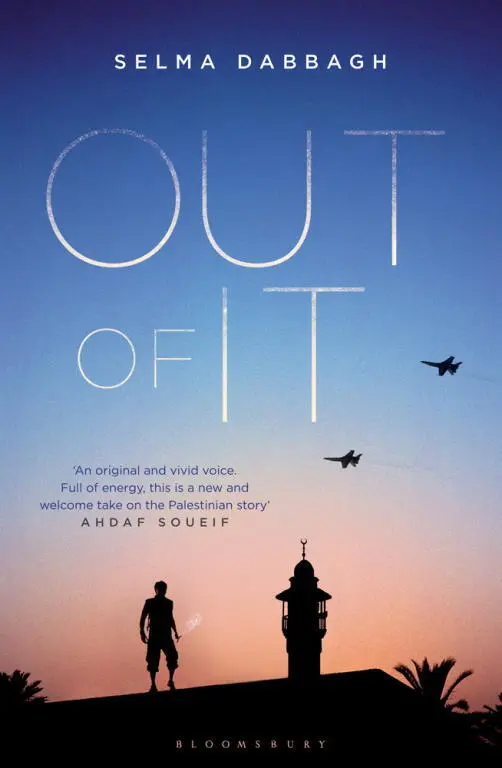
- Название:Out of It
- Автор:
- Издательство:Bloomsbury Publishing
- Жанр:
- Год:2011
- Город:London
- ISBN:978-1-4088-2430-6
- Рейтинг книги:5 / 5. Голосов: 1
-
Избранное:Добавить в избранное
- Отзывы:
-
Ваша оценка:
Out of It: краткое содержание, описание и аннотация
Предлагаем к чтению аннотацию, описание, краткое содержание или предисловие (зависит от того, что написал сам автор книги «Out of It»). Если вы не нашли необходимую информацию о книге — напишите в комментариях, мы постараемся отыскать её.
Meanwhile Sabri, the oldest brother of this disparate Palestinian family works on a history of Palestine from his wheelchair as their mother pickles vegetables and feuds with their neighbours.
Written with extraordinary humanity and humour, and moving between Gaza London and the Gulf, Out of It is a tale that redefines Palestine and its people. It follows the lives of Rashid and Iman as they try to forge paths for themselves in the midst of occupation, religious fundamentalism and the divisions between Palestinian factions. It tells of family secrets, unlikely love stories and unburied tragedies as it captures the frustrations and energies of the modern Arab world.
Out of It — читать онлайн бесплатно полную книгу (весь текст) целиком
Ниже представлен текст книги, разбитый по страницам. Система сохранения места последней прочитанной страницы, позволяет с удобством читать онлайн бесплатно книгу «Out of It», без необходимости каждый раз заново искать на чём Вы остановились. Поставьте закладку, и сможете в любой момент перейти на страницу, на которой закончили чтение.
Интервал:
Закладка:
But oh God, help him! What had happened to his body after that? Something forceful had ballooned in his chest. The more he saw Lana, the more it swelled. It was a skin stretched under his. He would awake in the morning so hard that it almost buckled him over. That was on the interior but his exterior: his face, his hair, his hands, and his voice, these could no longer be relied on either. He seemed to have discovered their true forms. They could horrify him. The break on the bridge in his nose from a fight in secondary school made his eyes squint. His hair was too coarse; his skin (however many times he washed it) had a murky pallor to it that could be confused for dirtiness and his voice around her had developed the panting undertone and the flurried laugh of a poof. His mind had been interfered with too; his sentences collided into each other, the sense of them piling up over each other into an incongruous mess.
He had found out the following about her: she studied history, her tutors thought very highly of her, her English was excellent, she was privately educated and she spoke German too. She was also Christian, but he did not see that as being much of a problem. He could see that she had a large group of friends, but there was not one specific boyfriend (the word alone made him sick) hanging around her as far as he could tell. Sabri came to notice other things about her too: that she was normally the one leading a debate, that however big the group sitting with her was, she would be the one to talk after everyone else and that they always urged her to speak. In her appliqué bag she carried flyers that she pinned neatly to the noticeboards in the hall, carefully moving aside those posters that they overlapped with. The notices were typed on a word processor and just said: ‘NO. They are NOT the answer.’
One of Sabri’s friends had told him that she was to run against him in the student elections. He mentioned it casually, in the same tone that they had commented on her shoes, after carefully discussing what the religious parties were saying and the other candidates put forward by the Leadership. ‘But which party is she running for?’ Sabri had asked.
‘She’s running as an independent ,’ his friend had replied and they found that hilarious too. ‘Don’t worry about her,’ they had said to all his questions. ‘She is not your worry.’ But by then, she was.
He had been completely taken.
He was not able to get high enough to see most of Abu Omar’s garden when he pushed himself up by the window. He could only make out the far corners of it. But in one of these, Abu Omar’s middle grandson, Wael, had taken to playing at this time of day. He said he was playing, but Sabri recognised that you could not really say such a thing about a boy as old as Wael now was. Sabri was sure that the boy went to that corner just so that Sabri could see him. He seemed to be constructing a sort of rat trap out of fencing this morning, manipulating some old wiring he had found and placing strips of fruit peel inside it. He had some kind of guillotine for a door. Ingenious, Sabri thought with satisfaction at the engineering of it. Sabri liked the boy’s love of bedevilling everything and everyone; the kid exasperated his family. The boy looked up, gave Sabri a dismissive glance, then looked away. Sabri pretended to write in one of the notebooks that he had poised for the moment that the boy would do this and watched the boy bending the meshing a little more, before going back to his desk.
Sabri pulled out an original Intifada Declaration of the Unified National Leadership of the Uprising. The pronouncement started off grandly, calling on people of ‘all sectors and classes’ to adhere to the general strike. Sabri concluded the paragraph he had written about the merchants’ strike in Ramallah and read through it with his editing pencil poised above it:
As part of the Intifada’s policy of non-violent resistance to the Israeli occupation, Palestinian shops would frequently be ordered by the Israeli army to stay open and shopkeepers were threatened with arrest if they left their shops unattended, but they continued to listen to the Unified Leadership and left their shops open against the orders of the Occupiers, their goods lying in plain view, none of which were stolen.
It took several weeks but ultimately the Palestinians won the battle to control their own shops.
He could not decide whether it was objective enough. It should not read like propaganda. He read it again. To hell with it if it did. That was what had happened. He had been there. He had seen it. Damn it. All interpretations of history are propaganda for one idea or another. Sabri downed the pencil that hovered over the paragraph. He would leave it as it was.
Chapter 7
Khalil had been delighted by Sindibad’s. This was mainly, Rashid thought, because the café was so far from the district where Khalil’s parents lived, in an area where the town appeared to have collapsed into itself. Rashid had pretended that he could see the café’s charm, but he had really found the place to be so mundane that it verged on the tragic. This did not stop him from encouraging Khalil to be amused by particular features of the place: the printed depiction of an alpine retreat framed in gilt, the row of faux silver vases sprouting leafless stems of plastic flowers on the counter at the back, the fairy lights strung around the air conditioning unit.
It was at Sindibad’s where Rashid and Khalil usually congregated and it was there that Rashid was heading that morning, the two messages, Lisa’s and the admissions secretary’s, folded into his back pockets. He had refused to take Lisa to Sindibad’s when she last came, the previous summer, even though that was before the situation got so bad. He had taken her to Pierre’s instead, which she had hated. ‘I might as well be in Vienna,’ she had said, moving around on a satin seat covered in thick, transparent plastic. She had been so bad-tempered that Rashid had been forced to lie, telling her that the man spiking at black forest gâteau on the next table was a commando fighter from the seventies.
That had been Lisa’s second visit to Gaza, only a couple of months previously, but it seemed like a lifetime ago. The first time she had come, when he met her, she had walked into the Centre wearing a crisp shirt and combat trousers and he had been overwhelmed. He had thought, possibly panic-struck, during her first visit to the Centre, that her interest was in Khalil, not him. He tried to put that down to Khalil’s greater involvement in the Centre and when he had questioned her later (in between kisses when he had snuck her back to his roof), she had reassured him that that was all there was to it. Lisa!
A water pipe next to the road had been hit and there was water everywhere in the streets, a brown rush of it slopping around the potholes. The roads were narrow and the mass of people were so close together that they seemed to follow each other using their sense of smell, not sight. And then everyone stopped completely and the crowd became jammed up and stuck between the walls. The blockage was being caused by an old man and a donkey. The donkey had ground to a halt in a puddle in the centre of the road and the traffic, headed up by an old Nasser car, was wedged behind it. Someone was ramming at Rashid’s ankles with a suitcase. ‘Watch it!’ Rashid called out, but the suitcase’s owner was on a mission to get away and seemed determined to ignore the humiliation that was involved in getting there.
The crowd took their frustration out on the donkey’s owner (‘Which one of you is the donkey? Take it around the edge, you fool. It thinks it’s going to drown,’ someone was shouting) but it did not help. They were still blocked in the road when a bullet-proofed Mercedes drove up. The crowd changed with the arrival of the car. They started spitting at the sight of their leaders. Look at them! Negotiated us away in exchange for that car, did you? So you can move it up and down the one kilometre of Gaza you liberated, did you? Bravo! Bravo. They turned on the anonymous figures behind the car’s tinted windows and the donkey’s owner became their brother. They gave him the reverence of a pilgrim ( Ya hajji! Ya hajji!) and were working with him in trying to coax the donkey across the puddle when a scrap of a boy sprang from the crowd holding a carrot, which the animal went for, almost bolting straight out of the puddle.
Читать дальшеИнтервал:
Закладка:
Похожие книги на «Out of It»
Представляем Вашему вниманию похожие книги на «Out of It» списком для выбора. Мы отобрали схожую по названию и смыслу литературу в надежде предоставить читателям больше вариантов отыскать новые, интересные, ещё непрочитанные произведения.










Обсуждение, отзывы о книге «Out of It» и просто собственные мнения читателей. Оставьте ваши комментарии, напишите, что Вы думаете о произведении, его смысле или главных героях. Укажите что конкретно понравилось, а что нет, и почему Вы так считаете.