Alice Munro - Alice Munro's Best
Здесь есть возможность читать онлайн «Alice Munro - Alice Munro's Best» весь текст электронной книги совершенно бесплатно (целиком полную версию без сокращений). В некоторых случаях можно слушать аудио, скачать через торрент в формате fb2 и присутствует краткое содержание. Город: Toronto, Год выпуска: 2008, ISBN: 2008, Издательство: McClelland & Stewart, Жанр: Современная проза, на английском языке. Описание произведения, (предисловие) а так же отзывы посетителей доступны на портале библиотеки ЛибКат.
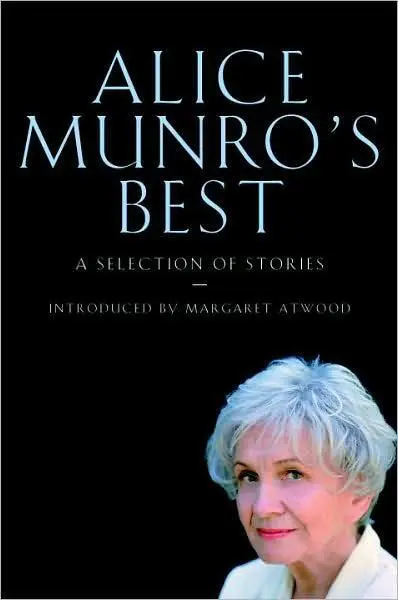
- Название:Alice Munro's Best
- Автор:
- Издательство:McClelland & Stewart
- Жанр:
- Год:2008
- Город:Toronto
- ISBN:9780771065200
- Рейтинг книги:3 / 5. Голосов: 1
-
Избранное:Добавить в избранное
- Отзывы:
-
Ваша оценка:
Alice Munro's Best: краткое содержание, описание и аннотация
Предлагаем к чтению аннотацию, описание, краткое содержание или предисловие (зависит от того, что написал сам автор книги «Alice Munro's Best»). Если вы не нашли необходимую информацию о книге — напишите в комментариях, мы постараемся отыскать её.
This splendid gift edition is sure to delight Alice Munro’s growing body of admirers, what Atwood calls her “devoted international readership.” Long-time fans of her stories will enjoy meeting old favourites, where their new setting in this book may reveal new sides to what once seemed a familiar story; devoted followers may even dispute the exclusion of a specially-beloved story. Readers lucky enough to have found her recently will be delighted, as one masterpiece succeeds another.
The 17 stories are carefully arranged in the order in which she wrote them, which allows us to follow the development of her range. “A Wilderness Station,” for example, breaks “short story rules” by taking us right back to the 1830s then jumping forward more than 100 years. “The Albanian Virgin” destroys the idea that her stories are set in B.C. or in Ontario’s “Alice Munro Country.” And “The Bear Came Over the Mountain,” the story behind the film
, takes us far from the world of young girls learning about sex into unflinching old age.
This is a book to read slowly, savouring each story. It deserves a place in every Canadian book-lover’s library.
Alice Munro's Best — читать онлайн бесплатно полную книгу (весь текст) целиком
Ниже представлен текст книги, разбитый по страницам. Система сохранения места последней прочитанной страницы, позволяет с удобством читать онлайн бесплатно книгу «Alice Munro's Best», без необходимости каждый раз заново искать на чём Вы остановились. Поставьте закладку, и сможете в любой момент перейти на страницу, на которой закончили чтение.
Интервал:
Закладка:
“I did all I could,” said Raymond. “I didn’t scoot off and leave her, like her Prince of Fantasy Land.”
GEORGIA GOT A vengeful pleasure out of breaking with Maya. She was pleased with the controlled manner in which she did it. The deaf ear. She was surprised to find herself capable of such control, such thorough going punishment. She punished Maya. She punished Miles, through Maya, as much as she could. What she had to do, and she knew it, was to scrape herself raw, to root out all addiction to the gifts of those two pale prodigies. Miles and Maya. Both of them slippery, shimmery — liars, seducers, finaglers. But you would have thought that after such scourging she’d have scuttled back into her marriage and locked its doors, and appreciated what she had there as never before.
That was not what happened. She broke with Ben. Within a year, she was gone. Her way of breaking was strenuous and unkind. She told him about Miles, though she spared her own pride by leaving out the part about Miles and Maya. She took no care — she had hardly any wish — to avoid unkindness. On the night when she waited for Maya to call, some bitter, yeasty spirit entered into her. She saw herself as a person surrounded by, living by, sham. Because she had been so readily unfaithful, her marriage was a sham. Because she had gone so far out of it, so quickly, it was a sham. She dreaded, now, a life like Maya’s. She dreaded just as much a life like her own before this happened. She could not but destroy. Such cold energy was building in her she had to blow her own house down.
She had entered with Ben, when they were both so young, a world of ceremony, of safety, of gestures, concealment. Fond appearances. More than appearances. Fond contrivance. (She thought when she left that she would have no use for contrivance anymore.) She had been happy there, from time to time. She had been sullen, restless, bewildered, and happy. But she said most vehemently, Never, never. I was never happy, she said.
People always say that.
People make momentous shifts, but not the changes they imagine.
JUST THE SAME, Georgia knows that her remorse about the way she changed her life is dishonest. It is real and dishonest. Listening to Raymond, she knows that whatever she did she would have to do again. She would have to do it again, supposing that she had to be the person she was.
Raymond does not want to let Georgia go. He does not want to part with her. He offers to drive her downtown. When she has gone, he won’t be able to talk about Maya. Very likely Anne has told him that she does not want to hear any more on the subject of Maya.
“Thank you for coming,” he says on the doorstep. “Are you sure about the ride? Are you sure you can’t stay to dinner?”
Georgia reminds him again about the bus, the last ferry. She says no, no, she really wants to walk. It’s only a couple of miles. The late afternoon so lovely, Victoria so lovely. I had forgotten, she says.
Raymond says once more, “Thank you for coming.”
“Thank you for the drinks,” Georgia says. “Thank you too. I guess we never believe we are going to die.”
“Now, now,” says Raymond.
“No. I mean we never behave — we never behave as if we believed we were going to die.”
Raymond smiles more and more and puts a hand on her shoulder. “How should we behave?” he says.
“Differently,” says Georgia. She puts a foolish stress on the word, meaning that her answer is so lame that she can offer it only as a joke.
Raymond hugs her, then involves her in a long chilly kiss. He fastens onto her with an appetite that is grievous but unconvincing. A parody of passion, whose intention neither one of them, surely, will try to figure out.
She doesn’t think about that as she walks back to town through the yellow-leafed streets with their autumn smells and silences. Past Clover Point, the cliffs crowned with broom bushes, the mountains across the water. The mountains of the Olympic Peninsula, assembled like a blatant backdrop, a cutout of rainbow tissue paper. She doesn’t think about Raymond, or Miles, or Maya, or even Ben.
She thinks about sitting in the store in the evenings. The light in the street, the complicated reflections in the windows. The accidental clarity.
CARRIED AWAY
LETTERS
IN THE DINING ROOM of the Commercial Hotel, Louisa opened the letter that had arrived that day from overseas. She ate steak and potatoes, her usual meal, and drank a glass of wine. There were a few travellers in the room, and the dentist who ate there every night because he was a widower. He had shown an interest in her in the beginning but had told her he had never before seen a woman touch wine or spirits.
“It is for my health,” said Louisa gravely.
The white tablecloths were changed every week and in the meantime were protected by oilcloth mats. In winter, the dining room smelled of these mats wiped by a kitchen rag, and of coal fumes from the furnace, and beef gravy and dried potatoes and onions — a smell not unpleasant to anybody coming in hungry from the cold. On each table was a little cruet stand with the bottle of brown sauce, the bottle of tomato sauce, and the pot of horseradish.
The letter was addressed to “The Librarian, Carstairs Public Library, Carstairs, Ontario.” It was dated six weeks before — January 4, 1917.
Perhaps you will be surprised to hear from a person you don’t know and that doesn’t remember your name. I hope you are still the same Librarian though enough time has gone by that you could have moved on.
What has landed me here in Hospital is not too serious. I see worse all around me and get my mind off of all that by picturing things and wondering for instance if you are still there in the Library. If you are the one I mean, you are about of medium size or perhaps not quite, with light brownish hair. You came a few months before it was time for me to go in the Army following on Miss Tamblyn who had been there since I first became a user aged nine or ten. In her time the books were pretty much every which way, and it was as much as your life was worth to ask herfor the least help or anything since she was quite a dragon. Then when you came what a change, it was all put into sections of Fiction and Non-Fiction and History and Travel and you got the magazines arranged in order and put out as soon as they arrived, not left to molder away till everything in them was stale. I felt gratitude but did not know how to say so. Also I wondered what brought you there, you were an educated person.
My name is Jack Agnew and my card is in the drawer. The last book I took out was very good — H.G. Wells, Mankind in the Making. My education was to Second Form in High School, then I went into Douds as many did. I didn’t join up right away when I was eighteen so you will not see me as a Brave Man. I am a person tending to have my own ideas always. My only relative in Carstairs, or anyplace, is my father Patrick Agnew. He works for Douds not at the factory but at the house doing the gardening. He is a lone wolf even more than me and goes out to the country fishing every chance he gets. I write him a letter sometimes but I doubt if he reads it.
After supper Louisa went up to the Ladies’ Parlor on the second floor, and sat down at the desk to write her reply.
I am very glad to hear you appreciated what I did in the Library though it was just the normal organization, nothing special.
I am sure you would like to hear news of home, but I am a poor person for the job, being an outsider here. I do talk to people in the Library and in the hotel. The travellers in the hotel mostly talk about how business is (it is brisk if you can get the goods) and a little about sickness, and a lot about the War. There are rumors on rumors and opinions galore, which I’m sure would make you laugh if they didn’t make you angry. I will not bother to write them down because I am sure there is a Censor reading this who would cut my letter to ribbons.
Читать дальшеИнтервал:
Закладка:
Похожие книги на «Alice Munro's Best»
Представляем Вашему вниманию похожие книги на «Alice Munro's Best» списком для выбора. Мы отобрали схожую по названию и смыслу литературу в надежде предоставить читателям больше вариантов отыскать новые, интересные, ещё непрочитанные произведения.



Обсуждение, отзывы о книге «Alice Munro's Best» и просто собственные мнения читателей. Оставьте ваши комментарии, напишите, что Вы думаете о произведении, его смысле или главных героях. Укажите что конкретно понравилось, а что нет, и почему Вы так считаете.