Alice Munro - Alice Munro's Best
Здесь есть возможность читать онлайн «Alice Munro - Alice Munro's Best» весь текст электронной книги совершенно бесплатно (целиком полную версию без сокращений). В некоторых случаях можно слушать аудио, скачать через торрент в формате fb2 и присутствует краткое содержание. Город: Toronto, Год выпуска: 2008, ISBN: 2008, Издательство: McClelland & Stewart, Жанр: Современная проза, на английском языке. Описание произведения, (предисловие) а так же отзывы посетителей доступны на портале библиотеки ЛибКат.
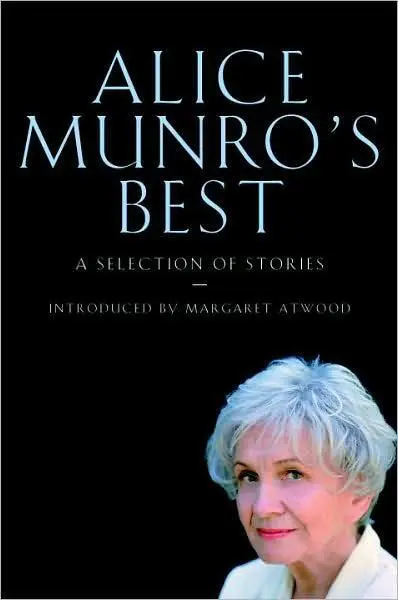
- Название:Alice Munro's Best
- Автор:
- Издательство:McClelland & Stewart
- Жанр:
- Год:2008
- Город:Toronto
- ISBN:9780771065200
- Рейтинг книги:3 / 5. Голосов: 1
-
Избранное:Добавить в избранное
- Отзывы:
-
Ваша оценка:
Alice Munro's Best: краткое содержание, описание и аннотация
Предлагаем к чтению аннотацию, описание, краткое содержание или предисловие (зависит от того, что написал сам автор книги «Alice Munro's Best»). Если вы не нашли необходимую информацию о книге — напишите в комментариях, мы постараемся отыскать её.
This splendid gift edition is sure to delight Alice Munro’s growing body of admirers, what Atwood calls her “devoted international readership.” Long-time fans of her stories will enjoy meeting old favourites, where their new setting in this book may reveal new sides to what once seemed a familiar story; devoted followers may even dispute the exclusion of a specially-beloved story. Readers lucky enough to have found her recently will be delighted, as one masterpiece succeeds another.
The 17 stories are carefully arranged in the order in which she wrote them, which allows us to follow the development of her range. “A Wilderness Station,” for example, breaks “short story rules” by taking us right back to the 1830s then jumping forward more than 100 years. “The Albanian Virgin” destroys the idea that her stories are set in B.C. or in Ontario’s “Alice Munro Country.” And “The Bear Came Over the Mountain,” the story behind the film
, takes us far from the world of young girls learning about sex into unflinching old age.
This is a book to read slowly, savouring each story. It deserves a place in every Canadian book-lover’s library.
Alice Munro's Best — читать онлайн бесплатно полную книгу (весь текст) целиком
Ниже представлен текст книги, разбитый по страницам. Система сохранения места последней прочитанной страницы, позволяет с удобством читать онлайн бесплатно книгу «Alice Munro's Best», без необходимости каждый раз заново искать на чём Вы остановились. Поставьте закладку, и сможете в любой момент перейти на страницу, на которой закончили чтение.
Интервал:
Закладка:
My mother could not say who the Cameronians were or why they were called that. Some freak religion from Scotland, she said from the perch of her obedient and lighthearted Anglicanism. The teacher always boarded with the Grieveses, and my mother was a little daunted at the thought of going to live in that black board house with its paralytic Sundays and coal-oil lamps and primitive notions. But she was engaged by that time, she wanted to work on her trousseau instead of running around the country having a good time, and she figured she could get home one Sunday out of three. (On Sundays at the Grieveses’ house, you could light a fire for heat but not for cooking, you could not even boil the kettle to make tea, and you were not supposed to write a letter or swat a fly. But it turned out that my mother was exempt from these rules. “No, no,” said Flora Grieves, laughing at her. “That doesn’t mean you. You must just go on as you’re used to doing.” And after a while my mother had made friends with Flora to such an extent that she wasn’t even going home on the Sundays when she’d planned to.)
Flora and Ellie Grieves were the two sisters left of the family. Ellie was married, to a man called Robert Deal, who lived there and worked the farm but had not changed its name to Deal’s in anyone’s mind. By the way people spoke, my mother expected the Grieves sisters and Robert Deal to be middle-aged at least, but Ellie, the younger sister, was only about thirty, and Flora seven or eight years older. Robert Deal might be in between.
The house was divided in an unexpected way. The married couple didn’t live with Flora. At the time of their marriage, she had given them the parlor and the dining room, the front bedrooms and staircase, the winter kitchen. There was no need to decide about the bathroom, because there wasn’t one. Flora had the summer kitchen, with its open rafters and uncovered brick walls, the old pantry made into a narrow dining room and sitting room, and the two back bedrooms, one of which was my mother’s. The teacher was housed with Flora, in the poorer part of the house. But my mother didn’t mind. She immediately preferred Flora, and Flora’s cheerfulness, to the silence and sickroom atmosphere of the front rooms. In Flora’s domain it was not even true that all amusements were forbidden. She had a crokinole board — she taught my mother how to play.
The division had been made, of course, in the expectation that Robert and Ellie would have a family, and that they would need the room. This hadn’t happened. They had been married for more than a dozen years and there had not been a live child. Time and again Ellie had been pregnant, but two babies had been stillborn, and the rest she had miscarried. During my mother’s first year, Ellie seemed to be staying in bed more and more of the time, and my mother thought that she must be pregnant again, but there was no mention of it. Such people would not mention it. You could not tell from the look of Ellie, when she got up and walked around, because she showed a stretched and ruined though slack-chested shape. She carried a sickbed odor, and she fretted in a childish way about everything. Flora took care of her and did all the work. She washed the clothes and tidied up the rooms and cooked the meals served in both sides of the house, as well as helping Robert with the milking and separating. She was up before daylight and never seemed to tire. During the first spring my mother was there, a great housecleaning was embarked upon, during which Flora climbed the ladders herself and carried down the storm windows, washed and stacked them away, carried all the furniture out of one room after another so that she could scrub the woodwork and varnish the floors. She washed every dish and glass that was sitting in the cupboards supposedly clean already. She scalded every pot and spoon. Such need and energy possessed her that she could hardly sleep — my mother would wake up to the sound of stovepipes being taken down, or the broom, draped in a dish towel, whacking at the smoky cobwebs. Through the washed uncurtained windows came a torrent of unmerciful light. The cleanliness was devastating. My mother slept now on sheets that had been bleached and starched and that gave her a rash. Sick Ellie complained daily of the smell of varnish and cleansing powders. Flora’s hands were raw. But her disposition remained top-notch. Her kerchief and apron and Robert’s baggy overalls that she donned for the climbing jobs gave her the air of a comedian — sportive, unpredictable.
My mother called her a whirling dervish.
“You’re a regular whirling dervish, Flora,” she said, and Flora halted. She wanted to know what was meant. My mother went ahead and explained, though she was a little afraid lest piety should be offended.(Not piety exactly — you could not call it that. Religious strictness.) Of course it wasn’t. There was not a trace of nastiness or smug vigilance in Flora’s observance of her religion. She had no fear of heathens — she had always lived in the midst of them. She liked the idea of being a dervish, and went to tell her sister.
“Do you know what the teacher says I am?”
Flora and Ellie were both dark-haired, dark-eyed women, tall and narrow-shouldered and long-legged. Ellie was a wreck, of course, but Flora was still superbly straight and graceful. She could look like a queen, my mother said — even riding into town in that cart they had. For church they used a buggy or a cutter, but when they went to town they often had to transport sacks of wool — they kept a few sheep — or of produce, to sell, and they had to bring provisions home. The trip of a few miles was not made often. Robert rode in front, to drive the horse — Flora could drive a horse perfectly well, but it must always be the man who drove. Flora would be standing behind holding on to the sacks. She rode to town and back standing up, keeping an easy balance, wearing her black hat. Almost ridiculous but not quite. A gypsy queen, my mother thought she looked like, with her black hair and her skin that always looked slightly tanned, and her lithe and bold serenity. Of course she lacked the gold bangles and the bright clothes. My mother envied her her slenderness, and her cheekbones.
RETURNING IN THE fall for her second year, my mother learned what was the matter with Ellie.
“My sister has a growth,” Flora said. Nobody then spoke of cancer.
My mother had heard that before. People suspected it. My mother knew many people in the district by that time. She had made particular friends with a young woman who worked in the Post Office; this woman was going to be one of my mother’s bridesmaids. The story of Flora and Ellie and Robert had been told — or all that people knew of it — in various versions. My mother did not feel that she was listening to gossip, because she was always on the alert for any disparaging remarks about Flora — she would not put up with that. But indeed nobody offered any. Everybody said that Flora had behaved like a saint. Even when she went to extremes, as in dividing up the house — that was like a saint.
Robert came to work at Grieveses’ some months before the girls’ father died. They knew him already, from church. (Oh, that church, my mother said, having attended it once, out of curiosity — that drear building miles on the other side of town, no organ or piano and plain glass in the windows and a doddery old minister with his hours-long sermon, a man hitting a tuning fork for the singing.) Robert had come out from Scotland and was on his way west. He had stopped with relatives or people he knew, members of the scanty congregation. To earn some money, probably, he came to Grieveses’. Soon he and Flora were engaged. They could not go to dances or to card parties like other couples, but they went for long walks. The chaperone — unofficially — was Ellie. Ellie was then a wild tease, a long-haired, impudent, childish girl full of lolloping energy. She would run up hills and smite the mullein stalks with a stick, shouting and prancing and pretending to be a warrior on horseback. That, or the horse itself. This when she was fifteen, sixteen years old. Nobody but Flora could control her, and generally Flora just laughed at her, being too used to her to wonder if she was quite right in the head. They were wonderfully fond of each other. Ellie, with her long skinny body, her long pale face, was like a copy of Flora — the kind of copy you often see in families, in which because of some carelessness or exaggeration of features or coloring, the handsomeness of one person passes into the plainness — or almost plainness — of the other. But Ellie had no jealousy about this. She loved to comb out Flora’s hair and pin it up. They had great times, washing each other’s hair. Ellie would press her face into Flora’s throat, like a colt nuzzling its mother. So when Robert laid claim to Flora, or Flora to him — nobody knew how it was — Ellie had to be included. She didn’t show any spite toward Robert, but she pursued and waylaid them on their walks; she sprung on them out of the bushes or sneaked up behind them so softly that she could blow on their necks. People saw her do it. And they heard of her jokes. She had always been terrible for jokes and sometimes it had got her into trouble with her father, but Flora had protected her. Now she put thistles in Robert’s bed. She set his place at the table with the knife and fork the wrong way around. She switched the milk pails to give him the old one with the hole in it. For Flora’s sake, maybe, Robert humored her.
Читать дальшеИнтервал:
Закладка:
Похожие книги на «Alice Munro's Best»
Представляем Вашему вниманию похожие книги на «Alice Munro's Best» списком для выбора. Мы отобрали схожую по названию и смыслу литературу в надежде предоставить читателям больше вариантов отыскать новые, интересные, ещё непрочитанные произведения.






Обсуждение, отзывы о книге «Alice Munro's Best» и просто собственные мнения читателей. Оставьте ваши комментарии, напишите, что Вы думаете о произведении, его смысле или главных героях. Укажите что конкретно понравилось, а что нет, и почему Вы так считаете.