Alice Munro - Alice Munro's Best
Здесь есть возможность читать онлайн «Alice Munro - Alice Munro's Best» весь текст электронной книги совершенно бесплатно (целиком полную версию без сокращений). В некоторых случаях можно слушать аудио, скачать через торрент в формате fb2 и присутствует краткое содержание. Город: Toronto, Год выпуска: 2008, ISBN: 2008, Издательство: McClelland & Stewart, Жанр: Современная проза, на английском языке. Описание произведения, (предисловие) а так же отзывы посетителей доступны на портале библиотеки ЛибКат.
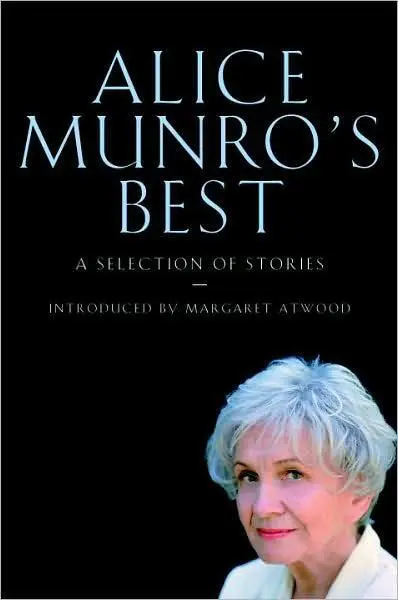
- Название:Alice Munro's Best
- Автор:
- Издательство:McClelland & Stewart
- Жанр:
- Год:2008
- Город:Toronto
- ISBN:9780771065200
- Рейтинг книги:3 / 5. Голосов: 1
-
Избранное:Добавить в избранное
- Отзывы:
-
Ваша оценка:
Alice Munro's Best: краткое содержание, описание и аннотация
Предлагаем к чтению аннотацию, описание, краткое содержание или предисловие (зависит от того, что написал сам автор книги «Alice Munro's Best»). Если вы не нашли необходимую информацию о книге — напишите в комментариях, мы постараемся отыскать её.
This splendid gift edition is sure to delight Alice Munro’s growing body of admirers, what Atwood calls her “devoted international readership.” Long-time fans of her stories will enjoy meeting old favourites, where their new setting in this book may reveal new sides to what once seemed a familiar story; devoted followers may even dispute the exclusion of a specially-beloved story. Readers lucky enough to have found her recently will be delighted, as one masterpiece succeeds another.
The 17 stories are carefully arranged in the order in which she wrote them, which allows us to follow the development of her range. “A Wilderness Station,” for example, breaks “short story rules” by taking us right back to the 1830s then jumping forward more than 100 years. “The Albanian Virgin” destroys the idea that her stories are set in B.C. or in Ontario’s “Alice Munro Country.” And “The Bear Came Over the Mountain,” the story behind the film
, takes us far from the world of young girls learning about sex into unflinching old age.
This is a book to read slowly, savouring each story. It deserves a place in every Canadian book-lover’s library.
Alice Munro's Best — читать онлайн бесплатно полную книгу (весь текст) целиком
Ниже представлен текст книги, разбитый по страницам. Система сохранения места последней прочитанной страницы, позволяет с удобством читать онлайн бесплатно книгу «Alice Munro's Best», без необходимости каждый раз заново искать на чём Вы остановились. Поставьте закладку, и сможете в любой момент перейти на страницу, на которой закончили чтение.
Интервал:
Закладка:
“It isn’t that small a car,” said Andrew huffily.
“That’s not the point,” I said. “The point is, it isn’t any of his business!”
WE SENT THE second night in Missoula. We had been told in Spokane, at a gas station, that there was a lot of repair work going on along Highway 2, and that we were in for a very hot, dusty drive, with long waits, so we turned onto the interstate and drove through Coeur d’Alene and Kellogg into Montana. After Missoula, we turned south toward Butte, but detoured to see Helena, the state capital. In the car, we played Who Am I?
Cynthia was somebody dead, and an American, and a girl. Possibly a lady. She was not in a story. She had not been seen on television. Cynthia had not read about her in a book. She was not anybody who had come to the kindergarten, or a relative of any of Cynthia’s friends.
“Is she human?” said Andrew, with a sudden shrewdness.
“No! That’s what you forgot to ask!”
“An animal,” I said reflectively.
“Is that a question? Sixteen questions!”
“No, it is not a question. I’m thinking. A dead animal.”
“It’s the deer,” said Meg, who hadn’t been playing.
“That’s not fair!” said Cynthia. “She’s not playing!”
“What deer?” said Andrew.
I said, “Yesterday.”
“The day before,” said Cynthia. “Meg wasn’t playing. Nobody got it.”
“The deer on the truck,” said Andrew.
“It was a lady deer, because it didn’t have antlers, and it was an American and it was dead,” Cynthia said.
Andrew said, “I think it’s kind of morbid, being a dead deer.”
“I got it,” said Meg.
Cynthia said, “I think I know what morbid is. It’s depressing.”
Helena, an old silver-mining town, looked forlorn to us even in the morning sunlight. Then Bozeman and Billings, not forlorn in the slightest — energetic, strung-out towns, with miles of blinding tinsel fluttering over used-car lots. We got too tired and hot even to play Who Am I? These busy, prosaic cities reminded me of similar places in Ontario, and I thought about what was really waiting there — the great tombstone furniture of Roger and Caroline’s dining room, the dinners for which I must iron the children’s dresses and warn them about forks, and then the other table a hundred miles away, the jokes of my father’s crew. The pleasures I had been thinking of — looking at the countryside or drinking a Coke in an old-fashioned drugstore with fans and a high, pressed-tin ceiling — would have to be snatched in between.
“Meg’s asleep,” Cynthia said. “She’s so hot. She makes me hot in the same seat with her.”
“I hope she isn’t feverish,” I said, not turning around.
What are we doing this for, I thought, and the answer came — to show off. To give Andrew’s mother and my father the pleasure of seeing their grandchildren. That was our duty. But beyond that we wanted to show them something. What strenuous children we were, Andrew and I, what relentless seekers of approbation. It was as if at some point we had received an unforgettable, indigestible message — that we were far from satisfactory, and that the most commonplace success in life was probably beyond us. Roger dealt out such messages, of course — that was his style — but Andrew’s mother, my own mother and father couldn’t have meant to do so. All they meant to tell us was “Watch out. Get along.” My father, when I was in high school, teased me that I was getting to think I was so smart I would never find a boyfriend. He would have forgotten that in a week. I never forgot it. Andrew and I didn’t forget things. We took umbrage.
“I wish there was a beach,” said Cynthia.
“There probably is one,” Andrew said. “Right around the next curve.”
“There isn’t any curve,” she said, sounding insulted.
“That’s what I mean.”
“I wish there was some more lemonade.”
“I will just wave my magic wand and produce some,” I said. “Okay, Cynthia? Would you rather have grape juice? Will I do a beach while I’m at it?”
She was silent, and soon I felt repentant. “Maybe in the next town there might be a pool,” I said. I looked at the map. “In Miles City. Anyway, there’ll be something cool to drink.”
“How far is it?” Andrew said.
“Not so far,” I said. “Thirty miles, about.”
“In Miles City,” said Cynthia, in the tones of an incantation, “there is a beautiful blue swimming pool for children, and a park with lovely trees.”
Andrew said to me, “You could have started something.”
BUT THERE WAS a pool. There was a park too, though not quite the oasis of Cynthia’s fantasy. Prairie trees with thin leaves — cottonwoods and poplars — worn grass, and a high wire fence around the pool. Within this fence, a wall, not yet completed, of cement blocks. There were no shouts or splashes; over the entrance I saw a sign that said the pool was closed every day from noon until two o’clock. It was then twenty-five after twelve.
Nevertheless I called out, “Is anybody there?” I thought somebody must be around, because there was a small truck parked near the entrance. On the side of the truck were these words: We have Brains, to fix your Drains. (We have Roto-Rooter too.)
A girl came out, wearing a red lifeguard’s shirt over her bathing suit. “Sorry, we’re closed.”
“We were just driving through,” I said.
“We close every day from twelve until two. It’s on the sign.” She was eating a sandwich.
“I saw the sign,” I said. “But this is the first water we’ve seen for so long, and the children are awfully hot, and I wondered if they could just dip in and out — just five minutes. We’d watch them.”
A boy came into sight behind her. He was wearing jeans and a T-shirt with the words Roto-Rooter on it.
I was going to say that we were driving from British Columbia to Ontario, but I remembered that Canadian place names usually meant nothing to Americans. “We’re driving right across the country,” I said. “We haven’t time to wait for the pool to open. We were just hoping the children could get cooled off.”
Cynthia came running up barefoot behind me. “Mother. Mother, where is my bathing suit?” Then she stopped, sensing the serious adult negotiations. Meg was climbing out of the car — just wakened, with her top pulled up and her shorts pulled down, showing her pink stomach.
“Is it just those two?” the girl said.
“Just the two. We’ll watch them.”
“I can’t let any adults in. If it’s just the two, I guess I could watch them. I’m having my lunch.” She said to Cynthia, “Do you want to come in the pool?”
“Yes, please,” said Cynthia firmly.
Meg looked at the ground.
“Just a short time, because the pool is really closed,” I said. “We appreciate this very much,” I said to the girl.
“Well, I can eat my lunch out there, if it’s just the two of them.” She looked toward the car as if she thought I might try to spring some more children on her.
When I found Cynthia’s bathing suit, she took it into the changing room. She would not permit anybody, even Meg, to see her naked. I changed Meg, who stood on the front seat of the car. She had a pink cotton bathing suit with straps that crossed and buttoned. There were ruffles across the bottom.
“She is hot,” I said. “But I don’t think she’s feverish.”
I loved helping Meg to dress or undress, because her body still had the solid unself-consciousness, the sweet indifference, something of the milky smell, of a baby’s body. Cynthia’s body had long ago been pared down, shaped and altered, into Cynthia. We all liked to hug Meg, press and nuzzle her. Sometimes she would scowl and beat us off, and this forthright independence, this ferocious bashfulness, simply made her more appealing, more apt to be tormented and tickled in the way of family love.
Читать дальшеИнтервал:
Закладка:
Похожие книги на «Alice Munro's Best»
Представляем Вашему вниманию похожие книги на «Alice Munro's Best» списком для выбора. Мы отобрали схожую по названию и смыслу литературу в надежде предоставить читателям больше вариантов отыскать новые, интересные, ещё непрочитанные произведения.



Обсуждение, отзывы о книге «Alice Munro's Best» и просто собственные мнения читателей. Оставьте ваши комментарии, напишите, что Вы думаете о произведении, его смысле или главных героях. Укажите что конкретно понравилось, а что нет, и почему Вы так считаете.