John Hawkes - Second Skin
Здесь есть возможность читать онлайн «John Hawkes - Second Skin» весь текст электронной книги совершенно бесплатно (целиком полную версию без сокращений). В некоторых случаях можно слушать аудио, скачать через торрент в формате fb2 и присутствует краткое содержание. Год выпуска: 1964, ISBN: 1964, Издательство: New Directions, Жанр: Современная проза, на английском языке. Описание произведения, (предисловие) а так же отзывы посетителей доступны на портале библиотеки ЛибКат.
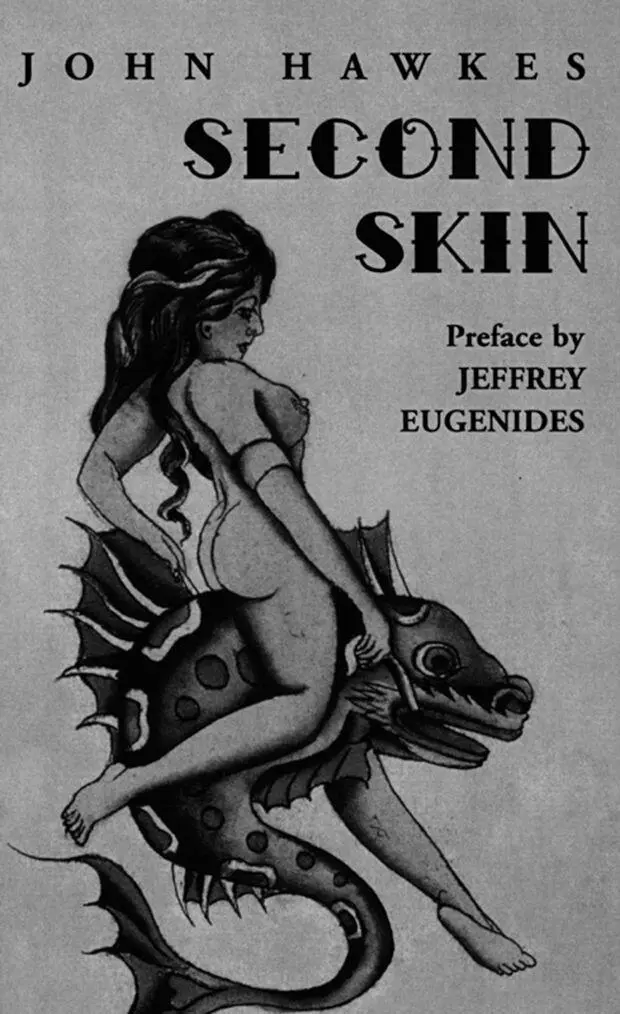
- Название:Second Skin
- Автор:
- Издательство:New Directions
- Жанр:
- Год:1964
- ISBN:978-0811216449
- Рейтинг книги:3 / 5. Голосов: 1
-
Избранное:Добавить в избранное
- Отзывы:
-
Ваша оценка:
Second Skin: краткое содержание, описание и аннотация
Предлагаем к чтению аннотацию, описание, краткое содержание или предисловие (зависит от того, что написал сам автор книги «Second Skin»). Если вы не нашли необходимую информацию о книге — напишите в комментариях, мы постараемся отыскать её.
Combining unflinching descriptions of suffering with his sense of beauty, Hawkes is a master of nimble and sensuous prose who makes the awful and mundane fantastic, and occasionally makes the fantastic surreal.
Second Skin — читать онлайн бесплатно полную книгу (весь текст) целиком
Ниже представлен текст книги, разбитый по страницам. Система сохранения места последней прочитанной страницы, позволяет с удобством читать онлайн бесплатно книгу «Second Skin», без необходимости каждый раз заново искать на чём Вы остановились. Поставьте закладку, и сможете в любой момент перейти на страницу, на которой закончили чтение.
Интервал:
Закладка:
“Good night, you two,” I called anyway, and was alone with my music, the drunk GI, the woman who began clearing away the debris. Alone with the miniature silver dog. But not for long. Because before I could sit down with the drunk GI Fernandez retuned, breathless, guarded, already smelling of Cassandra’s scent, and held out to me the Edgeworth tobacco tin in which he kept his spiv, that terrible little weapon made of a broken razor blade.
“For you, Papa Cue Ball,” he said. “Take it. In case that one there,” jerking his elbow at the soldier, “in case that one tries to cause you any trouble when he wakes up. It’s better to be ready for him, just in case. …
“Thanks, Fernandez. But wait,” trying to detain him, watching him slip off not toward the shrouded staircase but toward the littered street outside, “where are you going?”
“For the guitar, Papa Cue Ball. There would be no romance without my green guitar.”
But I was alone. Alone in this mining town of rusted iron pipe and settling rock and corrugated paper turned to mold. AJone with my heavy stomach, my heartburn, the dizziness I still suffered from the altitude. I paced up and down the dark room, I tried unsuccessfully to make friends with the wretched little silver dog. Apparently the woman expected me to climb to my own room upstairs and sleep, but I told her that I had spent so many months at sea that I found it difficult to sleep in a bed ashore. Why didn’t she bring me a beer, I asked her, and also one for the soldier and, if she liked, a beer for herself as well? She nodded, and then she put her fat brown hand on my arm and gave it a squeeze.
I told her I would sit down and keep the soldier company. So I pulled out a chair and took a seat. The head of black curly hair was buried in the crossed arms, the khaki shirt was disheveled, the cuffs were unbuttoned and drawn back from the thin gray wrists, and I noticed the outline of a shoulder patch which had been removed and no doubt destroyed.
“Hey, Joe,” I said. “Wake up, Joe. How about joining me for a beer?” No answer. No sound of breathing, not even the faint exhalation of a low moan. I leaned close to the hidden head to listen but there was nothing. I touched his elbow, I shook him by the arm. “Joe,” I said, “two lone servicemen ought to join forces, don’t you think?” But there was nothing. Only the rats, a little wind through the timbers, the first wailing chords struck on the guitar upstairs.
Then, on a tray this time, she brought out three beers and also a tin basin of warm water and a scrap of rag. And slowly she put down the glasses, arranged the rag and basin next to the GI and sat close beside him. We drank to each other — dark eye on mine, little silver dog huddled between her breasts — and still holding her glass and without taking her eyes from mine she reached out her free hand, took a chubby fistful of black curly hair and pulled the GI upright, let his head loll over the back of the chair.
“Is he OK?” I whispered, “is he alive?”
She nodded, drank another sip of beer. Then she showed me the back of her small shapeless hand, held her hand up like a club.
“You did it?” I whispered and pushed aside my beer, leaned away from the two of them. “You mean you did that to him yourself?”
More nodding, more sipping, a soft shadow of pride passing over the greasy brown contours of her round face, more searching looks at me. And then suddenly she finished off her beer and, softly talking all the while to the dog and now and then glancing at me, she cradled the GI’s head and dipped the rag and went to work on him. With age-old tenderness she ran the rag over the lips, under the eyes, around the nose, again and again dipping the rag, squeezing, returning with heavy breath to the gentleness of her occupation. The white face began to emerge and already the water, I could see, was a soft rich color, deep and dark.
When the dog tipped its tiny nose over the edge of the basin I stood up. And quickly, without commotion, I left them there, the preoccupied fat woman bent over her task and the soldier moaning in the crook of her arm — he had begun to moan at last — and I groped my way outside and knelt at the nearest pile of rubble and upchucked into the rubble to my heart’s content, let go with the tortillas, the hot tamales, the champagne, nameless liquor and beer, knelt and clung to a chunk of mortar and gooseneck of rusted pipe and threw open the bilge, had a good deep rumble for myself.
Anyone who has gotten down on his knees to vomit has discovered, if only by accident, the position of prayer. So that terrible noise I was making must have been the noise of prayer, and the effect, as the spasms faded and the stomach went dry, was no doubt similar to the peace that follows prayer. In my own way I was contrite enough, certainly, had worked hard enough there in the rubble to deserve well the few moments when a little peace hung over me in the wake of the storm that had passed.
I breathed, I smeared my face in my handkerchief, I climbed to my feet. It was a job done, and now the night, I knew, was going to fly away fast. Too bad for them, I thought, too bad for me. It hadn’t ended well but it had ended.
And now I was wandering and the opera house was like a decapitated turret or the remains of a tiny and monstrous replica of a Rhine castle. A few curtain wires flapping loose in the wind, a couple of sandbags and a little gilt chair upside down in the entrance hall, a pile of handbills. Another house of pleasure for the men in the drifts. And how many performances did my Mexican love attend? How many with some other little hairless rat-shaped dog tucked under her arm? How many with a mouthful of pepitas and a heavy hand on her rolling thigh and bright candles lit all the way across the little stage? I would never know. But there was life yet in that miniature lopsided castle of bygone scratching orchestras and flouncing chorus girls and brawling applause. So I began to feel my way up the narrow stairs. I climbed as high as the first balcony, climbed up into the fading night and could go no further, for the second balcony, the roof, the stage, all of it was gone and there was only a scattering of broken glass, the wind in my face, the feeling of blackness and a good view of the pitiless gorge and hapless town. I could make out the squat deeper shadow of the far-off Packard, I could hear the guitar. The dawn was rising up to my nostrils.
And then I saw those two enormous soft rolls of faded tickets which — by what devilish prank? what trick of time? — had been printed up for a movie that had starred Rita Hayworth, I remembered, as the unfaithful mistress of a jealous killer who escaped from prison midway through the first reel of the film. Shotguns, touring cars, acid in the face, long hair soaking wet in the rain— it was a real find, that memory, those rolls of tickets, and I scooped them up and tore them into ten-foot lengths and tied them to the broken railing, to upright twists of iron, to the arms of ravaged chairs, and watched all those paper strips snapped out onto the wind and listened to the distant sounds of my little son-in-law shouting at my poor daughter and beating on the neck of the guitar, and emptied my pockets, threw my remaining handfuls of confetti out onto the wind. It was a fete of mildewed paper and wild sentiment, a fete for three.
And in that flapping dawn — sky filled with rose, silver, royal blue — I opened the Edgeworth tobacco tin, for a long while stared at the razor blade inside. Then slowly, can and all, I tossed it over the edge of the first balcony. And seven and a half months after that flapping dawn in the mountains Pixie poked her little nose into the world — premature, an incubator baby — and sixteen months after that same rose and silver and royal blue dawn they were putting Gertrude’s poor body into the ground. Thank God for the old PBY’s and for a captain who did not interfere when I left the ship to be on hand back home as needed in City Hall or maternity ward or cemetery. Thank God for the boys who flew those old PBY’s straight to the mark.
Читать дальшеИнтервал:
Закладка:
Похожие книги на «Second Skin»
Представляем Вашему вниманию похожие книги на «Second Skin» списком для выбора. Мы отобрали схожую по названию и смыслу литературу в надежде предоставить читателям больше вариантов отыскать новые, интересные, ещё непрочитанные произведения.






Обсуждение, отзывы о книге «Second Skin» и просто собственные мнения читателей. Оставьте ваши комментарии, напишите, что Вы думаете о произведении, его смысле или главных героях. Укажите что конкретно понравилось, а что нет, и почему Вы так считаете.