John Hawkes - Second Skin
Здесь есть возможность читать онлайн «John Hawkes - Second Skin» весь текст электронной книги совершенно бесплатно (целиком полную версию без сокращений). В некоторых случаях можно слушать аудио, скачать через торрент в формате fb2 и присутствует краткое содержание. Год выпуска: 1964, ISBN: 1964, Издательство: New Directions, Жанр: Современная проза, на английском языке. Описание произведения, (предисловие) а так же отзывы посетителей доступны на портале библиотеки ЛибКат.
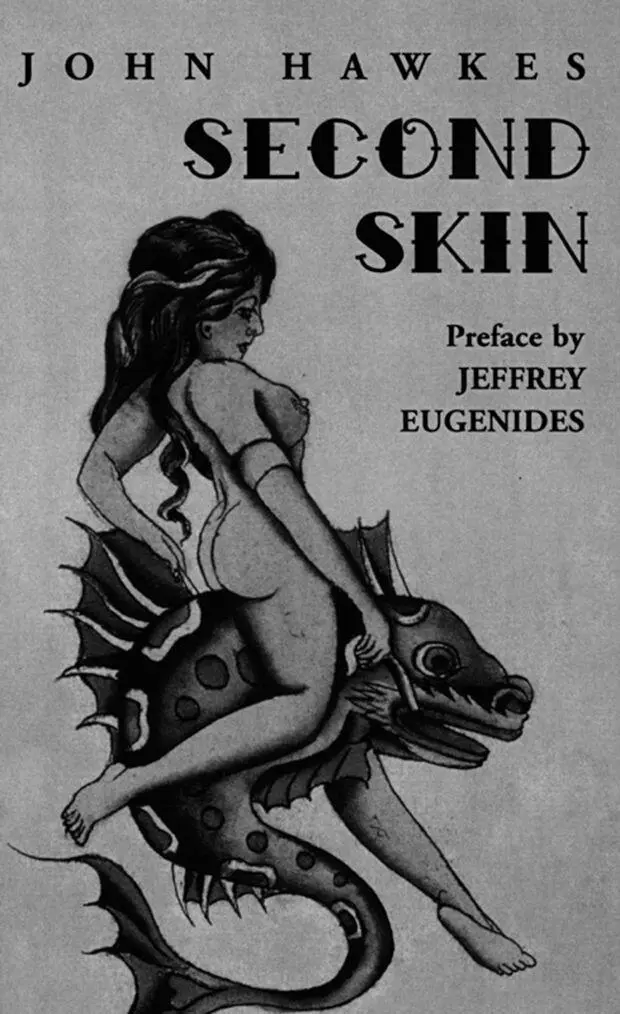
- Название:Second Skin
- Автор:
- Издательство:New Directions
- Жанр:
- Год:1964
- ISBN:978-0811216449
- Рейтинг книги:3 / 5. Голосов: 1
-
Избранное:Добавить в избранное
- Отзывы:
-
Ваша оценка:
Second Skin: краткое содержание, описание и аннотация
Предлагаем к чтению аннотацию, описание, краткое содержание или предисловие (зависит от того, что написал сам автор книги «Second Skin»). Если вы не нашли необходимую информацию о книге — напишите в комментариях, мы постараемся отыскать её.
Combining unflinching descriptions of suffering with his sense of beauty, Hawkes is a master of nimble and sensuous prose who makes the awful and mundane fantastic, and occasionally makes the fantastic surreal.
Second Skin — читать онлайн бесплатно полную книгу (весь текст) целиком
Ниже представлен текст книги, разбитый по страницам. Система сохранения места последней прочитанной страницы, позволяет с удобством читать онлайн бесплатно книгу «Second Skin», без необходимости каждый раз заново искать на чём Вы остановились. Поставьте закладку, и сможете в любой момент перейти на страницу, на которой закончили чтение.
Интервал:
Закладка:
“Skipper?” Cassandra was staring ahead, whispering, driving with her bright new wedding ring high on the wheel, “Light me a cigarette. Please.” So I opened the purse — how long now had I been waiting for an excuse to open that purse? for a chance to get a peek inside that purse even in the smelly darkness of the speeding car? — and found the cigarettes and a little glossy unused booklet of paper matches and put one of her cigarettes between my lips and struck one of the matches — puff of orange light, sweet taste of sulphur — and smelled the blue smoke, and placed the white cigarette between the fingers which she held out to me in the V-for-victory sign. And during all the long miles we chalked up that night — tunnels of love through the trees, black Pacific deep and hungry and defiant down there below the highway, which was always honeymoon highway to me when that night had passed — and until we reached the hotel far up in the mountains, that was all Cassandra said to me, but it was enough. She had changed. There is a difference between a young bride with crimson flowers and a young woman driving a dirty old forest green Packard with her white pointed toe just reaching the accelerator and a cigarette burning in her pretty mouth. What bride wants to keep her eyes on the road? So she had changed. She would never lose the invisible encyclopedia balanced on the crown of her head and would always be identified for me with the BVM. But behind her anticipation — why else the new purse? why else the patent leather traveling bag? or why the monogram? — and behind whatever vision she may have had of matrimony, there was a change. Still hopeful, still feeling joy, but smoking an unaccustomed cigarette and tasting fate. In the darkness I noticed that one of her pendant earrings had disappeared, and I was sorry and irritated at the same time, wanted to tell her to remove its mate or to let me take it off myself. But I held my peace.
And Fernandez? Fernandez, I knew, was drunk. At least he was a jealous custodian of the bottle, or inconsiderate groom, a testy son-in-law. And forty or fifty miles beyond El Chico Rio the black sprawling ominous interior of the Packard was filled suddenly with the elated piercing sounds of a wolfish whistle, and I saw that Fernandez was sitting on the edge of the seat with the bottle gripped between his knees and two fingers stuck between his teeth, grinning, staring at Cassandra, whistling those two loud terrible notes of his crude appreciation, and I knew that Fernandez was drunk or at least that he had given way, at last, to the psychic tensions of his mysterious past.
“Control yourself, Fernandez,” I said, trying at any cost to preserve the humor of our journey, “we have a long night ahead of us.”
“The heart cries out,” he said, dully, morosely, “the heart demands satisfaction, nothing less. But my wife will know what I mean,” nodding, wiping his brow. “Know what I mean, Chicken?”
The mere expression on her white face appeased him, though not for long because all at once we could see the moon shattering on the black chaos of the Pacific far below us and the first cigarette package was empty and Fernandez was hunched in the furthest dark comer of the car.
“Fernandez?” Softly, cheerfully, touching him lightly on the shoulder: “Are you all right? Shall we stop for a minute?”
“Drive on, good Papa Cue Ball, drive on,” he said, and I saw that he had removed his shoes, removed his green socks, rolled the white linen trousers up to his knees. What next? His legs were perfect white shapely bowling pins, and he was arching one foot, wriggling the toes, flexing one calf.
“Hey, Chicken! You like cheesecake? You like cheesecake, Chicken?”
The Packard swerved once — headlights chopping through the trees — but Cassandra applied the brakes, steadied her hands on the wheel, and we recovered again, accelerated, sped around a curve with the moon going great guns again and Fernandez quickly repeating the marriage service to himself in Spanish. And then my heart was floating in a dark sea, in my stomach the waves were commencing their dark action. And yet for two more hours I was aware of everything, the climbing Packard, sudden feeling of elevation, hairpin turns in the road, small rocks in the road, Cassandra’s white skirt riding above her knee, moon flitting behind stark silhouetted peaks, the white plastic Madonna fixed and comforting on the dashboard, clearly aware of Fernandez sitting upright and all at once talking happily at my side.
“It’s silver mining country, Chicken. You see? Mountains of the great silver deposits. Think of the lost cities, the riches, thousands of little sure-footed burros laden with silver. Do you understand my feeling, Chicken? Silver is the precious metal of the church, the metal of devotion, ceremony, candlelight. The treasure of the heart, the blessed metal of my ancestors and of my somber boyhood. Out of these mountains they dug silver for old coins, Chicken, silver for the heavy girdles of young brides. Think of it. …
And slumped between them I listened, held my peace, drifted higher and higher into those black gutted mountains. There were ravines and cliffs and falling boulders all waiting to finish off the Packard, and we left our tire tracks in patches of fresh snow. Yet I merely grinned to myself, tried to imagine what our exact altitude might be.
… stumbling forward with the monogrammed traveling case in my hand, in the beam of the headlights stumbling, trying to breathe, feeling exhilarated despite the dizziness and pain in my eyes. “Is this it, Fernandez?” I called over my shoulder, hatless and suddenly hot and cold at the same time. “Pretty high up, Fernandez!”
“This is it, Papa Cue Ball,” he called back to me. “Honeymoon Hide-Away, which is the best place in all Southern Cal for the young men and women who have just taken the vows of marriage!”
Narrow rock-strewn deserted place, beginning of a steep gorge ringed with peaks, and I stumbled, paused, struggled for breath, looked up at the cold diminishing stars and birdless peaks. We were trapped, I knew. And yet I was unaccountably pleased to see that at the end of the headlights’ dull beam there was a shattered stone wall of a demolished building and leaning against it, fat and sullen and holding a little hairless dog in her arms, a Mexican woman who remained alone now with her little dog in all this rubble. I wondered how long she had been leaning there waiting to meet us.
“Señorita ,” I called, “buenas noches!” And I waved — she was a match for me, the fat brown unsmiling mother of that wrecked mining town — and hurried after her with the blood draining from my eyes and my heart pounding. Around the corner I found only a single sharply inclined street of the abandoned mining town, only a barred window, a row of doorless openings, a chimney fallen intact across the street like the skeleton of some enormous snake, a few streaks of moonlit mortar and a few jagged heaps of dislocated stone still lodged there in the bottom of the sheer gorge. Ruin. Slow collapse. The rank odor of dead enterprise.
But there was light in the hotel and the heavy long empty bar was ornamented with the plump naked bodies of young Victorian women carved in bas-relief and lying prone on their rounded sides down all the length of that dark dusty wood. A light in the Hide-Away, and I rushed inside, dropped Cassandra’s traveling case beside the bar.
“Three beers, Señorita,” I said — she was standing in the shadows next to an old nickel-plated cash register that looked like a cranky medieval machine of death—“and the rooms are ready? You’ve got the rooms ready for us, I hope?”
She waited. Her small eyes were bright and glittering in the shadow, she could have been afraid or sullen but there was beauty still in the dark reticence of her enormous size. Then she moved, stood the little silver hairless dog on the bar — obedient, trembling, scared to death — and turned her back on me, groaned and stooped out of sight. It was a slow intimate process, the procuring of that first beer, headless, tepid, drawn in a small Coca-Cola glass and from what spigot or rancid keg I was unable to see, but at last she set the glass in front of me and braced herself against the bar, moved the dog out of my arm’s reach. Then she turned again and in the same way produced the second glass, and the third, until the three glasses stood in a bitter row and the dog tipped its sharp trembling ears at me from the far side of the cash register. I thought the woman’s eyes were warmer when she slid the last beer in line, at least her breath — rich, flaring, full of provocative hot seasoning and rotten teeth — was closer to my face and stronger.
Читать дальшеИнтервал:
Закладка:
Похожие книги на «Second Skin»
Представляем Вашему вниманию похожие книги на «Second Skin» списком для выбора. Мы отобрали схожую по названию и смыслу литературу в надежде предоставить читателям больше вариантов отыскать новые, интересные, ещё непрочитанные произведения.


Обсуждение, отзывы о книге «Second Skin» и просто собственные мнения читателей. Оставьте ваши комментарии, напишите, что Вы думаете о произведении, его смысле или главных героях. Укажите что конкретно понравилось, а что нет, и почему Вы так считаете.