Stanley Elkin - George Mills
Здесь есть возможность читать онлайн «Stanley Elkin - George Mills» весь текст электронной книги совершенно бесплатно (целиком полную версию без сокращений). В некоторых случаях можно слушать аудио, скачать через торрент в формате fb2 и присутствует краткое содержание. Год выпуска: 2010, Издательство: Open Road Integrated Media LLC, Жанр: Современная проза, на английском языке. Описание произведения, (предисловие) а так же отзывы посетителей доступны на портале библиотеки ЛибКат.
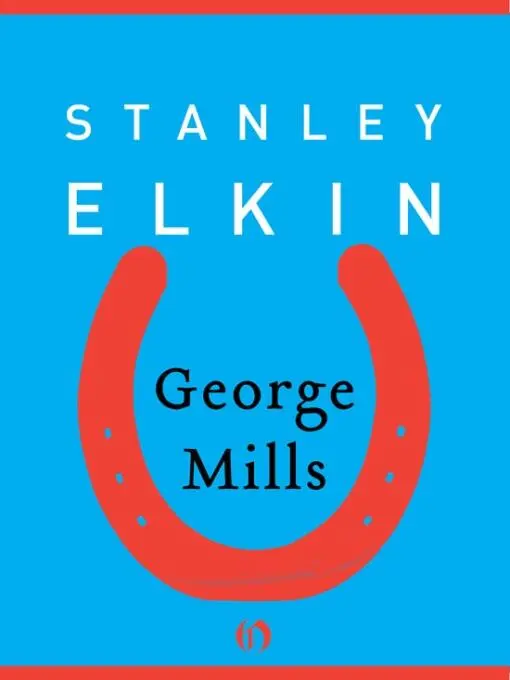
- Название:George Mills
- Автор:
- Издательство:Open Road Integrated Media LLC
- Жанр:
- Год:2010
- ISBN:нет данных
- Рейтинг книги:3 / 5. Голосов: 1
-
Избранное:Добавить в избранное
- Отзывы:
-
Ваша оценка:
George Mills: краткое содержание, описание и аннотация
Предлагаем к чтению аннотацию, описание, краткое содержание или предисловие (зависит от того, что написал сам автор книги «George Mills»). Если вы не нашли необходимую информацию о книге — напишите в комментариях, мы постараемся отыскать её.
George Mills — читать онлайн бесплатно полную книгу (весь текст) целиком
Ниже представлен текст книги, разбитый по страницам. Система сохранения места последней прочитанной страницы, позволяет с удобством читать онлайн бесплатно книгу «George Mills», без необходимости каждый раз заново искать на чём Вы остановились. Поставьте закладку, и сможете в любой момент перейти на страницу, на которой закончили чтение.
Интервал:
Закладка:
The man seemed bewildered. He turned to George. “Where have you come from?”
“Milwaukee,” George said.
“Was it your brother or sister you lost?”
George looked to his father for help.
“Hey, you, watch it,” his father said angrily.
“Which was it, Mother,” the big man asked, “your son or your daughter?”
“I miscarried some years ago,” his mother said. “A little girl.” Her eyes were red.
“Had you named her yet? They’re easier to locate if they had a name.”
“She was born dead,” his mother said.
“Of course,” the man said, “but often a name’s been picked out. Even if there were only one or two you were merely favoring. Were you going to call the child after a relative? Were you thinking of giving her your name?”
“Come on, Nancy,” George Mills said. “We’ve made a mistake.”
“Nancy,” the man said sweetly. “She’d have been Nancy.”
“Let’s go.” He picked up the suitcase and turned to leave.
“I preferred Janet,” his mother said softly.
“Yes,” he said. “Janet’s a fine name.”
“Let’s go,” Mills said, “let’s just go. ” But his wife was weeping now, his son had begun to sob. “Ah, for Christ’s sake,” his father said, setting the suitcase down again.
He was not crying for the stillborn sister whom he had seen only briefly in a blur of swaddling and whose name he had just heard for the first time, and not for his mother whose grief seemed to trigger his own, nor even for his suddenly confused, uncomfortable father. He wept as children in fairy tales did. It wasn’t even grief. It was fear. How could he ever have supposed that there was no difference between where they were and where they’d come from? They were lost, all of them. They were missing persons.
He had little moral imagination. His sense of evil was circumscribed by his ideas about the wicked, what they could do to you, the harm in villains. Only the monstrous and disfigured. Not murderers and holdup men but murderers and holdup men hobbled and joined at the ankles — some chain reaction of the irrational. Even their uniforms — the guards’ as well as the convicts’—suggesting action in multiples, armies of bad men, familied, for all he knew actually related, blooded. (This would have been in the days of the Dillingers and Babyface Nelsons and Capones and others, gangs, clans, tribes, confederated in wickedness and villainy like the red savages he read about in books.) The town, the community itself, presented just such a face to him, its east-west axes like its north-south ones, the configuration of each block like that of its neighbor. All the churches — he knew they were churches now — advertised on the glass-encased hoarding and reverends — he knew there were reverends, men and maybe even women, too, like the dark-robed fellow who spoke of his dead sister, the two-year-buried little girl — in all the rectories, vicarages, and parsonages like the one they stood in.
“I said let’s go,” his father said. “I said let’s get out of here.”
“Before I’ve shown you your daughter?” the big man said. “Before I’ve brought her back to speak to you?”
His father was holding the door open. “George?” he said. “Nancy?”
“Can’t we just see her first, George?” his wife said.
“Can we?” his son asked. He had an idea she was somewhere in the house, the old man keeping her for them like shoes brought in for repair.
“Go on,” the man told them gently. “I’m sorry,” he said to his father. “It’s near dark. If you leave now you can walk back to the highway while there’s still some light left.”
“How do you know one of those cars parked outside isn’t mine?”
“You have no automobile.”
“Sure we do. It’s parked a few houses down.”
“You have no machine,” the old man said.
“You hear that, Nancy?” his father said shrewdly. “That’s the man you’d let show you the child we lost. An old woman who ain’t got nothing better to do than hide out behind his curtains and spy on folks.”
“If you had an auto you’d have locked that suitcase in it.”
“All right, Reverend,” his father relented, “I guess you got me there. There’s no car. But here’s where I got you. We ain’t got any money for your medicine show. We’ve put a little by for milk and bread and a buck or so for a clean kip once in a while till we get settled, but we failed to set anything aside for apparitions or haunt house card tricks, so unless you work free like those orange picker murderers, you might just as well lift the charm or spell off Nancy and the kid and let us all get going.”
“A dollar?” the man said.
“Sure,” his father said, “if you start acting like a proper landlord and just keep the tables from rapping so we can get some sleep. If the ouija boards are all put away and the sheets are fresh. I’ll give you a dollar. What do you say, old Merlin?”
“Stay the night. I won’t charge you.”
“Here’s your buck,” his father said.
“I won’t charge you.”
“You ain’t my uncle,” his father said, pressing money into the man’s hand.
“I invited you,” he said.
“And I’m obliged to you,” his father said, “but near as I can tell you’re just some working stiff like me and George too will be someday if we can only just get him the proper sleep every so often. Don’t worry about the money. You’d have taken that, and more too, I guess, if only we’d agreed to look into that crystal ball of yours.”
“You think I’m a fake,” the big man said, slipping the dollar his father had given him into a pocket in his robe.
“Well,” his father said mildly, “at least a rotten businessman. I see lots more cars parked in front of them other congregations.”
The big man made their bed up for them in what they did not know yet was the master bedroom. Then he went downstairs to his dimly lighted parlor, waiting, they supposed, for someone else to come to his door. Later, George Mills heard his heavy step on the stairs when he came up again to make up his cot and lie down in the small spare bedroom down the hall.
In fact, the loose dark robe was a sort of dressing gown, not Wickland’s working clothes at all. These, like those of most of the psychics, parapsychologists, clairvoyants, and occultists in Cassadaga, were ordinary business suits, the customary browns and grays and faintly baggy wool garments of traveling salesmen or reporters, say — vested, fobbed, long and thickly flied. He was given to brightly colored sleeve garters. Otherwise his clothing was sober, the color of fedoras or suits in snapshots. Nor was there much in the way of paraphernalia about the house, little of the gear George or his parents might have expected. Though they were to see this stuff too, plenty of it, during their long sojourn in the queer town, George, before Wickland found other uses for him, a sort of errand boy, as the only kid in town a community asset, his services on call, available to everyone, all of them, like the Fire Department they did not have or the doctor they did not need.
Meanwhile his father found work, underbidding the prison officials for the contract on the town’s small square and streets. He did other things too of course, driving one or another of the spiritualists’ cars the fifteen miles into De Land each day — where the circus had its winter quarters — to pick up their mail at the PO boxes they rented there, mailing the parcels and pamphlets they sent out, the letters and phonograph records with their special messages from the dead, to almost all of the forty-eight states. And working in the darkrooms, taught to develop the blurred photographs he was told were auras, bringing out the burning images of spirit photography in sharp detail so that he became almost a technician, driving with their copy all the way to the Orlando printers and, after a while, choosing the stock, selecting the font, sometimes even suggesting the layouts, the color of the boards, a sort of agent ombudsman who dickered with the printers about the proper discount when mistakes were made, the proofreading off or the bundles mismanaged. And a kind of constable too, without the powers of arrest of course, but a sort of agent for the town here too, like a volunteer in a tourist booth, actually wearing a badge with a four-digit number on it, like a code stamped on a tin can, and from time to time getting actually physical, servicing the town the way a bouncer might vigilante a bar or roadhouse, though these occasions were rare, the grief-stricken and mentally ill being by and large a docile lot, wonderful folks to do business with.
Читать дальшеИнтервал:
Закладка:
Похожие книги на «George Mills»
Представляем Вашему вниманию похожие книги на «George Mills» списком для выбора. Мы отобрали схожую по названию и смыслу литературу в надежде предоставить читателям больше вариантов отыскать новые, интересные, ещё непрочитанные произведения.




Обсуждение, отзывы о книге «George Mills» и просто собственные мнения читателей. Оставьте ваши комментарии, напишите, что Вы думаете о произведении, его смысле или главных героях. Укажите что конкретно понравилось, а что нет, и почему Вы так считаете.