Stanley Elkin - George Mills
Здесь есть возможность читать онлайн «Stanley Elkin - George Mills» весь текст электронной книги совершенно бесплатно (целиком полную версию без сокращений). В некоторых случаях можно слушать аудио, скачать через торрент в формате fb2 и присутствует краткое содержание. Год выпуска: 2010, Издательство: Open Road Integrated Media LLC, Жанр: Современная проза, на английском языке. Описание произведения, (предисловие) а так же отзывы посетителей доступны на портале библиотеки ЛибКат.
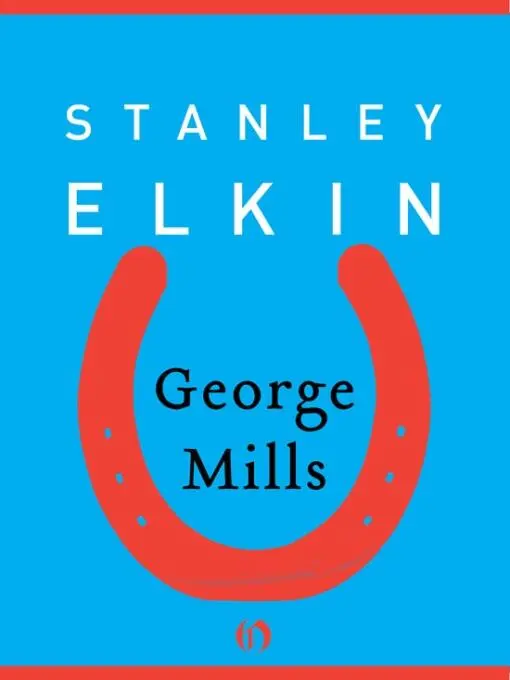
- Название:George Mills
- Автор:
- Издательство:Open Road Integrated Media LLC
- Жанр:
- Год:2010
- ISBN:нет данных
- Рейтинг книги:3 / 5. Голосов: 1
-
Избранное:Добавить в избранное
- Отзывы:
-
Ваша оценка:
George Mills: краткое содержание, описание и аннотация
Предлагаем к чтению аннотацию, описание, краткое содержание или предисловие (зависит от того, что написал сам автор книги «George Mills»). Если вы не нашли необходимую информацию о книге — напишите в комментариях, мы постараемся отыскать её.
George Mills — читать онлайн бесплатно полную книгу (весь текст) целиком
Ниже представлен текст книги, разбитый по страницам. Система сохранения места последней прочитанной страницы, позволяет с удобством читать онлайн бесплатно книгу «George Mills», без необходимости каждый раз заново искать на чём Вы остановились. Поставьте закладку, и сможете в любой момент перейти на страницу, на которой закончили чтение.
Интервал:
Закладка:
Then they saw the chain gang.
It was policing the small square where the bench and palm tree were.
Two guards with rifles slouched along on either side of the line of convicts as they moved across the square picking up cigarette butts, Coca-Cola bottles, the feeble litter of the lightly trafficked park. A third guard sat on the bench watching the prisoners as one might casually watch a ball game played by children, his arms embracing the back of the bench, his rifle balanced against his crotch.
The convicts were actually chained at the legs, the chains drawn so close the men were almost shoulder to shoulder like men on parade. They took small steps like Chinese house servants or young girls in heels. With their backs to them, the thick white and black horizontals of their uniforms seemed a single broad fabric like a wide flag flapping. They looked like staves on sheet music.
George and his mother followed his father to the guard on the bench.
“How do you do?” his father said.
“Are there real bullets in that?” George Mills asked.
“They’re shells, son. Bullets is in handguns.”
“My boy never saw a chain gang,” his father said. “We’re from up North.”
“Up North they lock folks up,” the guard said. “Here they get to go outdoors.”
“What did these men do?” his father said.
“All different things,” the guard said. “Murders and armed robberies. Rapes. Different things.”
“Murders,” his son said. “Gee, they’re not even very big.”
“Size got nothing to do with it, son. Big men can get what they want without killing people.”
“See what can happen, George?” Mills said. “See what they do to you if you grow up wild? Officer, would you mind if we had a word with these men?” His father winked at the guard.
The guard looked at George and returned his father’s wink. His mother said nothing.
“These shells is real, son,” he said, and tapped the chamber of his rifle. “They call ’em shells ’cause they’re so big. They’re bigger than bullets. You get hit with a shell you never get better. You go along with your dad. You listen to what these cons tell you.” The man stood up and blew two shrill blasts on a whistle that hung from his neck. The convicts stopped where they were and came to a sort of attention. “Gary and Henry,” he called out to the other two guards, “these folks is from up North and got a little boy with them who don’t always mind.” He accompanied Mills and his son to the rank of convicts.
“Tell the kid how old you was when you come to us, Frizzer,” the man said.
Before Frizzer could answer, George’s father did an astonishing thing. He took his hat from his head and held it in his hands in exactly the attitude of supplication George had seen hobos employ when they came to his mother’s door in Milwaukee. Status seemed instantly altered, perspective did, his father exchanging actual inches and pounds with the prisoner. There was something religious, even pious about the gesture. It startled George, it startled them all, the prisoners literally moved, forced back, their chains scraping in a sharp, brief, metallic skirl.
“It’s true what your captain says. We’re Northerners. Hard times forced us south. There’s no work up there no more. We come for the sunshine. To catch fish from the water. My boy ain’t had no nourishment in two days. His ma is pregnant. If you got some candy, the sugar in gum…If you could let them drink off the last sweetness in those soda bottles you picked up from the ground. If you could—”
“Wait a minute, hey,” the guard said who had told them about the shells.
“If you saved something from your lunch—”
“Hold on there. What—”
“My boy ain’t had nothing in his mouth these two days, my wife’s been hungry three. Flowers we eat, the crusts from peanut butter and jelly sandwiches from other folks’ picnics in the public parks.”
“Now just a golden goddamn min—”
“I guess I don’t need this fruit,” the convict Frizzer said, and produced an orange from where it had been stored in his blouse.
“Me neither,” said another con and handed over a second orange, placing it beside Frizzer’s in his father’s upturned hat.
“I ain’t hungry,” said a third man, handing his orange to the boy.
“What the hell! ” the guard shouted.
“Thank you,” his father said. “God bless you. God bless you, men. God bless you,” his father said, still like the hobo, dispensing love’s holy wampum, and hurried his wife and son from the square. They disappeared up a street.
“But we all had sandwiches and milk two hours ago,” George said.
“Son of a bitch,” his father said. “ Son of a bitch! ” He was furious, his size restored, not magnified, compact as a middleweight, coiled, latent with force and uppercut, like the clever laborer he was who took weight’s measure, gravity’s marksman.
“What is it? What’s wrong?” his mother said.
“Working conditions!” his father roared. “The competition!” He turned and, as hard as he could, threw the two oranges he still carried back in the direction of the square. “The way they organize the labor around here! Evidently they got to arrest and chain you before they let you work in their parks or pick their oranges. Apparently you first got to kill a man, then arm-rob and rape him before they let you into their union! We might as well stay and get a good night’s rest before we start back home in the morning.”
It was getting on toward dusk. There were cars parked in the street now, two and sometimes three cars in each of the driveways, giving the town or neighborhood or whatever it was a vaguely prosperous look.
“Look at them,” his father said, pointing to the houses, which had now turned on their porch lights, “they’re blind pigs. Or cat-houses. This must be where they apprentice their farmhands. What’s that piano music?”
“Organ,” his wife said.
When he was calmer he jabbed the doorbell of the first carless, unlighted house they came to.
“Reverend?” his father said to the large, powerfully built man who opened the door for them, the hearty, glandless and even organless type George would remember all his life (though he didn’t know this yet and saw only a big old man who looked even bigger in the dark, loose flowing robe he wore like a dress, only not like a dress any woman would wear, and suddenly recalled the prisoners’ strange garb, thinking, So it isn’t the land or trees or animals or even the houses that’s weird down here, it’s the clothes; thinking, There ain’t nothing in Mama’s suitcase like anything they wear in Florida, Mama packed all wrong). “Reverend,” his father said again. “Joe sent me, Reverend. My wife figures you have a spare room, but I figure it’s more like a back room, so you can bring me and her a couple of beers and the boy a Coca-Cola.”
“Why don’t you set your case down?” the big man said. George had never heard a voice like it. Vocal cords could not have produced such clear, resonant sound, only hard, unflexed, lenient muscle. “Your boy’s tired. He’s falling asleep on his feet.”
“We’re all tired, Reverend,” his father said. “Or maybe I should call you Foreman.”
“Foreman?”
“Well, it’s just that I’ve seen your work detail or day shift or whatever you call those chained, shotgun-trained fellows down by the square. I figured the bosses would have to have somewhere to sleep nights, too. Where they could rest their bodies and put down their rifles and jackboots. It would be pretty uncomfortable, fitting all them gun-toting foremen and overseers on just that one bitty bench. Ain’t this the hotel?”
Читать дальшеИнтервал:
Закладка:
Похожие книги на «George Mills»
Представляем Вашему вниманию похожие книги на «George Mills» списком для выбора. Мы отобрали схожую по названию и смыслу литературу в надежде предоставить читателям больше вариантов отыскать новые, интересные, ещё непрочитанные произведения.




Обсуждение, отзывы о книге «George Mills» и просто собственные мнения читателей. Оставьте ваши комментарии, напишите, что Вы думаете о произведении, его смысле или главных героях. Укажите что конкретно понравилось, а что нет, и почему Вы так считаете.