Stanley Elkin - George Mills
Здесь есть возможность читать онлайн «Stanley Elkin - George Mills» весь текст электронной книги совершенно бесплатно (целиком полную версию без сокращений). В некоторых случаях можно слушать аудио, скачать через торрент в формате fb2 и присутствует краткое содержание. Год выпуска: 2010, Издательство: Open Road Integrated Media LLC, Жанр: Современная проза, на английском языке. Описание произведения, (предисловие) а так же отзывы посетителей доступны на портале библиотеки ЛибКат.
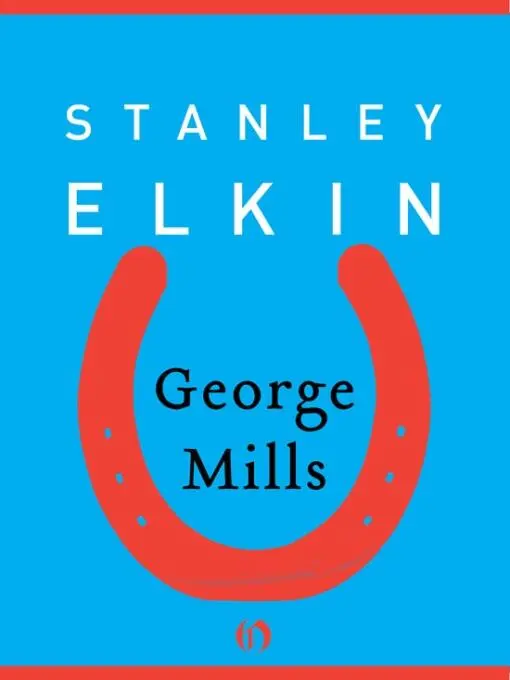
- Название:George Mills
- Автор:
- Издательство:Open Road Integrated Media LLC
- Жанр:
- Год:2010
- ISBN:нет данных
- Рейтинг книги:3 / 5. Голосов: 1
-
Избранное:Добавить в избранное
- Отзывы:
-
Ваша оценка:
George Mills: краткое содержание, описание и аннотация
Предлагаем к чтению аннотацию, описание, краткое содержание или предисловие (зависит от того, что написал сам автор книги «George Mills»). Если вы не нашли необходимую информацию о книге — напишите в комментариях, мы постараемся отыскать её.
George Mills — читать онлайн бесплатно полную книгу (весь текст) целиком
Ниже представлен текст книги, разбитый по страницам. Система сохранения места последней прочитанной страницы, позволяет с удобством читать онлайн бесплатно книгу «George Mills», без необходимости каждый раз заново искать на чём Вы остановились. Поставьте закладку, и сможете в любой момент перейти на страницу, на которой закончили чтение.
Интервал:
Закладка:
“He married Aunt Elizabeth when both were twenty-eight. They had four children, my cousins Redford and Oliver and Susan and Ben, and raised them, he and Elizabeth — I don’t mean strictly, I don’t mean by any theory, I don’t even mean good-naturedly — as naturally as Aunt Elizabeth might put up strawberries, following nothing more than the natural laws and time-honored processes of canning, first this, then that.
“Elizabeth died when the youngest, Oliver, was still in his teens.
“Fine young men, a lovely woman, whose only quarrel that I can now recall was who would get to stay with Joe. The smith profession is, of course, a languishing one, and while it was never a matter of who would make his way in the world, who would get to go off to the state university at Burlington — none would, none wanted to — but rather which would have to hire out, which would have to work the timber or the nearby farms or go to the factories where the money was, and which would remain — they wouldn’t have thought of it as behind — with the benevolent, godlike father they loved as much for his kindness and wisdom as for his paternity.
“ ‘Mother’s dead,’ Susan told him. ‘You have no woman, Father, no one to cook your meals or mend and wash or sing for you. The trade is falling on hard times. You’re only fifty-two. You don’t yet even need our young strength to help you at the forge. Send them away, dear. Let me stay.’
“Redford said, ‘I’m the oldest, Father. It’s the privilege of the oldest son — I don’t say “duty,” I say “privilege,” I could say “right”—to follow in his father’s footsteps, to help him in his profession. I don’t want to take it over, sir. For this I care nothing, though should you desire it I would stay at the forge till after the last horse in Vermont had died, and after that as well. I would repair tools, fit new disks, harrows, shape new heads to nails, fashioning your iron as you taught me, building the fire to 1,535 degrees Centigrade, puddling and shingling, adding your water like transfusion. Allow me to remain, Father. I ask in the name of primogeniture.’
“ ‘I’m the youngest, Pa,’ said Oliver. ‘My boyhood isn’t finished yet. I lost a mother. I’m not ready, Daddy. Don’t send me off.’
“And Ben reminded him he was neither oldest son nor youngest, not special at all, not even female like his sister, that nothing about his birth gave him the special prerogatives or claims the three others had lived with all their lives. It was only justice and fair play, qualities whose names he might not even know had he not learned about them, a mute listener, an undistinguished son and brother, in his father’s shop all his unexceptional life. It was only retroactive equity and redress he was seeking in asking to be allowed to stay with his father. It was only the presentation of a twenty-odd-year-old bill and quit-claim.
“ ‘You can’t ask me,’ Joe told them — they had come separately to make their cases but he answered them together—‘to choose among my children. Your sexes and ages are of no importance. Years make no precedence in love. Biology has no claims on it. You shall have to decide among yourselves.’
“It was only the next valley over, Dr. Kinsley, not the next state or county or even village. None was to be exiled, banished. It was understood that they could take their dinners together, not weekly, mind, but daily if they chose. Joe had built rooms onto his house as they were needed, had carpentered the beds and other furniture for each of his children, so that their living arrangements were not only adequate but actually lavish, the house as trim and ordered and ample to the needs of their bodies and imaginations as a child’s tree house. It was their sense of seemliness and honor that guided them, their knowledge that if they continued to live together as a family now that all but one of them was grown, it would be as a family that had somehow gone off, spoiled in some acute, vinegarish way.
“That was when they quarreled. They did it where their father could not hear them, could not know of it. They had been told that they had to decide by themselves. Logic was useless. These were the claims of need and love. They soon saw that right had nothing to do with it, that each of their arguments was checked and canceled by the equally legitimate arguments of the others.
“ ‘We’ll never convince each other,’ Ben said. ‘We’ll have to fight it out.’
“Even Susan understood that Ben meant physically, that they would have to wrestle and punch for the right to stay with the wonderful old man. They were a blacksmith’s children, had the blacksmith bone and blacksmith muscle. Each had grown up by the forge, each taken his or her turn with the hammer at the anvil. Susan had played with iron as another child might play with sand. They had never quarreled, never fought. They had no idea who was strongest. They didn’t want to hurt each other and, at least in the beginning, each held back, withdrew not as an actual miser might actual money but like some old chivalrous soldier from the hoard of his strength and wile that measured, calibrated advantage he perceived as waste, brutality, overkill, unfair edge. Merely pushing and shoving at first, merely milling about in the baled field of their combat, not so much testing the power of his or her foes as on guard to arrest and counter any sudden thrust. They might have been confronting each other tentatively as so many strikers and scabs, police and demonstrators, so that Redford must have thought of Ben, ‘Why, he’s delicate,’ and Ben of Oliver with whatever of regret his nervousness permitted, ‘Poor frail Ollie, so attenuated finally in those work clothes. He should hire out, the outdoors will do him good,’ and Susan of herself, remembering the anvil she had once actually lifted off the ground just to see if she could do it, ‘Perhaps women are stronger than men, perhaps it’s virginity which gives us the advantage, perhaps all force is moral force.’
“They feinted with each other for half an hour until it must have seemed even to themselves like some badly managed charade, even to country people who had never seen an actual prize fight in an actual ring, whose work was with the seasons, who levered Nature and Nature’s crops, more a shy and nebulous routine of courtship, or the obscure, oblique forms preparatory to hard bargaining and doing business, than anything they were really there for.
“ ‘I’ve been fooling with you,’ Susan admitted suddenly, and knocked Redford down with what she did not even know was an uppercut. Ben jumped on her back and tried to ride her to the ground but Oliver grabbed him from behind and pulled him off.
“The sister and brothers were startled by what had happened, amazed and ashamed by the sudden change that had come over them. Mutual protectors, they were mutual protectors still, but furious now, each rushing to the defense of the other, calculating punishment, doing the meticulous equations of violence and charging against the perpetrator the exact measure of the blow that had been struck. Susan, who had knocked Redford down with an uppercut, was knocked down by an uppercut by Ben. Oliver, who had pulled Ben’s head back while Susan carried him across the field, was himself grabbed about the neck by Redford and thrown to the ground. Susan leaped at Redford to avenge Oliver. They struggled this way for perhaps a quarter of an hour.
“ ‘What we got here ain’t no fight,’ Ben managed breathlessly. ‘What we got here is some antifight.’ It was so. All could see it was so.
“ ‘We got to go all out, I guess,’ Oliver said, ‘or we’ll never fix who gets to stay with Pa.’
“Possibly it was Oliver’s logic. More likely it was the invocation of their dear father that brought them round. In either event, there was a battle royal, a free-for-all which bore about as much relation to the first fifteen minutes of their conflict as the last quarter of a football game does to the pregame ceremonies — the marching bands and prancing mascots and flash cards and all the simple pictographs of loyalty.
Читать дальшеИнтервал:
Закладка:
Похожие книги на «George Mills»
Представляем Вашему вниманию похожие книги на «George Mills» списком для выбора. Мы отобрали схожую по названию и смыслу литературу в надежде предоставить читателям больше вариантов отыскать новые, интересные, ещё непрочитанные произведения.
Обсуждение, отзывы о книге «George Mills» и просто собственные мнения читателей. Оставьте ваши комментарии, напишите, что Вы думаете о произведении, его смысле или главных героях. Укажите что конкретно понравилось, а что нет, и почему Вы так считаете.