Stanley Elkin - George Mills
Здесь есть возможность читать онлайн «Stanley Elkin - George Mills» весь текст электронной книги совершенно бесплатно (целиком полную версию без сокращений). В некоторых случаях можно слушать аудио, скачать через торрент в формате fb2 и присутствует краткое содержание. Год выпуска: 2010, Издательство: Open Road Integrated Media LLC, Жанр: Современная проза, на английском языке. Описание произведения, (предисловие) а так же отзывы посетителей доступны на портале библиотеки ЛибКат.
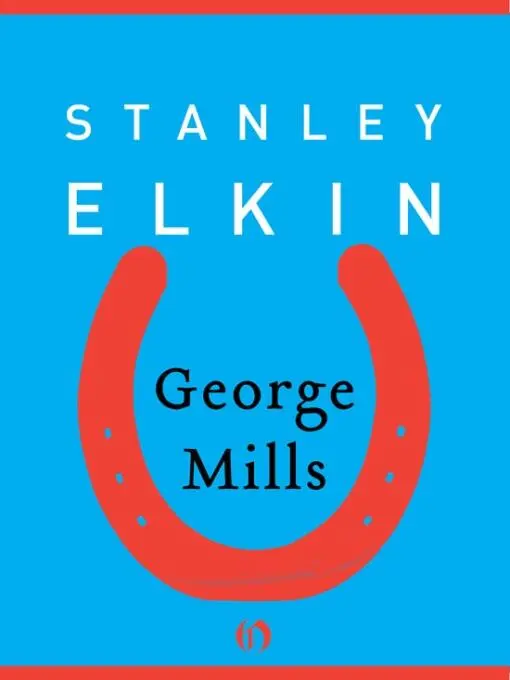
- Название:George Mills
- Автор:
- Издательство:Open Road Integrated Media LLC
- Жанр:
- Год:2010
- ISBN:нет данных
- Рейтинг книги:3 / 5. Голосов: 1
-
Избранное:Добавить в избранное
- Отзывы:
-
Ваша оценка:
George Mills: краткое содержание, описание и аннотация
Предлагаем к чтению аннотацию, описание, краткое содержание или предисловие (зависит от того, что написал сам автор книги «George Mills»). Если вы не нашли необходимую информацию о книге — напишите в комментариях, мы постараемся отыскать её.
George Mills — читать онлайн бесплатно полную книгу (весь текст) целиком
Ниже представлен текст книги, разбитый по страницам. Система сохранения места последней прочитанной страницы, позволяет с удобством читать онлайн бесплатно книгу «George Mills», без необходимости каждый раз заново искать на чём Вы остановились. Поставьте закладку, и сможете в любой момент перейти на страницу, на которой закончили чтение.
Интервал:
Закладка:
“Insects? Dead birds?”
George Mills made a face. “No, of course not,” he said. “Things only declined from the ordinary sweets and seasonings, things gone off, the collapsed cheeses, sour as laundry.”
“You’re pulling my leg,” Messenger said.
“This is how I used to be. It’s mostly all changed. I like stale bread. I don’t really mind it when the milk turns, the butter. A hint of the rancid like a touch of hors d’œuvre.” And then, already missing his own old straight man’s circumstances, “You were crying.”
“Me?” Messenger said, his nose and eyes still a little swollen. “Hell no.”
“You were. You were crying.”
“I was making lunch.”
“Is it Harve?” George Mills asked. “Were you crying about Harve?”
“Harve’s my kid,” Messenger said. “I don’t talk about my kid.”
“All right,” George Mills said.
“Fourteen his last birthday,” Messenger said.
“Yes,” George Mills said, and sat back.
“He doesn’t get the point of knock-knock jokes.”
“No,” George Mills said, and felt stirrings of appetite, his pica curiosity making soft growls in his head.
“I’m no woodsman,” he said. “I can’t tie a fly, I don’t know my bait.”
“No,” George Mills said.
“I can’t build a fire or assemble a toy. I haven’t much, you know, lore. I was never much good at the father-son sports. We don’t go out camping. I don’t take him to circuses or watch the parades. We don’t tan shirtless in bleachers or root for the teams. He doesn’t sip from my beer. I can’t name the stars, I don’t show him the sky. We didn’t play catch. I never taught him to ride. We didn’t do float trips or go to the zoo.
“I like to wrestle, show him the Dutch rub, Indian burns, but the kid thinks I’m angry. His eyes fill with tears.
“I don’t, you know, I don’t set an example. I don’t teach him, well, morals. Whatever it is they say has to start in the home — respect, I don’t know, good manners, how you have to appreciate the value of a dollar, that sort of thing — never started in ours.”
Uncle Joe, Mills thought, he means Uncle Joe.
“Fourteen years old and he doesn’t get the point of damned knock-knock jokes!
“I thought we’d go on a trip. This was a couple of years ago. I thought I’d take him on a trip. Just the two of us. We’d just load up the old bus … I mean the car, we’d drive in the car. We’d stay in motels. We’d order from room service. I had to promise we’d stay in a place with a Holidome.”
Mills looked at him.
“You know. One of those places, they’re enclosed, like a penny arcade. It has a swimming pool, it has a whirlpool and sauna, it has indoor-outdoor carpeting, it has swings and seesaws, computer games.”
Mills nodded.
“I had to promise. Otherwise he wouldn’t come. I had to promise to give him money for the machines. I had to promise he could choose what we’d watch on TV.
“We wouldn’t wait for a weekend. We’d make it special, go during school.
“I woke him at six. ‘We’ll catch breakfast on the highway,’ I told him. He was very cranky. He went to sleep in the back.
“ ‘Harve,’ I said, ‘we’re crossing the river, you’re missing the sunrise. Wake up, sleepyhead.’
“ ‘Why’d you wake me? I’m nauseous, I may have to throw up.’
“ ‘Anything you want, scout,’ I told him in the restaurant when the waitress came over. ‘What do you want?’
“He was angry as hell. He can’t read a menu. His mother says, ‘You want a hamburger, Harve? You want french fries and Coke, son?’ Me, I don’t do that. I want him to sound it out. He gets so impatient.
“ ‘What’ll it be?’ the waitress said, and I gave her my order. ‘What’ll it be?’ she said to the boy.
“ ‘Can you come back? I’m not ready.’ He glared at me.
“ ‘Anything you want, Harve. What do you want?’
“When she brought me my breakfast she turned to the kid. ‘Have you made up your mind yet?’ and stood poised with her pad.
“ ‘Yeah, I’m not hungry. I can’t eat a thing.’
“When I paid at the counter he pointed to candy, he pointed to gum.
“ ‘Why don’t you come up in front, Harve? Why don’t you put that airplane down and sit here with Dad? Goddamn it, Harve, I’m not your chauffeur.’ But we drove on in silence, the both of us sore.
“We’d gone a hundred miles maybe, Harve back there sulking, me sulking in front. He’d make sound-effect noises. With his planes, with his cars. A mimic of engines, impressions of speed. He’d imitate crashes, do disasters, explosions, ships lost at sea.
“ ‘Knock knock,’ I said when we’d driven another hour. ‘Knock knock, Harve.’
“And stopped for lunch. Harve not glaring at me over his menu this time, Harve equable, placid, almost benign. Don’t I know that kid? Because I’d figured it out in the car, knew what he’d do, knew he’d figured it out too — don’t I know him? don’t I? — knew it wasn’t even me he was mad at anymore. No, angry at himself for not thinking of it at breakfast. So I knew what he’d do. When the waitress came over I was ready for him.
“ ‘Have you decided?’
“ ‘Well, no,’ I said, ‘actually I haven’t. Why don’t you ask the boy?’
“And, triumphant, looked at him, saw the smile leave his face. No, not leave it, but hanging there crooked, like make-up mismanaged, like cosmetics deranged. But I had to hand it to him. I did. I had to take off my hat. I could have kissed him.
“ ‘Two eggs,’ he said slowly, remembering, getting it perfect, ’scrambled. Orange juice. Toast. Coffee,’ he said.
“ ‘Wouldn’t you rather have milk, Harve?’
“ ‘Sure.’ He grinned. ‘Milk.’
“ ‘Sounds good,’ I told her. ‘Bring me the same.’
“We stopped off for ice cream, stopped off for Coke. When we filled up in Kentucky I gave Harve three bucks. He offered me candy when he came out with the bag. I told him, ‘No thanks, Harve.’ You know what kids eat. Crap from the space age — sugar fuels, fizz. Candy with noises, a licorice that whistles, a licorice that whips. Panes of sugar so brittle like cracked glass in your mouth. Pop drops and doodads, candy like toys. ‘Your mother would kill me, she saw what you got.’ I made him promise to save some, not to fill himself up.
“He was sitting up front now. More like it, you know? We got into Nashville just after five.
“ ‘This is Nashville,’ I told him, ‘where they make all the country-and-western records. Nashville is famous.’
“ ‘Sure,’ Harve said, ‘Motown.’
“ ‘No, Motown’s in Michigan, Motown’s Detroit.’
“ ‘Where they got all the niggers.’
“ ‘Christ, where do you get that stuff? Your mother doesn’t talk like that, I certainly don’t. Black people are just like everybody else.’
“ ‘They’re poor,’ Harve said.
“ ‘Yes,’ I said, ‘many of them, many of them are.’
“ ‘Chicken George, Kunte Kinte. Slavery’s bad.’
“ ‘That’s right, Harve.’
“ ‘That’s why they kill us. That’s why they steal. That’s why they set fires and rape old white ladies and take our bicycles. That’s why they’re lazy and cheat on welfare.’
“ ‘Harve, that’s bullshit. You’re a bigot, you know that?’
“We were downtown now, stopped at a light. Some people were waiting on line for a bus.
“ ‘Your mama! ’ Harve called from the car.
“ ‘Roll up that window! Goddamn it, Harve!’ ” George Mills was giggling. “We could have been killed, ” Messenger said. “We could have been jabbed in the eyes with their hatpins, we could have been slashed in the guts with their shivs.” Enhanced, he began to laugh. “They could have pulled us out of the car and OD’d our asses with bad skag. They could’ve done us an injury with their Saturday Night Specials. Oh Jesus!” He wiped his eyes, licked his fingers. “Delicious,” he said. “Weeping delicious and laughter delicious too. All, all of it delicious.”
Читать дальшеИнтервал:
Закладка:
Похожие книги на «George Mills»
Представляем Вашему вниманию похожие книги на «George Mills» списком для выбора. Мы отобрали схожую по названию и смыслу литературу в надежде предоставить читателям больше вариантов отыскать новые, интересные, ещё непрочитанные произведения.


Обсуждение, отзывы о книге «George Mills» и просто собственные мнения читателей. Оставьте ваши комментарии, напишите, что Вы думаете о произведении, его смысле или главных героях. Укажите что конкретно понравилось, а что нет, и почему Вы так считаете.