Stanley Elkin - George Mills
Здесь есть возможность читать онлайн «Stanley Elkin - George Mills» весь текст электронной книги совершенно бесплатно (целиком полную версию без сокращений). В некоторых случаях можно слушать аудио, скачать через торрент в формате fb2 и присутствует краткое содержание. Год выпуска: 2010, Издательство: Open Road Integrated Media LLC, Жанр: Современная проза, на английском языке. Описание произведения, (предисловие) а так же отзывы посетителей доступны на портале библиотеки ЛибКат.
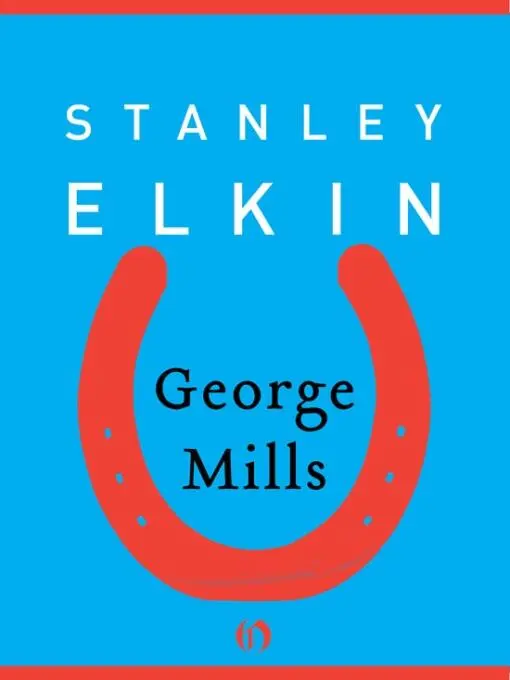
- Название:George Mills
- Автор:
- Издательство:Open Road Integrated Media LLC
- Жанр:
- Год:2010
- ISBN:нет данных
- Рейтинг книги:3 / 5. Голосов: 1
-
Избранное:Добавить в избранное
- Отзывы:
-
Ваша оценка:
George Mills: краткое содержание, описание и аннотация
Предлагаем к чтению аннотацию, описание, краткое содержание или предисловие (зависит от того, что написал сам автор книги «George Mills»). Если вы не нашли необходимую информацию о книге — напишите в комментариях, мы постараемся отыскать её.
George Mills — читать онлайн бесплатно полную книгу (весь текст) целиком
Ниже представлен текст книги, разбитый по страницам. Система сохранения места последней прочитанной страницы, позволяет с удобством читать онлайн бесплатно книгу «George Mills», без необходимости каждый раз заново искать на чём Вы остановились. Поставьте закладку, и сможете в любой момент перейти на страницу, на которой закончили чтение.
Интервал:
Закладка:
“ ‘I’m sorry,’ the professor of architecture said, ‘I didn’t quite hear you.’
“Because he was swallowing so hard. Because his pulses were pounding. Because his heart rate had taken away his voice.
“ ‘I said they’re revolutionary,’ he said.
“He showed Jenny the chairman’s letter. And even made his proposal in front of Nora. Because he knew they were friends, and because he certainly knew a thing or two about the strategy of seduction and that’s what he was up to now. So he asked in front of Nora.
“ ‘You can see how it is,’ he told her. ‘My wife’s flunking out.’
“ ‘I understand, Mr. Losey. Some of these things are awfully difficult. I guess I didn’t pay enough attention to the basics. I should never have agreed to be her tutor. I’d like to return the money.’
“ ‘Are you saying Nora’s too stupid to learn? I thought you were friends.’
“ ‘We are friends,’ Jenny said. ‘We are friends. Nora knows that. She’s my best friend,’ she said. ‘I love Nora. I feel terrible about this.’
“Which was what he’d counted on of course.
“And slapped the side of his head. ‘Do you think I showed you that letter because we want to fire you? On the contrary, Miss Greener. What you say makes perfect sense. She does need more preparation in the basics. That’s what the fellow says in his letter. That’s what we’re asking of you. We don’t want to fire you. We want to hire you full time. It was silly of Nora to think you could do the job on an hourly basis.’
“ ‘Full time?’ she said. ‘I’m going to school myself.’
“She was a scholarship student, from Cape Girardeau, Missouri. He’d learned that at the university. But all he really had to do was look at her. Her frumpy clothes and hick hairdo. Her country girl’s astonishment in his gorgeous house.
“ ‘Of course you are,’ he said. ‘I’m gone much of the time. Nora gets lonely. She doesn’t complain much, but she does.’
“ ‘I know,’ Jenny said.
“ ‘Then you know she’d like you to move in with us. You’re the architect. You can see for yourself we’ve plenty of room. We’d still pay you, of course. I couldn’t think of it otherwise.’ He’d been prepared to name an outrageous sum, almost as much as the fee he said he’d pay that now not-so-hypothetical architect to design a house, but something in Jenny’s face told him she’d turn that down flat and walk out. So he actually lowered the hourly rate she’d already been getting. ‘And your own work comes first. That goes without saying. But if you could see Nora through …’
“Nora didn’t speak out because she figured it was her only chance. Thinking — I don’t know — thinking, The bastard, the bastard! Maybe he could make me a hairdresser, a hostess in restaurants, a girl at the checkout, a clerk in a store. Thinking, Maybe she can see me through. Maybe she’s the only one who will.
“He never so much as kissed her. (The family, the family comes first.) He never said anything out of the way. If he ever tried to get fresh I don’t think she knew it. At the time knew it.
“One night, after dinner, Nora was in the kitchen. Jenny was clearing the dessert dishes. She had leaned down to take Losey’s and he put his hand on her arm. Not even his hand. Some fingers. ‘I’ve seen your sketches of the operating rooms,’ he said in a low voice so his wife wouldn’t hear. ‘I think you may have some respect for my judgment as a surgeon. They’re wonderful. The best I’ve ever seen,’ he told her passionately.
“So that’s where it stands.
“She’s still on probation but her grades have improved. She’ll never make Dean’s List but she’s still hanging on. But she isn’t a dummy. She can read the handwriting on the wall. Both of them can. All three of them. She may even get her degree, but that’s not what it says.
“He’s in greater demand than ever but he doesn’t travel so much as he used to. He turns down invitations. He stays home more. He’s writing, publishing papers. He likes to sit in his study while the women are off in theirs. (He’s converted one of their six bedrooms into a study for Jenny.) He likes to sit there, thinking about the future, thinking about the time she graduates next spring and the divorce has gone through.
“Thinking, They can do wonders with hair. With exercise and cosmetics. With diet, haute couture. Under their tans, behind their high fashions and starved, high-relief cheekbones, those broads in Barbados I went down on and vice versa might have been frumpy as Jenny once. As inexperienced as she probably is in bed.
“Because he really is a surgeon. Anything can be excised. Anything put back. He can sew on your fingerprints, he can take out your germs. Everything is remediable. It better be. Everything is remediable or your patient dies. She’ll just need some coaching.
“It’s a griefhouse, George. It’s a goddamn griefhouse. I can almost hear them, make out the tripled, separated weepings of the house’s tripartite griefs. Grieving for status, grieving for lifestyle. Grieving for bastards, for fops of collusion, for paste assholes. Mourning best friends and all fall guys.”
Messenger paused. Then said what George expected him to say. “The horror, the horror, hey Mills?”
“Yes,” George Mills said. “Yes!”
Messenger, enhanced, was sitting in Mills’s living room weeping when George came in.
“Hey,” George Mills said, “hey now. Hey don’t.”
Cornell looked up, surprised. He wiped his eyes with his fingers, licked them. “You know that’s delicious?” he said.
“I know,” Mills said.
“You lick your tears, George?”
“I chew my nails. I nibble the hair on my arms.”
“Really?”
“Millses have always had pica.” (Because he was interested now. Because Messenger had him. As he’d had Louise the first time he opened his mouth. And whatever might become of his own battered case, he was interested in theirs. Enough to talk, to tell him of his.)
“In me under control, arrested, marked down. But, you know, still there. I still have a piece of this sweet tooth in my mouth.”
“This sweet tooth, George?”
“A loose appetite sort of.”
“Clay? You eat chalk?”
“The flavor’s okay. I don’t care for the texture.”
“You’re a connoisseur.”
“Certain flowers, the stems on fruit. Newsprint. Erasers.”
“I chewed erasers,” Cornell said.
“No no, from the blackboards. I’d lick dust from their fur.”
“Better than a connoisseur. You’re a gourmet.”
“I sucked on stones. When I could get it I put sand in my mouth.”
“When you could get it?”
“You know, still wet. After the tide had gone out. A sand bouillabaisse. When I was a kid. Most all of this when I was a kid. Not now not so much.”
“You don’t do this stuff now?”
“I watch what I eat. Sometimes I binge. You know, fall off the wagon.”
“You’re not kidding me now?”
“No. I’m not kidding.”
“Well, what do you eat?”
“I eat cigarette ash. I like to get the juice out of cotton.”
“Are you kidding me, George?”
“No,” he said, “I already said. Not now not so much.”
“A meat-and-potatoes man,” Messenger said.
“Only the gristle, only the peels.”
Messenger watched him through his still red, still puffy eyes.
“Rust,” George said wistfully, “I used to like the taste of rust. And rotten, discolored wood from trees fallen in forests.”
“That’s good?”
“Brown water in puddles. Autumn leaves like a breakfast cereal. Sweat like a summer drink.”
Читать дальшеИнтервал:
Закладка:
Похожие книги на «George Mills»
Представляем Вашему вниманию похожие книги на «George Mills» списком для выбора. Мы отобрали схожую по названию и смыслу литературу в надежде предоставить читателям больше вариантов отыскать новые, интересные, ещё непрочитанные произведения.



Обсуждение, отзывы о книге «George Mills» и просто собственные мнения читателей. Оставьте ваши комментарии, напишите, что Вы думаете о произведении, его смысле или главных героях. Укажите что конкретно понравилось, а что нет, и почему Вы так считаете.