Stanley Elkin - George Mills
Здесь есть возможность читать онлайн «Stanley Elkin - George Mills» весь текст электронной книги совершенно бесплатно (целиком полную версию без сокращений). В некоторых случаях можно слушать аудио, скачать через торрент в формате fb2 и присутствует краткое содержание. Год выпуска: 2010, Издательство: Open Road Integrated Media LLC, Жанр: Современная проза, на английском языке. Описание произведения, (предисловие) а так же отзывы посетителей доступны на портале библиотеки ЛибКат.
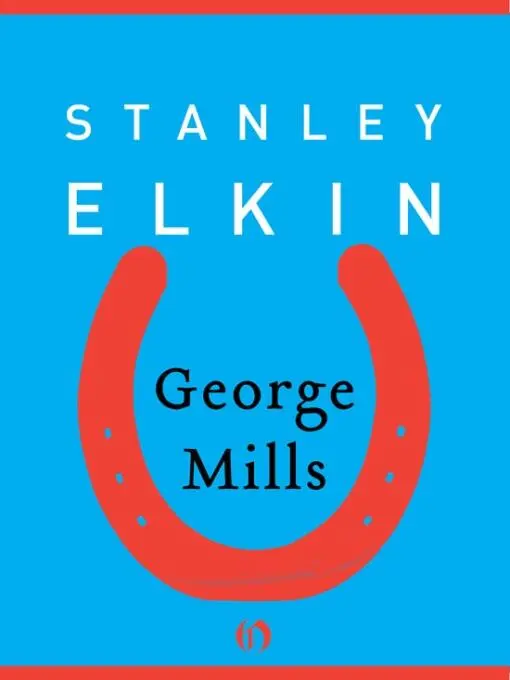
- Название:George Mills
- Автор:
- Издательство:Open Road Integrated Media LLC
- Жанр:
- Год:2010
- ISBN:нет данных
- Рейтинг книги:3 / 5. Голосов: 1
-
Избранное:Добавить в избранное
- Отзывы:
-
Ваша оценка:
George Mills: краткое содержание, описание и аннотация
Предлагаем к чтению аннотацию, описание, краткое содержание или предисловие (зависит от того, что написал сам автор книги «George Mills»). Если вы не нашли необходимую информацию о книге — напишите в комментариях, мы постараемся отыскать её.
George Mills — читать онлайн бесплатно полную книгу (весь текст) целиком
Ниже представлен текст книги, разбитый по страницам. Система сохранения места последней прочитанной страницы, позволяет с удобством читать онлайн бесплатно книгу «George Mills», без необходимости каждый раз заново искать на чём Вы остановились. Поставьте закладку, и сможете в любой момент перейти на страницу, на которой закончили чтение.
Интервал:
Закладка:
“Bufesqueu!”
“Why, Trooper, you’re blushing! You’re actually blushing.”
“You’re bloody outrageous you are.”
“Oh, am I?” said his friend. “You’d best brush up on those vows you took, mate. You know what they mean in this outfit by celibacy? They mean the pure, true pukka gen. Pope, Patriarch, Ayatollah and Lord Swami Guru Indian Chief. Not only can’t you get it off with a woman, you can’t get it off with a man or animal either. You can’t pull pud or touch yourself downtown or even think dirty jokes much less tell them. They hang for wet dreams here, and all that’s left for a lad is to make them think he gets off on God. That’s why I’m sopping when I rise from the rug. Incense, think incense, and make a wish, Mills.”
And the odd thing, Mills thought, was that despite everything — George IV’s tricks and the courier’s treachery, Abdulmecid’s and the Emperor’s misplaced rage, his forced conscription with all its concomitant hardships — he had got into the spirit of things. That he understood the source of his fierce loyalties, could trace them back forty-two or so generations to a strange curse delivered by a pampered young nobleman in a Polish wood who, for the authority to deliver it, had only a fair approximation of his greatest grandfather’s number and none at all, really, of the old man’s descendants (and who, at the time, did not really believe that either of them would live long enough to get out of their scrape in time even to get descendants), mitigated not at all his dumb cheer or caused him a moment’s pang. Cursed were the meek. He knew that. So be it. The last would never be first. He knew that. He knew everything, his low-born essence, his unswerving blue obedience and commissionaire’s style — everything. He could not help himself, would not. He was proud to be a Janissary. Proud of hardship, humiliation, his hardcore elite corps humility. So he had got into the spirit of things. And if he was no model soldier — I’m not, he thought, I’m not even good at it — he understood esprit de corps. None better. And valued most what he’d been forced to put up with. What few men living had had to endure, what most would have rebelled against out of hand, turning them tattles, turning them traitors. But not Mills. A hero of hardship, a big shot of bane and outrage.
There were the free-for-alls, the battles royal construed as preparation, training. The Soup Man’s cynical dictum: “Janissaries are brothers. A true Janissary will lay down his life for his brother as casually as he would stand him a beer or buy him his breakfast. If an enemy slays his colleague, even in the act of self defense, even protecting his family, deflecting a torch, say, from the thatched lean-to where his babes lie sleeping; or wrenching the firebrand from a corpsman’s hands with which he’d have ignited a wife’s pubic hair simply to take the chill out of the air, then the surviving Janissary is obligated by the laws of God and the traditions of his company not only to avenge his fallen comrade but to read that comrade’s original intent and to atrocify and consummate even to the nth degree his chum’s lewd scheme. He must perfect death and touch the bottom of punishment. He must annihilate all the friends of the family and, years later, should he meet someone in a peaceful street who, in a certain cast of light, merely resembles his cohort’s killer or perhaps, by a word or gesture, so much as reminds him of his former teammate, or even only of the incident, then must the veteran Janissary dispatch him at once and with the same concentrate rage and fury at his disposal as had been available to him on the initial occasion of his wrath. If the wrath is not there he must pray for it. If his prayers are unanswered then he must make indifference do, and call on reserves of insouciance and apathy to hone his cruelty and generate out of neutral nonchalance the worst usages of his imagination. We are Janissaries, on the fence, middle of the road in every cause, and patriots only to each other.”
And dropped his handkerchief, the signal on the day of their practical, for the recruits to attack each other. Mills, watching for the handkerchief to fall, touch the actual ground, was distracted for that fraction of a piece of a second it took Khoraghisinian, a friend, a young lad from his own barracks with whom he spoke on fire guard and after lights-out in his newly acquired makeshift Janissary diction of deep things, lost things, of home and absences, loved ones, of plans (mere desires now, simple idle longings, yearnings) and the high mysteries of the starry sky and the pungent, sacred memories of kitchen smells, the breads and sweets and savories of childhood, to drop on his neck from a tree’s low limb and scratch at his eyes with its brittle, leafless, wintry sticks. Before Mills could recover, Khoraghisinian had shoved handfuls of steaming, acidic horse dung into his eyes and nostrils and smeared it across Mills’s astonished mouth and tongue. Blinding George, choking him, leaving him breathless, gagging, gasping. Felling him, turning him over and, still in those split seconds it took Mills to recognize the source of the attack (permitting him to think Khoraghisinian — Khory), driving the twigs up his nose, hammering them home with his fists and frozen turds.
It was his sneezes that saved him. Sudden, furious, reflexive and unwilled. His entire body was behind them, some good immunological angel so repudiate to the foreign matter trapped in his face that the sneezes brought his neck and head up like the solidest of uppercuts, roundhouses and haymakers, brutally butting Khoraghisinian and catching him, who was already leaning over to receive them, smack in the center of his nose, between his eyes, on each temple and, stretching to evade Mills’s repetitive jackhammer blasts, full in the throat. Khoraghisinian’s neck was broken, the bridge of his nose. His eyes had been pounded deep beneath their sockets and smashed like egg yolks, spread like jelly. Khoraghisinian had been killed instantly.
“Excellent. Good recovery, excellent,” the Soup Man called from his horse. “Fine alertness, Muslim.”
Now, still dazed, Mills used his good friend as a kind of fort — Fort Khoraghisinian, Camp Khory — arranging his old friend’s body about him like a rampart and flattening himself behind it. The melee continued about and above him, a strange, pointless and issueless battle which Mills dreamily contemplated from the shieldy security of his pal’s corpse. He had not bothered — or thought: he was still stunned, still bound by the low conscientiousness of shock — to rub the dung from his eyes and his steaming, teary vision was distorted, not blurred or dulled so much as squeezed and biased with a queer, buckled clarity, like someone’s behind strong new prescription lenses. He perceived the incredible sharpness of blunt objects and instruments, so that rocks seemed thorny to him, cudgels torn from trees serrated, ordinary belts and bits of clothing — buttons, shoelace — sawtoothed. All about him he perceived the cusp of detail. The faces of his companions assumed a sort of tooled devastation. Their awled eyes and axey chins and spiky noses. Their scalpeled teeth and the hair on their heads brambly as barbed wire. Their nettled flesh, the fierce briery and cutting edge of their expressions. Even the sky — it was a bright day — seemed capable of stinging. Only the fighting had no point.
The combatants engaged and disengaged tempestuously, almost restlessly. They flung themselves upon and away from each other as if impatiently seeking something specific and valuable in one another. They were. Their opponent’s weakness like buried treasure. If an adversary seemed capable of absorbing a body blow, his challenger quickly withdrew it, administered instead sharp kicks to the shins, the groin. If he withstood these his assailant abandoned him, changed tactics, sought a more vulnerable victim, great fistfuls of whose hair he might pull at almost as if he were riding bareback at full gallop and clinging to the mane to keep from falling. (Mills wondering how he, the assailant, could bear the pain, the sword edge sharpness of the hairy, glassy shards. He looked for stigmata, bloody palms.)
Читать дальшеИнтервал:
Закладка:
Похожие книги на «George Mills»
Представляем Вашему вниманию похожие книги на «George Mills» списком для выбора. Мы отобрали схожую по названию и смыслу литературу в надежде предоставить читателям больше вариантов отыскать новые, интересные, ещё непрочитанные произведения.

Обсуждение, отзывы о книге «George Mills» и просто собственные мнения читателей. Оставьте ваши комментарии, напишите, что Вы думаете о произведении, его смысле или главных героях. Укажите что конкретно понравилось, а что нет, и почему Вы так считаете.