Stanley Elkin - George Mills
Здесь есть возможность читать онлайн «Stanley Elkin - George Mills» весь текст электронной книги совершенно бесплатно (целиком полную версию без сокращений). В некоторых случаях можно слушать аудио, скачать через торрент в формате fb2 и присутствует краткое содержание. Год выпуска: 2010, Издательство: Open Road Integrated Media LLC, Жанр: Современная проза, на английском языке. Описание произведения, (предисловие) а так же отзывы посетителей доступны на портале библиотеки ЛибКат.
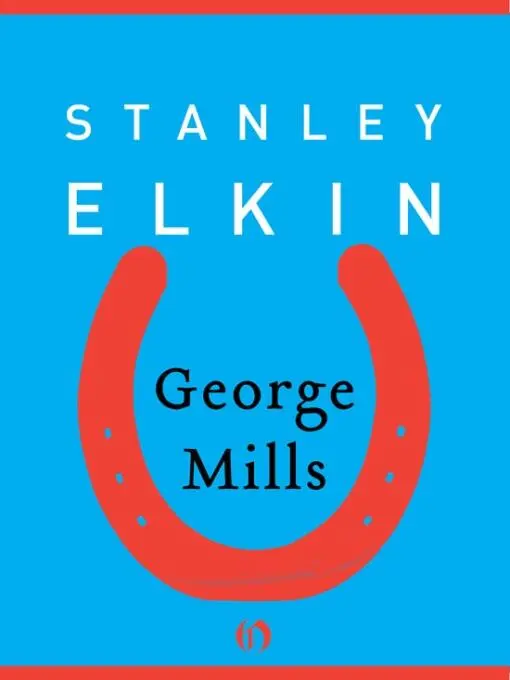
- Название:George Mills
- Автор:
- Издательство:Open Road Integrated Media LLC
- Жанр:
- Год:2010
- ISBN:нет данных
- Рейтинг книги:3 / 5. Голосов: 1
-
Избранное:Добавить в избранное
- Отзывы:
-
Ваша оценка:
George Mills: краткое содержание, описание и аннотация
Предлагаем к чтению аннотацию, описание, краткое содержание или предисловие (зависит от того, что написал сам автор книги «George Mills»). Если вы не нашли необходимую информацию о книге — напишите в комментариях, мы постараемся отыскать её.
George Mills — читать онлайн бесплатно полную книгу (весь текст) целиком
Ниже представлен текст книги, разбитый по страницам. Система сохранения места последней прочитанной страницы, позволяет с удобством читать онлайн бесплатно книгу «George Mills», без необходимости каждый раз заново искать на чём Вы остановились. Поставьте закладку, и сможете в любой момент перейти на страницу, на которой закончили чтение.
Интервал:
Закладка:
“Sir?”
“Turkic. You hev Turkic?”
“Guidebook Turkic. Nothing more. Nothing as fine as I’m certain yours is, Mr. Ambassador.”
“Me? I talk Yiddish to them.”
Peterson raised his napkin to his lips. For some time now he had been looking quite ill. “I say, would you excuse me, sir? It seems …”
He never finished his sentence. Eli Nudel hurried him away and Magaziner and I were left alone.
“So,” Magaziner said. “So so so.”
Mills grinned at him shyly.
“Yes?” Magaziner said.
“It was delicious,” Mills said.
“My pleasure.”
“I particularly liked the pudding. What did you call it, ‘lucksh and cook’?”
“ Kugel. Lockshen kugel. ”
“That’s it,” Mills said. “ Lockshen kugel. It was delicious. It was all delicious. It was my first state lunch. My friend’s been off his feed.”
“Your friend?”
“Peterson. Mr. Peterson.”
“Oh yes,” Moses Magaziner said, “Mr. Peterson.”
“The halvah was wonderful too. With the coffee. I loved the halvah. Is that right, halvah? I’m very ignorant. I don’t know the names of these aristocrat dishes.”
“ Halvah, yes,” the ambassador said. “Tell me again, Mr. Mills. King George sent you as his personal emissary with Abdulmecid’s gift? The letter the courier showed me vas a little unclear.”
“Yes, sir. Queer, ain’t it? Me a boob and all.”
The ambassador waved off George’s self-deprecation and questioned him further. He seemed particularly interested in the circumstances surrounding their meeting, and when Mills began to repeat what the King had told him of his relationship with Maria he stopped him at once. “Skip all that,” he said. George assumed it was because it was gossip with which the man was already familiar and was at a loss as to what else to tell him. “Vat did you say? Vat did you told him? ” Mills recounted his reasons for coming to London, mentioned the useless letter of recommendation his squire had sent with him but did not go into detail because he was still ashamed for the proud man he had so conscientiously pursued with respect, waiting each day for the cabriolet (which he still thought of as the squire’s carriage) to pass, planting himself beside the road those two furlongs before it not because he was afraid he’d miss it but because he enjoyed watching it, seeing it come. Not telling Magaziner any of this either, burdened by his queer guilt for the squire’s failed liaisons and associations.
So he told him what he had told the King, blocking out for him a general idea of Millsness, what he had been rehearsing not since he’d first heard it, since what he’d first heard he had no need to rehearse, had remembered, would always remember, but what had happened since, describing the circle, his ring of the wood, the tree, going over it — Magaziner was impatient, waving him quickly through certain passages, slowing him down at others, actually leading Mills’s story like a conductor, directing it like traffic — as even now, speaking to the ambassador, he was at once telling the tale and living some new part of it, the telling, living, remembering and rehearsing additional increments he knew it would have made him dizzy to contemplate if he had dared. (He didn’t need to dare. The strange pressures and weathers of his life had already acclimatized him to conditions and practices that were no longer even second nature but something actually biologically autonomous.) Magaziner stopped him. “Forty-third? He called you Forty-third?” Mills nodded. “Go on.” George backed and filled, telling the story randomly, stumbling a little, not permitted to do it as he’d rehearsed it in his head but forced by Magaziner to improvise, by Magaziner who interrupted him, conducted him, taking him forward to the voyage, the practice sessions in the cabin, Peterson’s silence at table, the courier calmly taking food into his stomach that moments later he would give up to the sea. Redirecting Mills another time to what George had said to the King, what the King to George, but always refusing the gossip, not as much shocked by it as bothered that it should have come up at all, asking George what he’d said, whether he’d encouraged it, Mills swearing he hadn’t, insisting his own embarrassment to Magaziner. “Yes?” Mills nodded. “Go on.” George related some more details. Magaziner raised a finger to his lip. Mills stopped. “ ‘There you are,’ he said? ‘It would seem you’re one of us? It would seem you’re one of us then, George? ’
“Ah, Mr. Peterson,” the British ambassador to the Ottoman Empire said, “fillink better?”
“Yes, thank you, sir.”
“Dot’s nice. Dot’s terrific.”
In the morning he accompanied George and the courier to the government carriage that had been sent for them. Peterson climbed in first and George handed the golden package in to him to hold for a moment before he got in beside him.
Just as he was about to do so, as he was raising one foot onto the carriage’s metal stirrup, the ambassador briefly embraced him and almost imperceptibly slipped something into his jacket pockets. It was halvah wrapped in two of the fine linen napkins from the embassy service.
So it was the height even more than the length.
“Well, old buns, it was more than eiver acherly. Dere I was den, weren’t I? A great green nineteen-year-old gawm what never got no closer to de movers an’ shakers ’n a trooper’s widow to de mighty King of Spine. What never till dat day in Putney”—Mills telling a small circle of his intimates in a corner of the kitchen, near the tripe barrels and offal buckets, speaking their language, the broken brogue of barracks and parade ground, a sort of Ottoman-Persian-Yiddish he’d picked up from his mates in the year to year and a half he’d been there, a dialect (and of course it would be low, bits and pieces of what the locals had brought with them from Tripoli and the Crimea, from Hungary and Mesopotamia, from Crete and the Balkans, from Thrace — places, some of them, Mills would not have been able to locate on a map, not because he was such a poor geographer but because, except for his thoroughgoing knowledge of his own antecedents, he was such a rotten historian, the nations and kingdoms having changed hands and names since the great days of the Ottoman Empire, the Empire itself having rearranged if not the lands themselves then their borders, so that what he spoke, had learned to speak, was a lingo of the disinherited and misbegotten, a patois which finally proved tougher than those old arbitrary state lines of demarcation themselves, the nations and kingdoms having been reabsorbed elsewhere, restaked, changed like partners in a dance, taken like trumps in bridge) which still retained neologisms centuries after the countries that originally contributed them were no longer required (some of the more gung-ho among them would have said “permitted”) to serve. He couldn’t have held up his end of a conversation either in Turkic (the official language of the Court) or in Farsi (the language spoken by most of the people). What he spoke, if poorly, was an elitist tongue: Janissary. A language (which he would actually attempt to render, if a sworn celibate like himself ever got the chance to get them, to his progeny in a chipped pidgin, some bent bloopered, crooked Cockney) the now greatly reduced but still fierce force shared (perhaps five thousand men could speak it), no matter their mother tongue, only among themselves — a grammar like a password, a syntax like a signal—“ ’ad never e’er even seen a king much less haddressed one. Who now ’ad saw not only ’is first king but a certificated courier too, as well as a hambassador in a hembassy and most of ’is hoficial ’ouse’old staff an’ not only dat but a first secretary to a grand vizier (an’ you may throw in too, if you’d haccount for my toney turnout, a Savile fooking Row tailor). An’ caught a glimpse in de far off, an’ just as I was bending to my Prostration Walk, of de Hemporer of de Hottoman Hempire an’, by ’is side, Abdulmecid, de godkid, de Hemporer in Whiting. It was ever so much more den a poor boy could bear.
Читать дальшеИнтервал:
Закладка:
Похожие книги на «George Mills»
Представляем Вашему вниманию похожие книги на «George Mills» списком для выбора. Мы отобрали схожую по названию и смыслу литературу в надежде предоставить читателям больше вариантов отыскать новые, интересные, ещё непрочитанные произведения.


Обсуждение, отзывы о книге «George Mills» и просто собственные мнения читателей. Оставьте ваши комментарии, напишите, что Вы думаете о произведении, его смысле или главных героях. Укажите что конкретно понравилось, а что нет, и почему Вы так считаете.