Stanley Elkin - George Mills
Здесь есть возможность читать онлайн «Stanley Elkin - George Mills» весь текст электронной книги совершенно бесплатно (целиком полную версию без сокращений). В некоторых случаях можно слушать аудио, скачать через торрент в формате fb2 и присутствует краткое содержание. Год выпуска: 2010, Издательство: Open Road Integrated Media LLC, Жанр: Современная проза, на английском языке. Описание произведения, (предисловие) а так же отзывы посетителей доступны на портале библиотеки ЛибКат.
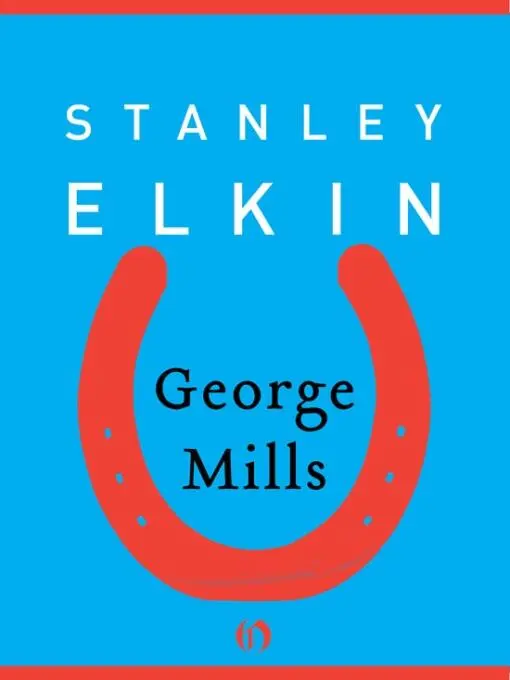
- Название:George Mills
- Автор:
- Издательство:Open Road Integrated Media LLC
- Жанр:
- Год:2010
- ISBN:нет данных
- Рейтинг книги:3 / 5. Голосов: 1
-
Избранное:Добавить в избранное
- Отзывы:
-
Ваша оценка:
George Mills: краткое содержание, описание и аннотация
Предлагаем к чтению аннотацию, описание, краткое содержание или предисловие (зависит от того, что написал сам автор книги «George Mills»). Если вы не нашли необходимую информацию о книге — напишите в комментариях, мы постараемся отыскать её.
George Mills — читать онлайн бесплатно полную книгу (весь текст) целиком
Ниже представлен текст книги, разбитый по страницам. Система сохранения места последней прочитанной страницы, позволяет с удобством читать онлайн бесплатно книгу «George Mills», без необходимости каждый раз заново искать на чём Вы остановились. Поставьте закладку, и сможете в любой момент перейти на страницу, на которой закончили чтение.
Интервал:
Закладка:
“ Sir! I understand what you’re telling me, sir! ”
“That there’s nothing shameful in a holy scour. That the cleanser is blessed as the cleansed. That it’s a privilege to brisk and shine another’s affairs, to polish his business as one would one’s own.”
“ Sir! I understand, sir! ”
“Of course you do. Others mightn’t, but you do.”
“ Sir! I do, sir! ”
“Who stuck his hands past the wrists into a colleague’s intestines. Now there’s no need to blush. There’s no reason to go all girly on me, George.”
“ Sir! No reason, sir! ”
“Of course not. You were doing your duty. You were doing your duty in his duty. Do I have it? Is that about it?”
“ Sir! You have it. That’s about it, sir! ”
“Well of course. And we understand that if it weren’t the eve of the Rabaran I wouldn’t be asking you to bathe me?”
“ Sir! We understand, sir! ”
“And that even if it is Rabaran eve we still wouldn’t ask if these were places we could comfortably reach ourselves?”
“ Sir! We understand, sir! ”
“ And that I choose you only because you’ve been there before? ”
Requiring that he — the Meat Cut — speak to him in ways that even the King George IV himself would never speak to him. And requiring that Mills answer in ways that King George wouldn’t, indeed couldn’t, ever permit himself to demand. Already aggrieved. Hoping if it weren’t the Meat Cut then some lesser officer, or noncommissioned officer perhaps — a Waiter or Busboy — or even someone from the ranks, a Paradise Dispatcher like himself. Or something to do with the mascot — maybe the mascot was his best bet — Mills commanded to entertain it, to throw sticks for the old blind dog and fetch them himself when the arthritic animal wouldn’t move. (And could imagine that conversation too, not conversation, really, just plain boorish ragging: “Would you look at the bloody-minded beast? Do you see him frolic? Did you e’er see such pep? When Shep goes we won’t even have to replace him. What do you think, Konia? Mills for mascot when old Shep gets demobbed?” “There’s advantages and disadvantages.” “Well I see the advantage. Shep could fetch good as any when he was healthy, but he never did get the hang of throwing. What disadvantage could there be?” “Well, there’s his age.” “His age?” “A human’s lifespan is seven to one compared with a dog’s. Shep’s ninety right now in human terms. Suppose Mills is made mascot, suppose he enjoys it, suppose he takes it in his head he’s only technically human, that only some rare vagary of Nature put him in pants in the first place? My God, don’t you see? He could will himself beast. He’s already five sixths of the way there. On a dog’s diet he could live to be three hundred and fifty!” “There’s that,” Konia’s collaborator admits. “There’s more.” “More, Konia?” “This one don’t have Shep’s temperament. He’s vicious.” Because he’s a living legend by now, so accredited ever since the day the Soup Man chose to single him out for his deeds — of yes, deeds, lifted forever beyond anything as normal as actions or reactions — which is all they were finally: reactions, hard, simple, knee-jerk — and into rhetoric, semiofficial shoptalk, regulation Lister bag company scuttlebutt whenever men stopped by for a cool drink of water — along with Van and Abl Erzuz and Tchambourb and Godukuksbabis and all the rest of that Star Chamber lot of cutthroat bullies.)
A living legend? A living joke.
Okay, he thinks. Swell. Why not? So be it. I’m your man. Fine. I’m your dogsbody. Of course. You want me to bath down the whole naked, goddamn garrison? Every last mutt and horse on campus and all the slops in all the tripe barrels and offal buckets, too, by running them bit by fucking bit through the blue collar saliva in my poor man’s mouth? Sir! If that’s what you want, sir!
And is as close at this moment to harboring a pure revolutionary thought as anyone in the entire history of the world.
And is still waiting on the Meat Cut for the man’s command, which he still hopes will be as devastating as the officer can make it, and prays that he still has whatever it takes neither to blench nor blink when he finally hears it.
He finally hears it.
He blenches. He blinks.
“Mills,” says the Meat Cut. “I say, George, why don’t you take the rest of the day off and go into town for a bit? Take your friend with you.”
“Sir? Into town, sir? Town? ”
“Dress uniforms. To show the flag. Take your pal, you know, the one that survived. Bufesqueu. Take Bufesqueu.”
It didn’t need newspapers, it didn’t need periodicals, it didn’t need chalk talks or elaborate background briefings by the officers. It didn’t even need the barracks wisdom and tittle-tattle of a Bufesqueu for Mills to understand that they had just been condemned to death. There were no provisions in the military code for Janissaries to be discharged. (There were Paradise Dispatchers in Mills’s own company in their seventies and eighties.) The reasons were obvious and, in an odd way, peculiarly compassionate.
It was not just that a veteran Janissary, celibate, old, failing and without family, ill equipped to do business in the outside world, would be lost as a civilian. He would be torn to shreds. This much came through the crazy pep talks of the Soup Man. They were despised as much as they were feared. This was their glory, their elitism.
And Mills well enough understood their ultimate mission. They all did. It was not so much to protect the state as to suppress the people. Indeed — those frequent demonstrations against the government — it was to suppress the state as well. (Though Mills had never seen it, there was something that terrified people and government both: the symbolic moment of Janissary rage when the troopers hauled the tremendous cauldrons in which they boiled soup out of the mess and into the square and upended them.) At the height of their strength two centuries earlier there had been upward of a hundred and thirty thousand troops in the Corps. Now there were barely five thousand, all of them concentrated in the huge and possibly impenetrable fortress where Mills had trained and until now lived as a prisoner. But this was the point. Not that their ranks had been diminished by a hundred and twenty-five thousand men, but that with two hundred years to work it out, a hostile government had been unable to abolish an organization of just five thousand that it openly feared and had little use for — except on those occasions when it meant to punish the people.
So they would be killed. Certainly Mills would be. He was the living legend after all. At least so far. Bufesqueu himself had said as much.
“How do they know?” Mills asked.
“How do we get hashish? How do we get halvah? Where do the fashions come from the fellows like to wear at parties? How do we get the forbidden boozes? Where do the rifles come from?”
“We don’t have rifles.”
“We don’t, no. The officers do. To use against us if we make trouble.” And when George looked at him in disbelief, Bufesqueu went on. “Kiddo, kiddo, it’s a Byzantine world. There’s plots and intrigues under every fez. There’s bucks to be made and merchants to make them. You want to know the real reason our outfit still exists?”
“We’re the greatest fighting force in the world.”
“The real reason.”
“That is the real reason. Man for man and hand to hand no one can touch us.”
Читать дальшеИнтервал:
Закладка:
Похожие книги на «George Mills»
Представляем Вашему вниманию похожие книги на «George Mills» списком для выбора. Мы отобрали схожую по названию и смыслу литературу в надежде предоставить читателям больше вариантов отыскать новые, интересные, ещё непрочитанные произведения.



Обсуждение, отзывы о книге «George Mills» и просто собственные мнения читателей. Оставьте ваши комментарии, напишите, что Вы думаете о произведении, его смысле или главных героях. Укажите что конкретно понравилось, а что нет, и почему Вы так считаете.