Péter Nádas - Parallel Stories
Здесь есть возможность читать онлайн «Péter Nádas - Parallel Stories» весь текст электронной книги совершенно бесплатно (целиком полную версию без сокращений). В некоторых случаях можно слушать аудио, скачать через торрент в формате fb2 и присутствует краткое содержание. Год выпуска: 2011, Издательство: Farrar, Straus and Giroux, Жанр: Современная проза, на английском языке. Описание произведения, (предисловие) а так же отзывы посетителей доступны на портале библиотеки ЛибКат.
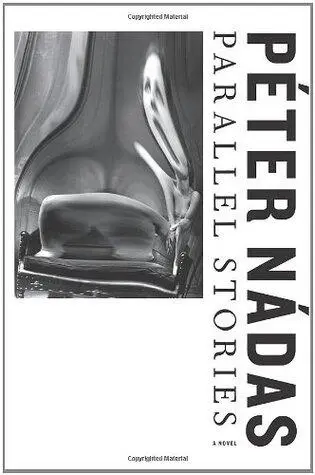
- Название:Parallel Stories
- Автор:
- Издательство:Farrar, Straus and Giroux
- Жанр:
- Год:2011
- ISBN:нет данных
- Рейтинг книги:5 / 5. Голосов: 1
-
Избранное:Добавить в избранное
- Отзывы:
-
Ваша оценка:
Parallel Stories: краткое содержание, описание и аннотация
Предлагаем к чтению аннотацию, описание, краткое содержание или предисловие (зависит от того, что написал сам автор книги «Parallel Stories»). Если вы не нашли необходимую информацию о книге — напишите в комментариях, мы постараемся отыскать её.
Three unusual men are at the heart of
: Hans von Wolkenstein, whose German mother is linked to secrets of fascist-Nazi collaboration during the 1940s; Ágost Lippay Lehr, whose influential father has served Hungary’s different political regimes for decades; and András Rott, who has his own dark record of mysterious activities abroad. The web of extended and interconnected dramas reaches from 1989 back to the spring of 1939, when Europe trembled on the edge of war, and extends to the bestial times of 1944–45, when Budapest was besieged, the Final Solution devastated Hungary’s Jews, and the war came to an end, and on to the cataclysmic Hungarian Revolution of October 1956. We follow these men from Berlin and Moscow to Switzerland and Holland, from the Mediterranean to the North Sea, and of course, from village to city in Hungary. The social and political circumstances of their lives may vary greatly, their sexual and spiritual longings may seem to each of them entirely unique, yet Péter Nádas’s magnificent tapestry unveils uncanny reverberating parallels that link them across time and space.This is Péter Nádas’s masterpiece — eighteen years in the writing, a sensation in Hungary even before it was published, and almost four years in the translating.
is the first foreign translation of this daring, demanding, and momentous novel, and it confirms for an even larger audience what Hungary already knows: that it is the author’s greatest work.
Parallel Stories — читать онлайн бесплатно полную книгу (весь текст) целиком
Ниже представлен текст книги, разбитый по страницам. Система сохранения места последней прочитанной страницы, позволяет с удобством читать онлайн бесплатно книгу «Parallel Stories», без необходимости каждый раз заново искать на чём Вы остановились. Поставьте закладку, и сможете в любой момент перейти на страницу, на которой закончили чтение.
Интервал:
Закладка:
It would be ridiculous to think she was unaware of all this since for two decades, until her practice ended, she had been one of the most celebrated and best-paid psychoanalysts in Budapest.
Her gloves had to be finely lined, the kind that cling snugly to the fingers. To feel the root of the fingers in them was an exceptional, almost insolent, pleasure.
Impossible, this forgetfulness really makes things impossible, she said to herself; she was unfazed by these alleged impossibilities of hers, though she was keenly aware of them too.
Her forgetfulness was her only refuge.
She was so upset about having left her gloves for months on various pieces of furniture in the hallway that she blushed in the darkness. Which managed to surprise her. She felt hot in her two-piece pearl-colored dress patterned with blue stripes. She tried to dismiss the feeling with a wave of her hand: she was not about to deceive herself with blushing and hot flashes. She was outnumbered by these subtle bodily actions, though, and she had to repeat for the third time what she had said to curb her upset self and satisfy the controlling one. Her head was nodding vigorously; in her excitement, this otherwise hardly noticeable and cleverly hidden little tic grew stronger. It’s really impossible the way I’ve been leaving things all over the place and then forgetting them. And all the time, she observed disinterestedly, she was regaining her composure.
The truth was that everything existed simultaneously in her mind, and she couldn’t forget anything, because she purposefully did not remind herself of anything. And in fact she brought about her forgetfulness artificially.
Yes, she was now going to put away those miserable winter gloves. Her famous glove collection had survived the devastation. She did not remember how handy a pair of gloves could be in certain situations. She had been taken away, along with her two sons, in the middle of summer. Instead of real objects, she invented objects and filled her memory with them, or she smuggled objects out of her memory and pretended they’d never existed; she freed her memory of everything depressing. She could not bear this anymore. She had to upset herself with all sorts of meaningless and invented triviality to allow her mind to run on empty. But it should have something to go on. She kept saying things to herself, continually, so as not to allow a single interjection concerning anything she thought improper or incorrect to acknowledge. She did not feign being deaf or blind: she truly did not see or hear what she did not think she should see or hear.
She let her body and soul play tricks on her. She knew how to please both of them, keep them calm.
Not for a moment would she leave herself without strict supervision.
By himself or herself, each human being is a relatively transparent, mechanical system — she firmly believed this. Only when together with others do the systems become complicated, and that’s bad enough. Living together with a subtenant includes several generations of Sozialgeschichte ; the soul and all its mechanical tricks lie somewhere beyond this. Stories about the soul and about social relations scarcely touch each other; rarely is there a direct connection between them; they are two different categories written side by side. At every moment they must be peeled apart. Which is what everybody does, all the time. This she firmly believed. Mrs. Szemző always thought very abstractly; if she wished to lighten up, she’d smirk and simper to conform to other people’s tastes. Only after this thought did she slam down her handbag. Right into the drawer. Making a loud thump.
There were two large cardboard boxes in the drawer, one for winter gloves, the other for summer ones.
The ceiling lamp’s gray light filtered through the panes of the glass door.
Hallways in Budapest apartments are usually pitifully shapeless. As though Hungarian architects had said, it makes no difference how you enter or what you find when you do. And in this apartment, the hallway was jam-packed with pieces of furniture much too large for the space. One could barely get past them, and they cast chaotic shadows, which made it worse. As if everything was temporary when in fact nothing had changed in ten years.
Just as the movers had put them down.
She kept deferring, pushing the task before her from day to day like a lifeless object, as though the one who’d do the job in her stead were still alive. One spring morning, ten years earlier, in the sunny bathroom of their house on Orbán Mountain, Dr. Szemző, a reputable dermatologist, had died of a cerebral hemorrhage. Which event, since then, had claimed for itself an eternal yesterday.
Szemző collapsed, letting out a single surprised shout. In those years, many of those who had survived the earlier devastation died like this, suddenly. With his death he displaced every last little tomorrow.
He had managed to slink out of the marching column at the corner of Személynök and Balaton streets.
He learned much later where they had shot the rest of them into the Danube.
After her husband’s funeral, for a token sum Mrs. Szemző turned over the rental rights of their already nationalized villa to a high-ranking national security officer, a timid blond man, father of several children, whose family had been hastily moved to the capital and whom the authorities would have foisted on her as a co-tenant no matter what. Had she insisted on staying in the villa on Orbán Mountain, she’d have had to move down to the basement, and she wasn’t willing to do that. She moved into the apartment on Pozsonyi Road that she was no longer allowed to use as her office. This was the essential part of the transaction, which the ÁVH officer arranged for her, allowing her as a favor to hold on to the right of ownership in the villa in exchange for moving out of it. That is when the furniture was crammed into the apartment, along with many meaningless objects she could not bring herself to throw out, even though she was not expecting or waiting for anything. The crammed furniture was something she permitted, and not unconsciously, one of her selves to have. If she could not create in her apartment a new order like the old one, at least she could more easily conceal from others how much this existence humiliated her.
Not from this one or that one, but from everyone she had been dragging along with her.
She felt as if all her pores suddenly opened up.
What will happen now.
Ágost barely breathed his words on the other side of the wall, whispering like a low fire.
Eyes wide open, they stared into each other’s face, grinning like children after a prank gone awry, hiding to avoid the dreaded consequences.
I don’t know, Gyöngyvér breathed her reply.
Skin shone in the dark, eyes were on fire. They were beautiful, wild, and strong. And they had been waiting for an entirely different storm than the one that now caught them.
I’m afraid you’ll get in big trouble for this.
I don’t think so, maybe she didn’t notice.
Why does she need the light.
Scared. I don’t know.
What is she scared of.
Of you. I don’t know what she’s scared of. Maybe burglars.
Then where the hell is she going.
She plays bridge with her girlfriends.
I see. What time is it anyway.
I think nine thirty, I’m pretty sure.
How do you know.
She leaves before the main entrance gate is locked, before they lock the gate there. The old girls can’t sleep.
They laughed at this remark.
You’re kidding.
Why would I, they play into the wee hours, sometimes she comes home the next morning. But shut up already. They stay awake together. Can’t you hear her, she’s still dawdling in the hallway.
Of course I can hear her.
Читать дальшеИнтервал:
Закладка:
Похожие книги на «Parallel Stories»
Представляем Вашему вниманию похожие книги на «Parallel Stories» списком для выбора. Мы отобрали схожую по названию и смыслу литературу в надежде предоставить читателям больше вариантов отыскать новые, интересные, ещё непрочитанные произведения.












Обсуждение, отзывы о книге «Parallel Stories» и просто собственные мнения читателей. Оставьте ваши комментарии, напишите, что Вы думаете о произведении, его смысле или главных героях. Укажите что конкретно понравилось, а что нет, и почему Вы так считаете.