Péter Nádas - Parallel Stories
Здесь есть возможность читать онлайн «Péter Nádas - Parallel Stories» весь текст электронной книги совершенно бесплатно (целиком полную версию без сокращений). В некоторых случаях можно слушать аудио, скачать через торрент в формате fb2 и присутствует краткое содержание. Год выпуска: 2011, Издательство: Farrar, Straus and Giroux, Жанр: Современная проза, на английском языке. Описание произведения, (предисловие) а так же отзывы посетителей доступны на портале библиотеки ЛибКат.
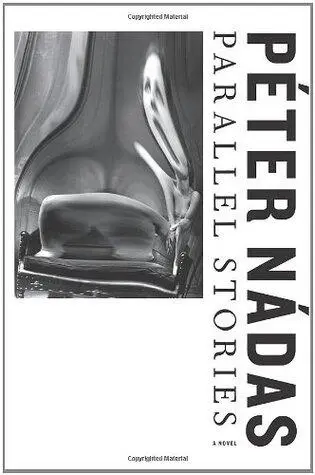
- Название:Parallel Stories
- Автор:
- Издательство:Farrar, Straus and Giroux
- Жанр:
- Год:2011
- ISBN:нет данных
- Рейтинг книги:5 / 5. Голосов: 1
-
Избранное:Добавить в избранное
- Отзывы:
-
Ваша оценка:
Parallel Stories: краткое содержание, описание и аннотация
Предлагаем к чтению аннотацию, описание, краткое содержание или предисловие (зависит от того, что написал сам автор книги «Parallel Stories»). Если вы не нашли необходимую информацию о книге — напишите в комментариях, мы постараемся отыскать её.
Three unusual men are at the heart of
: Hans von Wolkenstein, whose German mother is linked to secrets of fascist-Nazi collaboration during the 1940s; Ágost Lippay Lehr, whose influential father has served Hungary’s different political regimes for decades; and András Rott, who has his own dark record of mysterious activities abroad. The web of extended and interconnected dramas reaches from 1989 back to the spring of 1939, when Europe trembled on the edge of war, and extends to the bestial times of 1944–45, when Budapest was besieged, the Final Solution devastated Hungary’s Jews, and the war came to an end, and on to the cataclysmic Hungarian Revolution of October 1956. We follow these men from Berlin and Moscow to Switzerland and Holland, from the Mediterranean to the North Sea, and of course, from village to city in Hungary. The social and political circumstances of their lives may vary greatly, their sexual and spiritual longings may seem to each of them entirely unique, yet Péter Nádas’s magnificent tapestry unveils uncanny reverberating parallels that link them across time and space.This is Péter Nádas’s masterpiece — eighteen years in the writing, a sensation in Hungary even before it was published, and almost four years in the translating.
is the first foreign translation of this daring, demanding, and momentous novel, and it confirms for an even larger audience what Hungary already knows: that it is the author’s greatest work.
Parallel Stories — читать онлайн бесплатно полную книгу (весь текст) целиком
Ниже представлен текст книги, разбитый по страницам. Система сохранения места последней прочитанной страницы, позволяет с удобством читать онлайн бесплатно книгу «Parallel Stories», без необходимости каждый раз заново искать на чём Вы остановились. Поставьте закладку, и сможете в любой момент перейти на страницу, на которой закончили чтение.
Интервал:
Закладка:
If I’m not embarrassing you with this frivolous claim, I must say that one has a bisexual potential.
Racial purity is not a purpose in itself, let there be no misunderstanding between us about that, it is not an obsession but rather the biological prerequisite of the survival of the races.
He did not want to mention his proposal just yet; perhaps after he had finished his business with Karla, when the guests were leaving.
But he was on guard, observing the effect of his words, and he sensed boring into his side the destructive power, seething with jealousy and professional objections, of Baroness Thum’s tense silence. He was grateful to her for not expressing her hostility out loud, for not spewing out her venom. The reason he continued to speak so professorially, nicely cutting off and eliminating any possible questions and doubts, or veering off in different directions, was to keep the countess, who was very receptive to his ideas, from developing any misgivings about their future cooperation.
However, this game of playing it safe had little to do with professional reality.
To make the available data useful for purposes of national health and to use it to establish, at least retroactively, a new system of racial screening backed by the law, they needed as large a collection of data as it was possible to gather. We would need God’s data, he sometimes thought, annoyed at his own unpardonable way of thinking. And he had his doubts, because they had been operating a huge, expensive system on the strength of presuppositions — neither during their research nor retroactively could they justify the system on their meager available data — and since he believed their method of data gathering was inadequate, he had to consider the existing data irrelevant too.
We are confirmed materialists, this is what he thought, who try to grasp creation’s data in some material form. That is to say, his concern was that they conceived of human attributes as mere matter or as material manifestations.
This is nonsense; among sane people, this should be nothing but an object of ridicule.
The most important, strictly confidential sources of the palpable data were handled by Assistant Professor Mengele. Everything they regarded as so-called mixed or Jewish material. From Rome, however, they received data with which they could confirm African and south European sources of their comparisons, while from their colleagues in Oslo and Stockholm, where they had no independent institutions, they obtained data relating to Nordic peoples who had remained racially relatively pure. In his desperate hours, he saw clearly that not even another ten institutions and another ten generations would be enough to gather the necessary amount of data with which to confirm or reject a presupposition of any kind.
Budapest should long ago have been the center of research on Slavic and Balkan interbreeding. But he did not dare entrust his otherwise ready and willing Hungarian colleagues with the most confidential data, the research relating to the penis, vagina, and sperm stock.
Under the patronage of this woman, however, it might be possible to establish a German institute in Budapest paid for with Hungarian money, where he could quietly exile the baroness, and then he would not have to maintain an ongoing work relationship with Professor Orsós either.
But at the moment he feared not only the baroness’s professional judgment — her silence was hovering in the air — but also his wife’s rancor. He was guided by no inner conviction of any kind when he tried to do everything the way his wife wished.
Heredity and environment, these ancient movers of evolution and progress, he was saying, beaming with obligatory professional enthusiasm, are clearly separable. We must separate them.
There was no stopping now. He could no longer anticipate or comply with his wife’s wishes, which he did not understand himself.
I must stick with this pathetic little tone, this overly professorial little tone, he told himself, and he commanded himself to be patient.
It can be done nowhere but in the people’s state of Germany. The inherited stock and the conditions of a healthy environment must be guaranteed by nothing but the people’s state, which therefore must place the individual too under strict scientific supervision.
He burst into laughter. Except for Baroness Thum, nobody understood his expansive good mood, swollen with brutality and violence.
Yet Baroness Thum was busy with something else at the moment; taking advantage of the opportunity, she took a quick good look at Schuer’s teeth. She did not want to miss the chance. From this angle, she saw hardly any fillings. Although with such a brief glance she couldn’t catch every irregularity.
Of course, by now she’d had time to conclude that all three of Schuer’s offspring were idiots.
And anybody could see that the boy would be a pederast.
Maybe she should try to have a more thorough look at the roof of his mouth.
Today, the future of peoples can no longer be settled with conventional weapons, Countess, and if in the future, as part of your high office, you will be dealing with questions like this, you must keep this always in mind, that everything will be decided by the level and quality of the knowledge of genetics.
The maids had taken away the soup bowls and with great show and ceremony carried in, through the rooms, two large gravy bowls and on two great platters the elegantly sliced sauerbraten, garnished with steamed cabbage and gigantic potato dumplings, which at the Schuers was prepared according to the recipe of the famous clergyman’s daughter, with all the attention and love due to national foods. They had to keep it a secret from the master of the house that first the uncooked meat had been marinated for a week in a broth made with water, red wine, thinly sliced onion rings, and vinegar, spiced with bay leaves, pepper, and clove, and poured in the stone dish so as just to cover the meat. Several times a day, with ritual seriousness, they had turned the beef over in its bath.
Schuer laughed happily because to this day he could not help being happy about the circumstances he had just described. He could not get used to the wonderful thought that he’d a part in it; he was proud of it. He lived in a state that had adopted the findings of his science.
Think about it, Countess, he cried with rapturous boyish enthusiasm. The Führer is the first statesman in the history of the world who not only acknowledges and understands the achievements of research in racial purity and genetics, but has raised them to be the guiding principle in the administration of justice. For him, nothing is more important than a healthy nation.
Countess, please, perhaps a bit more gravy.
Which was a warning to the maids not to stand around staring but to make another round with the gravy bowls, and mainly a signal for her husband that it was high time to find another topic for table talk.
Oh, yes, Baroness, yes, please, you’re very kind.
Karla, dear, wouldn’t you like a bit more of this tasty sauce. Pass this to the baroness, will you. Our cook makes this exceptionally well. We’ll let the ladies have the recipe, unless of course you are already familiar with it.
Would love to have it, who could refuse such a generous offer.
Isn’t this the natural way, Countess. I can’t bear secret recipes.
Why should a recipe be kept secret.
Baroness Thum, however, rudely motioned to the maid that she could go, should not even come close with the disgustingly thick gravy.
And, as if happy about the unexpected silence and attention that she managed to provoke with her impoliteness, she turned toward Countess Imola and said loudly that she had known old Milton Bradley, he was a great mind, a great scientist, and a fascinating man.*
Читать дальшеИнтервал:
Закладка:
Похожие книги на «Parallel Stories»
Представляем Вашему вниманию похожие книги на «Parallel Stories» списком для выбора. Мы отобрали схожую по названию и смыслу литературу в надежде предоставить читателям больше вариантов отыскать новые, интересные, ещё непрочитанные произведения.











Обсуждение, отзывы о книге «Parallel Stories» и просто собственные мнения читателей. Оставьте ваши комментарии, напишите, что Вы думаете о произведении, его смысле или главных героях. Укажите что конкретно понравилось, а что нет, и почему Вы так считаете.