Péter Nádas - Parallel Stories
Здесь есть возможность читать онлайн «Péter Nádas - Parallel Stories» весь текст электронной книги совершенно бесплатно (целиком полную версию без сокращений). В некоторых случаях можно слушать аудио, скачать через торрент в формате fb2 и присутствует краткое содержание. Год выпуска: 2011, Издательство: Farrar, Straus and Giroux, Жанр: Современная проза, на английском языке. Описание произведения, (предисловие) а так же отзывы посетителей доступны на портале библиотеки ЛибКат.
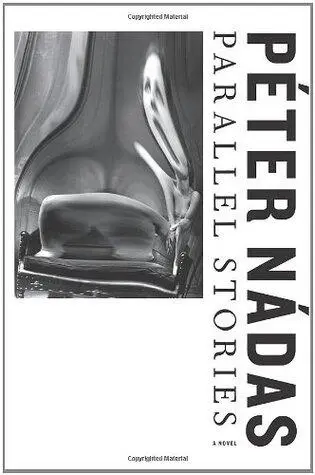
- Название:Parallel Stories
- Автор:
- Издательство:Farrar, Straus and Giroux
- Жанр:
- Год:2011
- ISBN:нет данных
- Рейтинг книги:5 / 5. Голосов: 1
-
Избранное:Добавить в избранное
- Отзывы:
-
Ваша оценка:
Parallel Stories: краткое содержание, описание и аннотация
Предлагаем к чтению аннотацию, описание, краткое содержание или предисловие (зависит от того, что написал сам автор книги «Parallel Stories»). Если вы не нашли необходимую информацию о книге — напишите в комментариях, мы постараемся отыскать её.
Three unusual men are at the heart of
: Hans von Wolkenstein, whose German mother is linked to secrets of fascist-Nazi collaboration during the 1940s; Ágost Lippay Lehr, whose influential father has served Hungary’s different political regimes for decades; and András Rott, who has his own dark record of mysterious activities abroad. The web of extended and interconnected dramas reaches from 1989 back to the spring of 1939, when Europe trembled on the edge of war, and extends to the bestial times of 1944–45, when Budapest was besieged, the Final Solution devastated Hungary’s Jews, and the war came to an end, and on to the cataclysmic Hungarian Revolution of October 1956. We follow these men from Berlin and Moscow to Switzerland and Holland, from the Mediterranean to the North Sea, and of course, from village to city in Hungary. The social and political circumstances of their lives may vary greatly, their sexual and spiritual longings may seem to each of them entirely unique, yet Péter Nádas’s magnificent tapestry unveils uncanny reverberating parallels that link them across time and space.This is Péter Nádas’s masterpiece — eighteen years in the writing, a sensation in Hungary even before it was published, and almost four years in the translating.
is the first foreign translation of this daring, demanding, and momentous novel, and it confirms for an even larger audience what Hungary already knows: that it is the author’s greatest work.
Parallel Stories — читать онлайн бесплатно полную книгу (весь текст) целиком
Ниже представлен текст книги, разбитый по страницам. Система сохранения места последней прочитанной страницы, позволяет с удобством читать онлайн бесплатно книгу «Parallel Stories», без необходимости каждый раз заново искать на чём Вы остановились. Поставьте закладку, и сможете в любой момент перейти на страницу, на которой закончили чтение.
Интервал:
Закладка:
They smiled at him from the midst of their intense conversation.
It soon became clear that the woman had been one of Mrs. Szemző’s classmates in school. Laughing and cutting into each other’s words, they were telling Madzar that only two days earlier they had been together at an open-air concert on Margit Island, and now they had met on the train completely by chance. They were laughing about how insane such coincidences were.
Every summer she brings her pupils, students at the Hungarian Royal School of Industrial Design, to Mohács, and they, she and Madzar, might have met before.
The woman rather dazed Madzar.
You know, I’ve lived abroad for a long time, he said politely and a little as if excusing himself.
They are all studying textiles, the woman explained, shining her large bright eyes on him, and for years the city had been kind enough to put the rooms of the empty hospital for infectious diseases at their disposal.
Which is ideal, enthused Mrs. Szemző, who felt she should mitigate somewhat the excitement generated by this unexpected encounter.
Ideal indeed, and not only because it’s comfortable there and the silk factory is nearby, not just that, enthused the rail-thin, black-haired woman dressed in layered silk. You’ll see for yourself what a splendid chestnut-tree park the building has, just splendid, she cried, and with her enormous eyes glanced at the architect, who surely knew this splendid park.
There, outside, we can do our watercolors under the trees, to our heart’s content.
Madzar was looking at the scar on the woman’s face.
Otherwise, we use the empty wards as studios, when it rains.
Luckily we don’t have to be afraid of some devastating epidemic. The two women laughed together.
Originally that property belonged to the prince of Montenuovo, Madzar remarked quietly, to be part of the conversation somehow. This family, you should know, has a special standing in Mohács, where frugality would not be exceptional. The Montenuovos disliked plants that were merely decorative. For them, every plant had to make its own profit. That is why they had so many chestnut trees planted, back in the day.
He wanted to step between them, both to observe them and to end this senseless female shouting and giggling. As if to his shame he had no choice but to put himself in the middle of their chaos and cacophony. Again things were happening some other way, not his. A woman had again done something to him, and had brought another one along to boot. He was outraged, and for a long moment the two women sent searching, penetrating looks from under their large hats at the man who seemed to be emanating aversion and rejection. They also smiled at him politely, appreciating and at the same time assuaging his embarrassment.
Sizing up the expert who will be their splendid guide in the next few days.
He’d probably enjoy being their tourist guide.
It would be truly ideal, if only he were willing.
And while they continued to chat like this, they kept looking at him from under their hats and wondering what had gotten into this attractive though rather preposterously dressed man.
Her pupils would be so glad if he looked at their work.
With your belated permission, my dear architect, I told Miss Dobrovan that I had seen your wonderful drawings.
So it’s no secret to me that you have a great talent as a draftsman too.
She is flashing her bright eyes at me so that I won’t look at her scar.
Madzar did not fail to see that the women were playing an old, well-rehearsed game.
But the scene was brief, with every word passing smoothly and quickly among them. They prattled on as if their words scarcely touched them. And then they had to be busy with the luggage, giving orders as to where to put what. Hired carriages were waiting in front of the station. The porters put the bags and suitcases of the young ladies and gentlemen, along with their easels and drawing boards, into a bus. Waiting for the Szemzős was the Hotel Korona’s black-lacquered, crest-adorned light carriage with its cheerful coachman and two black horses, groomed to a high shine.
The spoiled little city boys ran to them, they wanted to make friends with the horses or at least to stroke their nice shiny coats. But the horses were leisurely and contentedly feeding from the nosebags hung around their necks. They swatted at horseflies with their tails, their skin quivering, or, by way of warning, kicked a bit in the rapturous boys’ direction.
Madzar did not understand how the black hackney could be waiting for them since he hadn’t ordered it the evening before, but he was also busy thinking that the boys might soon get into trouble. Anxiously he watched how the horses endured the boys’ aggressive adulation.
But I expected only you, he said stealthily to Mrs. Szemző. His stifled voice was filled with rebuke.
I reserved the nicest corner room for you.
As if asking, how could I have known you’d be coming with your entire family.
Which was something Mrs. Szemző did not understand. She had so many other things to worry about in any case.
Where did you reserve and what sort of room — in other words, she didn’t know what to do with the amorously reproachful emphasis in his sentence. No doubt she was embarrassed occasionally by her own quite erotic fantasies about Madzar, that they would do this and then that, and how the man would behave in this or that position, but their real contact neither allowed nor called for such delicate intonations and details. Cautiously, seeing Madzar’s agitated state, she quickly came back with a question as to whether he had received her telegram.
Of course he did, came the man’s indignant, aggressive reply.
Why would he be here if he hadn’t.
I should have wired earlier, Mrs. Szemző added apologetically, and speaking a little too loudly. Doing this at the last minute wasn’t very considerate of me, I admit, and her hand in the white doeskin glove rested for a brief and intimate moment on Madzar’s arm. As she had done a few weeks earlier in the empty seventh-floor apartment from where they could look out, between the blocks of the Palatinus apartment buildings, at the same Danube.
It was dizzying to look at the same river here, and this shared feeling — existing simultaneously in past and present — dazed them a little, as if from the renewed thrust of another insult.
And the reason I didn’t was so as not to burden you too much, Mrs. Szemző continued her sentence. So that you wouldn’t have time to make any preparations, and she was surprised to see how simple it was, despite the proximity of her children, to keep her composure. And wouldn’t even think of changing your schedule because of our family’s little excursion.
Madzar could not control himself so elegantly.
What do you mean by not wanting to be a burden, he asked in the same reproachful amorous tone he had used before, but then quickly regretted having opened his mouth. The emotion bruised the flattering image he had created of his own self-discipline. It’s not just me, my mother is waiting for you with lunch. For weeks, I’ve been doing nothing but work for you, he cried in a voice of stifled desperation.
And what shouldn’t I even think about then.
Oh my God, how embarrassing, cried Mrs. Szemző. If only we hadn’t already promised. Who would have thought your mother would be so kind as to wait for us with lunch. But now I really see my mistake. I should have asked well ahead of time if such a visit would be convenient for you. But I could not restrain the boys from going to Mohács — they do not know Mohács at all. You won’t believe me, she said, and reluctantly let go of Madzar’s arm — but the feeling of closeness only increased and remained in the flesh and in the marrow of the bones.
Читать дальшеИнтервал:
Закладка:
Похожие книги на «Parallel Stories»
Представляем Вашему вниманию похожие книги на «Parallel Stories» списком для выбора. Мы отобрали схожую по названию и смыслу литературу в надежде предоставить читателям больше вариантов отыскать новые, интересные, ещё непрочитанные произведения.










Обсуждение, отзывы о книге «Parallel Stories» и просто собственные мнения читателей. Оставьте ваши комментарии, напишите, что Вы думаете о произведении, его смысле или главных героях. Укажите что конкретно понравилось, а что нет, и почему Вы так считаете.