Péter Nádas - Parallel Stories
Здесь есть возможность читать онлайн «Péter Nádas - Parallel Stories» весь текст электронной книги совершенно бесплатно (целиком полную версию без сокращений). В некоторых случаях можно слушать аудио, скачать через торрент в формате fb2 и присутствует краткое содержание. Год выпуска: 2011, Издательство: Farrar, Straus and Giroux, Жанр: Современная проза, на английском языке. Описание произведения, (предисловие) а так же отзывы посетителей доступны на портале библиотеки ЛибКат.
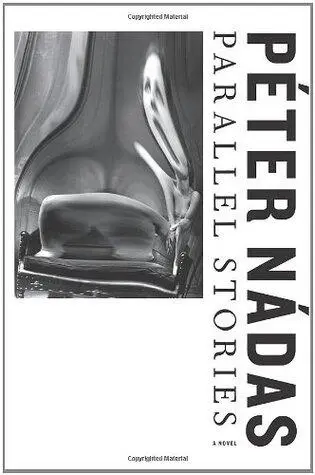
- Название:Parallel Stories
- Автор:
- Издательство:Farrar, Straus and Giroux
- Жанр:
- Год:2011
- ISBN:нет данных
- Рейтинг книги:5 / 5. Голосов: 1
-
Избранное:Добавить в избранное
- Отзывы:
-
Ваша оценка:
Parallel Stories: краткое содержание, описание и аннотация
Предлагаем к чтению аннотацию, описание, краткое содержание или предисловие (зависит от того, что написал сам автор книги «Parallel Stories»). Если вы не нашли необходимую информацию о книге — напишите в комментариях, мы постараемся отыскать её.
Three unusual men are at the heart of
: Hans von Wolkenstein, whose German mother is linked to secrets of fascist-Nazi collaboration during the 1940s; Ágost Lippay Lehr, whose influential father has served Hungary’s different political regimes for decades; and András Rott, who has his own dark record of mysterious activities abroad. The web of extended and interconnected dramas reaches from 1989 back to the spring of 1939, when Europe trembled on the edge of war, and extends to the bestial times of 1944–45, when Budapest was besieged, the Final Solution devastated Hungary’s Jews, and the war came to an end, and on to the cataclysmic Hungarian Revolution of October 1956. We follow these men from Berlin and Moscow to Switzerland and Holland, from the Mediterranean to the North Sea, and of course, from village to city in Hungary. The social and political circumstances of their lives may vary greatly, their sexual and spiritual longings may seem to each of them entirely unique, yet Péter Nádas’s magnificent tapestry unveils uncanny reverberating parallels that link them across time and space.This is Péter Nádas’s masterpiece — eighteen years in the writing, a sensation in Hungary even before it was published, and almost four years in the translating.
is the first foreign translation of this daring, demanding, and momentous novel, and it confirms for an even larger audience what Hungary already knows: that it is the author’s greatest work.
Parallel Stories — читать онлайн бесплатно полную книгу (весь текст) целиком
Ниже представлен текст книги, разбитый по страницам. Система сохранения места последней прочитанной страницы, позволяет с удобством читать онлайн бесплатно книгу «Parallel Stories», без необходимости каждый раз заново искать на чём Вы остановились. Поставьте закладку, и сможете в любой момент перейти на страницу, на которой закончили чтение.
Интервал:
Закладка:
Ultimately, the Bellardi-Montenuovo clan has always been and will forever remain the first family of Mohács.
Madzar knew this was the right opportunity; he could make it easier on himself because he wouldn’t have to wait alone for Bellardi, but he said nothing. Yet the very next day silent preparations began for receiving the guest; his mother was baking, I’ll bake some cheese bundles ahead of time, she said.
Which made her kitchen bloom with the sweet smell of vanilla.
Maybe you should bake some pork-crackling cones, Madzar said incautiously, for with the crackling cones, which Bellardi could never get at home, he revealed everything to his mother.
He blushed so hard he had to turn away.
I already did, son, don’t worry, just the way you like them, she added tactfully, as if she had no suspicions regarding the possible guest, I cut the pork crackling very fine before mixing it in. But it’s not my own anymore, that’s the problem. I had to have crackling delivered from Lehmann’s this morning. At least he has it fresh twice a week.
She cleaned the spacious veranda, the large living room, and the bedroom, where they might have to put the overnight guest. Unless he plans to spend the night elsewhere. Very few tradesmen’s families in Mohács could boast of such expensive bedroom furniture. These pieces had taken up an entire classroom of the local school when they were displayed as part of the great industrial exhibition, which His Excellency the regent came to see as did the royal princes, together with Magda Purgly, not to mention Archduke Frederick,* the prince of Montenuovo, and the Odescalchis. The furniture, made of pure Finnish poplar, was the masterwork of Tóni Windheim Jr., made after he had returned to his father’s plant from his wanderings. They had the wood brought from Finland; Sanyi Csikalek prepared the upholstery for it. The old Windheim manufactured an entire set; we bought ours from the first batch. He also sold a lot in Vienna, he shipped them there himself. Along with old Csikalek, they received a gold medal for it. But they got their medals separately, each for his own work. That’s when your father also received his, in 1926, when the grand exhibition was held on the four-hundredth anniversary, but you do remember that. Old Windheim was still with us then. They were standing like this, I’m telling you, your godmother to my right, and in front of her the whole big Windheim family, including the relatives from Pécs. Don’t forget, they are also our relatives, all of them. I’m saying it just like that, just as we said back then, not only the Catholics, we took an oath and everyone cried, everyone who came to Széchenyi Square that day. No stranger will ever set foot on our homeland as long as one Hungarian is alive. How could we forget the Serb rule. You can’t know about this, what are you laughing at. But Archbishop Zichy could not say this then because the Serbs were standing there crying. My, the things those people did, son. They broke down the door of our house in the dead of night. To this day I cry, son, when I think of that devastation. It was beautiful; you can laugh all you want. We’d swear there would be no discord, no disagreement. But the poor man could not get the gold medal himself, our young Tóni did, though it rightfully belonged to the old man.
Mother knows right well what I’m laughing at.
Hungary’s always been lost because of discords. There’s nothing to laugh about there.
Haven’t you been lost yourself, haven’t you said the same thing yourself plenty of times. Then why are you laughing at others. Just because you’ve seen the world, you don’t have to put your nose in the air.
The cover on the double bed, piled high with eiderdowns and pillows, was made of smooth, glossy yellow cotton twill, as was the upholstery on the two chairs, the round pouf in front of the dressing table, and the armchair, all of which were overlain with heavily starched handmade lace. Whenever Mrs. Madzar reminisced about the oath, Madzar had to smile because his mother truly did not consider herself Hungarian. We are German, she would say proudly, raising her white-kerchiefed head high. She said it as if she were removing her son from among the Hungarians.
Luckily, my son, she always said, with your nature you take after me more than after your father.
If only you didn’t urinate on the roses the way he did.
She moved out into the summer kitchen, sleeping on the cot, so that the precious bedroom would remain untouched until the guest’s arrival. A commodious white porcelain chamber pot was also part of the furnishing. They had never used it, because inside and out it was painted full of pretty little blue forget-me-nots. Still, during every spring and fall cleaning, Mrs. Madzar scrubbed it spick-and-span. Since she has been alone, she uses a blue, zinc-coated bucket at night so on cold nights she needn’t leave the bedroom and go outside. She was afraid, scared of every shadow. But she did not want more dogs in her life, because she’s had to beat enough of them to death. Earlier, they kept the bucket, if not this one, out on the veranda. It was not nice to let the man hear the woman’s dribbling. But even in the coldest winter nights her husband thought nothing of standing on the steps of the veranda and pissing from there.
I’ve never regretted marrying a Hungarian, but this I could never forgive the two of you.
That you have to piss on my roses, making the whole yard stink.
I can’t understand how Hungarians don’t smell their own stench.
Since they talked about a possible guest, she had been airing out everything, mercilessly chasing the tiniest flies and numerous mosquitoes. Every evening, she collected the day’s eggs in separate baskets. Her zeal irritated Madzar, her humbleness and servility because of the supposedly upper-class guest.
Why must you prepare so much, Mother. But he restrained himself, did not say anything. They talked very little anyway. Unless his mother was doing one of her well-practiced monologues, silence reigned in the house and above the yard. At most, the power saw screeched on the wood. The feeling itself was unjust toward his mother. Still, he did not show his real feelings. And Mrs. Madzar was very indulgent with her son, that was the reason — not thoughtlessness — she always talked with him about something other than what they should have talked about.
There were so many things that a mother could not talk about with her grown son, anyway.
She did everything not to hurt her son.
Because what she feared most was that this, her last remaining son, was about to leave her for good.
He was in such a hurry he did not even bring any luggage and he walked around in his father’s clothes.
Very carefully, she said to him, son, people will laugh at you in your father’s clothes.
Actually, her son confused her in these clothes.
You’re paying for your expensive hotel room in Pest instead of bringing your fine clothes here.
I’d keep them in fine order here.
Come on, Mother, who would laugh at me, I don’t know a soul in the whole city.
The city knows you’ve come home, son. At least when you leave the house you should wear your own clothes. Can’t you see how much you take after your father. He also saved money on things he shouldn’t have.
Oh, Mother, stop chewing my ears off.
As if you were only a tradesman, that’s what you look like in your father’s clothes.
Well, Mother, what should I look like.
You’re working here and paying for your expensive hotel in Pest. Gottlieb’s older son has two cars in America. I’m afraid your studies may have been in vain. The way you’re going, you’ll never have anything.
What have I got to do with Gottlieb’s older son, Mother.
Читать дальшеИнтервал:
Закладка:
Похожие книги на «Parallel Stories»
Представляем Вашему вниманию похожие книги на «Parallel Stories» списком для выбора. Мы отобрали схожую по названию и смыслу литературу в надежде предоставить читателям больше вариантов отыскать новые, интересные, ещё непрочитанные произведения.







Обсуждение, отзывы о книге «Parallel Stories» и просто собственные мнения читателей. Оставьте ваши комментарии, напишите, что Вы думаете о произведении, его смысле или главных героях. Укажите что конкретно понравилось, а что нет, и почему Вы так считаете.