Keri Hulme - The Bone People
Здесь есть возможность читать онлайн «Keri Hulme - The Bone People» весь текст электронной книги совершенно бесплатно (целиком полную версию без сокращений). В некоторых случаях можно слушать аудио, скачать через торрент в формате fb2 и присутствует краткое содержание. Жанр: Современная проза, на английском языке. Описание произведения, (предисловие) а так же отзывы посетителей доступны на портале библиотеки ЛибКат.
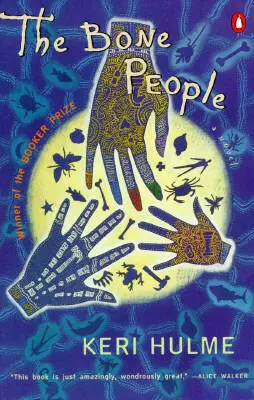
- Название:The Bone People
- Автор:
- Жанр:
- Год:неизвестен
- ISBN:нет данных
- Рейтинг книги:4 / 5. Голосов: 1
-
Избранное:Добавить в избранное
- Отзывы:
-
Ваша оценка:
The Bone People: краткое содержание, описание и аннотация
Предлагаем к чтению аннотацию, описание, краткое содержание или предисловие (зависит от того, что написал сам автор книги «The Bone People»). Если вы не нашли необходимую информацию о книге — напишите в комментариях, мы постараемся отыскать её.
The Bone People — читать онлайн бесплатно полную книгу (весь текст) целиком
Ниже представлен текст книги, разбитый по страницам. Система сохранения места последней прочитанной страницы, позволяет с удобством читать онлайн бесплатно книгу «The Bone People», без необходимости каждый раз заново искать на чём Вы остановились. Поставьте закладку, и сможете в любой момент перейти на страницу, на которой закончили чтение.
Интервал:
Закладка:
"You see that my grandmother is still here because I failed her in a small way. But it was necessary she stayed, because otherwise I would have failed her in a big way. I would have left."
Joe asks in a small voice, "How long have you been here?"
"All my life, since I was a small boy. Waiting for you."
The kaumatua sighs.
"It must seem very strange to you, a young man from the world outside, that someone has been waiting for you from before the time when you were born. But wait until tomorrow has gone. Then you will know whether I was mad or sane."
"You helped me," says Joe, and sees the old man nod, as if that is the proper answer.
"Now about moths," says the old man briskly. "When one dies, one must journey. The journey is well-known. You must know it.
One goes north to Te Rerenga-wairua, down the grey root of Akakitererenga, onto the rock platform and into the sea. Into the seahole that leads into Te Reinga."
"It is all myths and legends," says Joe, "and I never liked any of it."
"Tsk," says the kaumatua, "and your wife still returns to you as a moth?"
"Sometimes she turns into moths. Sometimes she decays in my arms. Sometimes she eats one of my sons and then starts on me, beginning at my privates. That is all business for a psychiatrist maybe, but not any exemplar of Maori truths."
The kaumatua drew on his pipe.
"I think it is," he says at last. "I have more experience in these matters than you. Listen! There are three versions of what happens to you after death. If you go to Te Reinga, it is held that you live as you did here. Eventually, you die again. And then the rot sets in. If you get past the spirit-eaters, Tuapiko and Tuwhaitiri, you get past them, there is underworld after underworld, each less pleasant than the last. In the end one of all you get a choice. The choice is to become nothing, or to return to earth as a moth. When the moth dies, that's you gone forever — just putting off the evil day, her?" Cackle.
He simmers down. "But that is allegory, I think. It means you journey on and on, becoming less human and more… something else. Your wife has just about reached the end of that road, I think."
He leans forward a little.
"The second way is to journey along the sea path. You surface once to say goodbye to Ohau, the last of this land you'll ever see, and then go ever westwards till you reach Te Honoiwairua in Irihia. There, there is a judgement, and you're thrust into heaven or hell."
He spits at the fire again, thoughtfully.
"I think that idea is cribbed. It doesn't sound quite Maori. The third version however, I like, therefore," chuckle, "it is more sophisticated. Some of us believe that the soul has a choice of which journey to make, to stay with Papa, or to join Rangi. Graveminders used to put a toetoe stalk, a tiri, into the ground at the end of the grave so it pointed to the sky. Then the soul could leave the body, and hang in the sun awhile, like a cicada crawled from its larval husk. It would choose which way it wanted to develop, the earthly, or the heavenly, and if it chose Rangi, away into the firmament it would go. Maybe as far as the tenth heaven where Rehua of the long hair smiles hospitably; Rehua the giver, eldest child of Rangi and Papa, Rehua the star of kindness with the lightning flashing from his armpits, Rehua who disperses sadness from strong and weak alike. Today I shall call, 'Ki a koe, Rehua! Rehua, ki a koe!"
His voice rings out, stronger than Joe has heard it yet. It is the voice of a triumphant young man.
There is a long time of silence. The fire dies down. The rain pours down, now hard and wind-driven, now in steady and soothing
Aue," mourns the old man at last, and his voice is cracked and thin and high again, "that is how I would like things to be, but do you know? I am more scared than a child would be. I have no faith in the old ways and no hope in the new."
"Are you dying?"
"I am nearly dead."
It was said matter-offactly.
"Sometime today, it will end for me. Don't shiver like that."
He bent over, and picked up more wood, coaxed the fire to burn brightly. Then he said, "It is nearly dawn. I have some things to tell you, but you must be strong when you hear them. They are not frightening, but they are grave matters. Matters of importance to you, and all people. So go to sleep again. You will not dream."
Joe says hoarsely,
"I think I am in a nightmare. I think I've been in a nightmare for months. Or maybe forever."
"Rupahu! You are a sick man, a broken man, but now it is time for you to heal, to be whole. To flourish and bear fruit. Go to sleep."
The old man wraps himself firmly in his overcoat again, sits down in the chair, and motionless, stares into the fire.
I am not sleepy. In this fug of smoke and turpentine, who could sleep? I suppose I should feel guilty lying on his bed. I suppose I should give it back and let him have some rest, especially if he thinks he's going to die soon. But he can't die on me now.
For all his arrogance and rambling, I think the old bloke just cleared up a nightmare for me. I can see where the thing got its root. And I can see what Hana meant when she said-
The kaumatua smiles to himself as the sound of breathing becomes louder, becomes a steady, even snore. O man, he thinks, you are still very young, and while your life has broken you, you can still heal yourself. With a little help, with a little help. And you, cackling away there in the back of my mind — o yes! I heard you start when
told him those things you made me do so long ago, for it was
your idea of a joke, nei? — very soon I will be in the back of my
mind with you, and the thought does not increase my respect…
indeed, my hands are knotting with rage, old woman. Watch out!
There is not long to go now!
He thinks with wonder and easy tears, I still have the certainty Of meeting her.
And the dry voice says from the dark,
I told you. You have never lost that.
The whare shuddered.
A draught of wind forced smoke back down the chimney, and ash spun out of the grate.
"Ata! Do you like ashes with your soup?"
The old man's voice is sprightly, and his eyes gleam with mischief.
"Not really," says Joe, and sips another mouthful of tea. He winces. It is nearly black, and as bitter as anything he has tasted. "But if they're in there, they're in there."
He thinks
Strange… I feel gay and, o, I don't know.. unburdened?
He considers that, sipping more of the hellbrew gingerly.
Yes, unburdened. As though something's climbed off my shoulders. Yet nothing's different. I still remember everything. God, I can even feel my arm as bad as yesterday.
He stares into his cup.
Very strange. The talk this early morning? My dreams? Nah, it must be the change in the weather-
The sky outside is intensely blue. Patches of whitish cloud spear across it, moving eastwards. The wind blows strongly.
"E ka pai," the old man says. "There's not that many. Maybe enough to make a new flavour."
He stirs the soup busily. "You look much better today."
"I feel much better," says Joe, grinning. "I'm not usually a bastard, I'm sorry for my bad temper."
The kaumatua grins back. It's an impish grin, much like Himi's? when he's done something not bad, but not good either.
"And I do not usually bait guests," he answers gently, and the grin fades. "It was necessary to spark a little anger in you, to begin the healing. So much better if the anger began on me. That may sound vague and mystical, but you were the broken man who had to come."
"You didn't bait me!"
"I did. I was taught early in my life how to manipulate people, by someone who was far top wise. You can antagonise people, by posture and tone of voice, without them being aware this is being done. Of course, you can do the opposite thing too, and be conciliatory. Or make people go to sleep."
Читать дальшеИнтервал:
Закладка:
Похожие книги на «The Bone People»
Представляем Вашему вниманию похожие книги на «The Bone People» списком для выбора. Мы отобрали схожую по названию и смыслу литературу в надежде предоставить читателям больше вариантов отыскать новые, интересные, ещё непрочитанные произведения.











Обсуждение, отзывы о книге «The Bone People» и просто собственные мнения читателей. Оставьте ваши комментарии, напишите, что Вы думаете о произведении, его смысле или главных героях. Укажите что конкретно понравилось, а что нет, и почему Вы так считаете.