Keri Hulme - The Bone People
Здесь есть возможность читать онлайн «Keri Hulme - The Bone People» весь текст электронной книги совершенно бесплатно (целиком полную версию без сокращений). В некоторых случаях можно слушать аудио, скачать через торрент в формате fb2 и присутствует краткое содержание. Жанр: Современная проза, на английском языке. Описание произведения, (предисловие) а так же отзывы посетителей доступны на портале библиотеки ЛибКат.
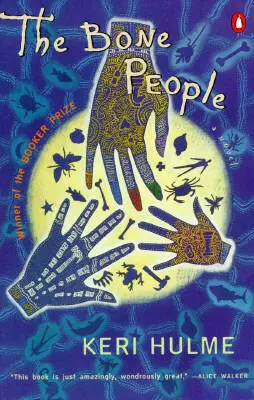
- Название:The Bone People
- Автор:
- Жанр:
- Год:неизвестен
- ISBN:нет данных
- Рейтинг книги:4 / 5. Голосов: 1
-
Избранное:Добавить в избранное
- Отзывы:
-
Ваша оценка:
The Bone People: краткое содержание, описание и аннотация
Предлагаем к чтению аннотацию, описание, краткое содержание или предисловие (зависит от того, что написал сам автор книги «The Bone People»). Если вы не нашли необходимую информацию о книге — напишите в комментариях, мы постараемся отыскать её.
The Bone People — читать онлайн бесплатно полную книгу (весь текст) целиком
Ниже представлен текст книги, разбитый по страницам. Система сохранения места последней прочитанной страницы, позволяет с удобством читать онлайн бесплатно книгу «The Bone People», без необходимости каждый раз заново искать на чём Вы остановились. Поставьте закладку, и сможете в любой момент перейти на страницу, на которой закончили чтение.
Интервал:
Закладка:
"Ka pai," says the old man behind him, "he tika tonu ano tena."
Joe stares at him. He couldn't have heard-
The seasound quickens in his ears.
The kaumatua smiles sadly back, and begins walking north.
It is smoky inside, and very quiet.
"What is that?"
"An antiseptic." The old man grunts. "A bush antiseptic-"
He had steeped and kneaded broad green leaves in a basin of water. The juice that he bathes Joe's arm with is mildly astringent.
"You were limping," he says, some time later.
Joe stretches his right leg cautiously: his jeans are stuck to the outer side of his thigh.
"I've cut the skin there, that's all," he says, pointing. "Nothing's broken."
The kaumatua tore another piece off his shirt.
"Can you bathe yourself there?"
Joe reaches awkwardly, careful not to move his forearm.
"Yes."
The kaumatua purses his lips, and rips off three more strips. He rolls them neatly, and then stands.
"I will be back in a short while."
He draws his greatcoat tightly round him, and walks noiselessly outside.
"E, what a weird old bird,"
tut he says it quietly lest the elder hear. He thinks, That's the first time I've ever met anyone who literally gave you the shirt off their back.
He balls the worn scrap in his hand. I can always buy him another… you're getting as bad as Kerewin, Ngakau-
He washes the crust of blood away; the stones have bitten into his flesh as well as scraping long grazes on his hip and thigh. More scars, he thinks morosely. All self-inflicted more or less. I don't think I've ever had an honest accident or an honourable wound-
The washing reopens the cuts. He rearranges the piece of shirt into a wad, and holds it against his thigh, staunching the flow with difficulty.
Kerewin said at Moerangi, "Suffering is undignified." Suffering ennobles, I said, but I smiled to show her that I thought that was really bullshit. What was noble about enduring a hook in your thumb? And she said, "Sometimes, the dross is burnt off your character," and moodily added, "but the scars that result from burning can be a worse exchange."
"Come on," says Joe to Joe, "you're here. God knows where, but here. They're, they're anywhere."
He blinks furiously, and scans the room for something to look at.
Opposite him is the range. The cover over the firebox is cracked, and smoke leaks out in pungent clouds. There is a piece of twine strung above the range: a pair of grey socks hang from it. On the mantelpiece above is an ornate black clock. The clock is stopped.
"Figures," says Joe.
There are books on the mantelpiece, but he can't read the titles from here. That used to be a thing Kerewin did, read the book titles in any room she came into. "You want to know about anybody? See what books they read, and how they've been read-" By the door, thinks Joe firmly, by the door, on the same side of the room as the range, is a sink and bench. There are rust stains in the sink where the tap drips. One tap — for hot water, boil it. Hence the two battered iron kettles steaming gently on the stove.
At the far end of the whare there's a wooden bed. Beside it, a tin trunk. Then there's a single window, with spiderwebs growing out from the corners. And lastly, the table he sits beside. One chair, and one stool.
"Ascetical. Or bloody poor."
There are two incongruities.
Above the table, leaning out from the wall as though to remind you they're there, are three black-framed photographs. One is a faded sepia picture of a mother and child: both are Maori, the woman with long hair, the child practically hairless with narrow eyes and sulky downturned mouth. The middle photograph is Michael Joseph Savage, amicable smile, bookish air, mildly looking the world over through wire-rimmed spectacles. The official portrait putout.
The last is a colour photograph, much more recent. A young blond-haired man, long blond hair, ahh Jesus Ngakau, don't look at that one, but he does. The.young man is gaunt and ill-looking, with deep hollows under his oblique eyes. His smile is somehow wildly merry, as though he has fallen into a terrifying joke. Pointed chin and high cheekbones… man, you're getting sick again, seeing him in everyone. He looks hurriedly away, to the other strange thing in the room.
It's a worn hexagonal pincushion made of black velvet. It hangs on the wall above the head of the bed, and is studded with needles and long antique hat pins.
"Odd religion this man must have," and he grins to himself.
The kaumatua, standing hitherto silent in the doorway, says,
"My grandmother always wore a hat when she went to town. Bare feet, but wellclad head. She spent most of her money on hats. A small vanity, and a permissible one."
He adds after a minute of silence,
"This room has been left unchanged since her death, with two exceptions. That I hung on the wall," stabbing a finger at the cadaverous young man, "and this," poking at his barechested body, "sleeps on her bed instead of the floor. She died outside," he says.
He lays the materials he has gathered on the table. The rough bandages have been soaked in a secretion that is powerfully redolent of turpentine. There are lengths of flax fibres, freshly scraped and rubbed into raw string, and two flat footlong shafts of wood. And clear gum in a mussel shell.
From one of the cupboards under the bench, the kaumatua brings a saucepan. He adds a little hot water to the gum in the musselshell, until it slides easily into the pot: he heats the mix on the range. When the gum has melted and blended with the water, he cools it.
"You could call this bush-lotion. Or Maori ointment. It heals well, whatever the name given to it."
Joe has been watching him with growing resentment. After the sudden shock the old man's silent appearance and words had caused, he found his feelings of awe and thanksgiving had somehow been displaced by a strong antagonism with undertones of contempt. He says abruptly,
"I know its healing properties. It's miro gum. The antiseptic was probably tutu. I asked you what it was because I couldn't see what leaves you had in the bowl. The bandages smell like you've expressed oil from miro fruit onto them. The only thing I don't bloody know is where you'd find a miro tree round here."
"Ka pai," says the old man. "In my garden as a matter of fact.
I planted it there forty years ago. It's quite a big tree now. Good for people who fall over bluffs, as well as the pigeons."
He sounds mildly amused.
He brings the melted mirogum over.
"I suppose you know it stings too, o man of wisdom?" He smiles slowly, his lips thinning and edging away from his teeth. It isn't really a smile.
"Yes," says Joe shortly.
The kaumatua is very skilful, both in applying the lotion to the deep wound in his arm, and in rebinding the arm later, so his wrist is immobilised. But the gum burns like fire, and for all the elder's skill, the shattered bone is moved more than once.
"Stand up," says the kaumatua, when he has done bandaging.
"My jeans'll fall down," says Joe, and realises with horror that he has whined like a petulant child.
The kaumatua doubles up with laughter. "Her!" he gasps huskily, between spasms of laughter, "maybe this is a new kind of man after all! E her!" He collapses onto the stool, cackling to himself, brushing tears away from his eyes.
"Her?" asks Joe warily, unsmiling.
The other wipes his eyes again.
"O not 'her'," he says at last. "Just a noise." He grins wickedly. "I'll look the other way, man, until your modesty is recovered, in case I see a sight not meant for mortal eyes."
Joe bends his head. "I'm sorry," he says in a low shaky voice. "My thigh won't stop bleeding. That's why I'm holding it. That's why I didn't want to stand. That's why," he stops, feeling his eyes overflow. God I'm either going to faint or bawl out loud like a baby.
Читать дальшеИнтервал:
Закладка:
Похожие книги на «The Bone People»
Представляем Вашему вниманию похожие книги на «The Bone People» списком для выбора. Мы отобрали схожую по названию и смыслу литературу в надежде предоставить читателям больше вариантов отыскать новые, интересные, ещё непрочитанные произведения.











Обсуждение, отзывы о книге «The Bone People» и просто собственные мнения читателей. Оставьте ваши комментарии, напишите, что Вы думаете о произведении, его смысле или главных героях. Укажите что конкретно понравилось, а что нет, и почему Вы так считаете.