Hwang Sok-Yong - The Shadow of Arms
Здесь есть возможность читать онлайн «Hwang Sok-Yong - The Shadow of Arms» весь текст электронной книги совершенно бесплатно (целиком полную версию без сокращений). В некоторых случаях можно слушать аудио, скачать через торрент в формате fb2 и присутствует краткое содержание. Год выпуска: 2014, ISBN: 2014, Издательство: Seven Stories Press, Жанр: Современная проза, на английском языке. Описание произведения, (предисловие) а так же отзывы посетителей доступны на портале библиотеки ЛибКат.
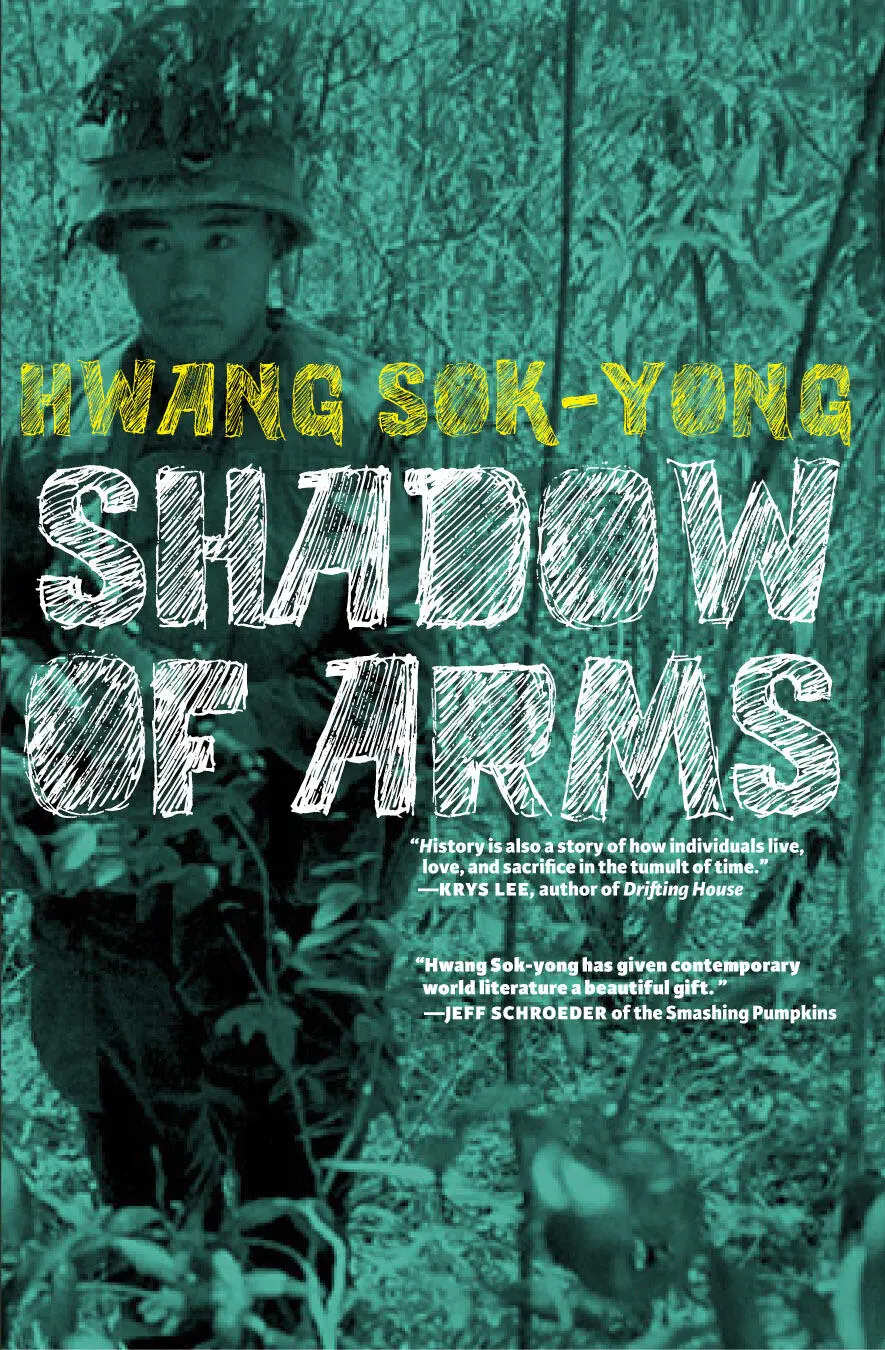
- Название:The Shadow of Arms
- Автор:
- Издательство:Seven Stories Press
- Жанр:
- Год:2014
- ISBN:9781609805081
- Рейтинг книги:5 / 5. Голосов: 1
-
Избранное:Добавить в избранное
- Отзывы:
-
Ваша оценка:
The Shadow of Arms: краткое содержание, описание и аннотация
Предлагаем к чтению аннотацию, описание, краткое содержание или предисловие (зависит от того, что написал сам автор книги «The Shadow of Arms»). Если вы не нашли необходимую информацию о книге — напишите в комментариях, мы постараемся отыскать её.
is a novel of the human condition rather than of the exploits and losses of one side or the other in war.
The Shadow of Arms — читать онлайн бесплатно полную книгу (весь текст) целиком
Ниже представлен текст книги, разбитый по страницам. Система сохранения места последней прочитанной страницы, позволяет с удобством читать онлайн бесплатно книгу «The Shadow of Arms», без необходимости каждый раз заново искать на чём Вы остановились. Поставьте закладку, и сможете в любой момент перейти на страницу, на которой закончили чтение.
Интервал:
Закладка:
Back in psychological warfare training he remembered reading a poem that a defector to the NLF had passed around. Back then it had seemed silly enough to toss in the trash, but now it kept coming back into his mind:
Mother, since leaving your side I’ve been marching with my comrades. I trudged over the mountains and crossed through Laos to come to the heart of Vietnam. My courage didn’t fail as I marched through the rain. Now, I am here in a strange place, yet my own country just the same. I’m looking around me and thinking: What is it that I must liberate? The marketplace is crowded and noisy, the rice shoots in the field are billowing before the breeze, there is the sound of a temple gong in the distance, children are playing in the schoolyard and the singing of a choir can be heard. Butterflies are busy flying over the flowers in the bok choy field, and I don’t know what it is I’m supposed to liberate.
It’s true: anybody who’s worn out or who gives up self-discipline for a while is bound to become conservative. City guerrillas especially, he had been taught, must battle against the temptations of city life. Fight against time, fight against self, and most of all, fight against the loneliness of being separated from the organization. Minh passed trees lining the road and turned right past the tennis courts. The wind off the ocean blew his shirt and his hair. He took out the map and looked it over, then stopped by the bottom of the stairs below the fourth house.
The scent of the flowers was overwhelming — the strong fragrance of iris almost made him dizzy. He slowly climbed up the steps. Beside the white wooden gate there was a doorbell. He looked through the wooden lattice into the front yard of the house. This place was not Vietnam. From the dewy freshness of the palm leaves it seemed the garden had just been watered. He rang the doorbell. No answer. He tried again several times but there was still no response. As he turned to head back down the steps, from inside he could hear the sound of a glass door sliding open. Minh turned back once more and stood waiting at the gate. The hall door opened and a woman in a yellow beach robe craned her neck out and asked in English, “Who is it?”
“Is this the residence of Major Pham Quyen?”
“Yes, but he’s now at the provincial government office. You should contact him there.”
“I’ve come to see you.”
“Me? Who are you?”
“I’m Pham Minh, the major’s younger brother.”
“Ah, I think I’ve heard about you.”
The woman came outside in slippers, treading on the stepping stones, and opened the side door. She smelled of shampoo. So she was taking a bath, Minh thought as he looked straight into her eyes. More beautiful than he had expected. Her skin was lighter than that of a Vietnamese woman and her full breasts billowed inside the beach robe. The sight was blinding. Quyen had already accomplished his first goal — he had created a neutral country right here, surrounded by the war-torn city of Da Nang.
“Come in, come in, please.”
She gestured with her chin for him to follow her inside. They sat down facing each other, he on the couch and she on a chair.
“Have you had lunch?”
“Yes, at home.”
“Something to drink? Coffee?”
“Thank you.”
“Hot or iced?”
“Either is fine.”
Mimi looked back at him with a broad warm smile. Somehow Minh could not bring himself to feel any ill will toward her. She seemed not all that different from his sister Mi. The window to the veranda was open and a cool sea breeze was blowing in. The room was quite cheerful. The woman had the television turned on to the American Forces channel. Again the inside of her robe was billowing.
“Everyone is fine at home? Lei, Mi and your mother?”
“Yes.”
After plugging in the coffeepot, Mimi returned and sat with her legs crossed on a wicker chair across from him. The beach robe fastened only from the neck down to the waist, and its lower flaps naturally parted to reveal the thighs of her long legs. Minh shifted his glance here and there somewhat awkwardly. She offered him a cigarette from a pack of Kents. He welcomed the distraction and took one.
“I’ve heard about a younger brother who was in medical school up in Hue. It was Minh, I think?”
“Yes, that’s my name.”
“You don’t look much like Major Pham. But wait a minute, yes, I see the resemblance between you and Lei.”
“Lei and I take after our mother, and Big Brother after our father.”
“What about your big sister?”
“I don’t know, maybe half and half.”
“I’m sorry, I should visit your home often, but I haven’t been there even once yet. What can I do? I’m so scared. I think you can understand. I’m a foreigner, and our lifestyle being what it is. .”
Mimi stopped mid-sentence and rushed over to the steaming coffeepot.
“Your mother doesn’t like me, right? Or, rather, the whole family doesn’t.”
“I didn’t either.”
“Ah, then I’d better make a good impression on you.”
“Are you getting married?”
“We already did. Legally, I’m his wife.”
“Do you believe he’ll actually take you abroad?”
She set the coffee down in front of him, then picked up the cigarette she’d placed in the ashtray and took a deep puff.
“Yes, as long as his plans and mine don’t conflict. I extended the time I’m willing to wait from three months to a year. Quyen is always talking about it: either we go out or we send you first, but in any event the whole family has to leave this country, that’s what he says. Then we won’t have to worry about having a child.”
She was some woman, direct and uninhibited. Minh didn’t know how to respond.
“How did you find the house? Did your brother tell you the way?”
“No. Lei said she was here once and drew me a map.”
“Lei is naughty. She knows where I am and never paid a visit.”
“Are you always at home?”
“I go downtown now and then.”
“Da Nang must be boring for you.”
“Living is more or less the same wherever you are. Have you left school for good?”
“I’m going to enlist.”
“Well I’m sure your brother will find a way to help you out.”
“He probably will. I’ve come to ask a favor.”
Mimi looked at him with widened eyes but said nothing.
“I want to earn some money until I’m ready to go abroad to study.”
“Money? It’s filthy stuff, true, but look at those Americans. With it there’s not a thing in the world they can’t do. Money’s not just a piece of paper or gold.”
“What is it, then?”
“Money is freedom itself. The more you have, the freer you’ll be. No money, no freedom.”
“Madame is not a housewife, but is running some kind of business, I suppose?”
“Both,” said Mimi with a wink.
What little hatred Minh had felt for her by this time was gone. She was different from Quyen. A woman who had pulled herself up from the very bottom, she was frank and generous both to herself and others.
“We’re partners and we love each other. I’m not just wasting time, either. To settle abroad there’s something more convenient than gold.”
“Dollars?”
“No. Money orders — military remittance checks. Occasionally I go to the Sports Club with the finance office staff to play cards and be their friend. We need it. And you will, too, when you take off. Wait, you said you wanted to ask a favor. . to make money, is that what you said?”
“That’s right.”
“Business, that’s what you should do.”
“What kind?”
“In a place like this, the most profitable business, after all, is to buy and sell the goods of those American bastards.”
Читать дальшеИнтервал:
Закладка:
Похожие книги на «The Shadow of Arms»
Представляем Вашему вниманию похожие книги на «The Shadow of Arms» списком для выбора. Мы отобрали схожую по названию и смыслу литературу в надежде предоставить читателям больше вариантов отыскать новые, интересные, ещё непрочитанные произведения.










Обсуждение, отзывы о книге «The Shadow of Arms» и просто собственные мнения читателей. Оставьте ваши комментарии, напишите, что Вы думаете о произведении, его смысле или главных героях. Укажите что конкретно понравилось, а что нет, и почему Вы так считаете.