Susan Barker - The Incarnations
Здесь есть возможность читать онлайн «Susan Barker - The Incarnations» весь текст электронной книги совершенно бесплатно (целиком полную версию без сокращений). В некоторых случаях можно слушать аудио, скачать через торрент в формате fb2 и присутствует краткое содержание. Год выпуска: 2014, Издательство: Doubleday, Жанр: Современная проза, на английском языке. Описание произведения, (предисловие) а так же отзывы посетителей доступны на портале библиотеки ЛибКат.
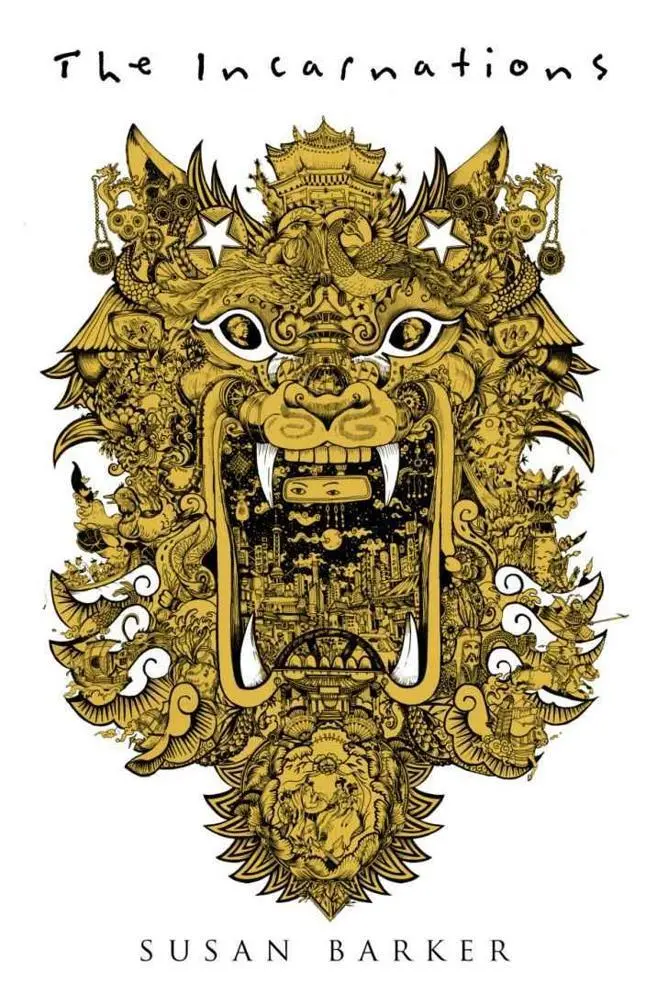
- Название:The Incarnations
- Автор:
- Издательство:Doubleday
- Жанр:
- Год:2014
- ISBN:нет данных
- Рейтинг книги:5 / 5. Голосов: 1
-
Избранное:Добавить в избранное
- Отзывы:
-
Ваша оценка:
The Incarnations: краткое содержание, описание и аннотация
Предлагаем к чтению аннотацию, описание, краткое содержание или предисловие (зависит от того, что написал сам автор книги «The Incarnations»). Если вы не нашли необходимую информацию о книге — напишите в комментариях, мы постараемся отыскать её.
I dream of sixteen concubines, plotting to murder the sadistic Emperor Jiajing.
I dream of the Sorceress Wu lowering the blade, her cheeks splattered with your blood.
I dream of you as a teenage Red Guard, rampaging through the streets of Beijing.
I am your soulmate, Driver Wang and now I dream of you.
You don't know it yet, but soon I will make you dream of me…
A stunning tale of a Beijing taxi driver being pursued by his twin soul across a thousand years of Chinese history, for fans of David Mitchell.
The Incarnations — читать онлайн бесплатно полную книгу (весь текст) целиком
Ниже представлен текст книги, разбитый по страницам. Система сохранения места последней прочитанной страницы, позволяет с удобством читать онлайн бесплатно книгу «The Incarnations», без необходимости каждый раз заново искать на чём Вы остановились. Поставьте закладку, и сможете в любой момент перейти на страницу, на которой закончили чтение.
Интервал:
Закладка:
‘Ba,’ says Wang, ‘you wanted to see me?’
His father smiles at him, slumped in his blue-striped pyjamas, his chin resting on his collar bone. A fleecy blanket is tucked over his lap and his hair is neatly combed and parted on the left. Wang knows that if he were to lean down and hug his wheelchair-bound father (though they are not and were never on hugging terms), he would smell toothpaste and soap. He’d smell aftershave and the talcum powder sprinkled on him when his incontinence pad is changed. Lin Hong is irreproachable in matters of grooming, and Wang’s father would pass the most rigorous of hygiene inspections, at any time of night or day. But Wang isn’t fooled. Her attention to cleanliness is just an excuse for the many petty indignities she visits upon him in his debilitated state.
Wang stands there expectantly. ‘Ba? Is everything okay?’
Across the night sky aeroplane tail lights blink in arcs of descent. Wang’s father’s mouth comes ajar and a strand of saliva threads his lips. He has a book on his lap. He holds it out and Wang takes it. It is a hardback edition of the The Book of Odes , red and pocket-sized. The spine creaks as Wang opens it and turns the brittle yellow pages of traditional script in faded ink. Second edition, 1908. The book is a century old. Why has his father, who is not a reader, given him a gift of poetry? Wang thanks his father, uncertainly.
‘Your mother,’ says his father. ‘It was hers.’
In the nineteen years since her death, he has only ever mentioned Li Shuxiang in passing, to make sneering comparisons: Like mother, like son . Wang stares at his father, sees the shimmer of regret in his eyes and is disgusted. What a cliché, Wang thinks, that the crippled old man is getting sentimental in his old age. Why didn’t he feel the sting of conscience back when it mattered, when she was alive? Wang is not convinced. Restore the strength to his legs, and the motor function to his left side, and he’ll be back to his ways of cruelty, philandering and excess at once. Wang puts the book in his jacket pocket. He thinks back to when he was a child, to the stacks of books around his mother’s bed. He can’t remember ever seeing The Book of Odes .
He thanks his father. Out of politeness, he stays for another ten minutes, before apologizing for keeping him up past his bedtime and seeing himself out the front door.
After midnight Wang arrives home for the second time that day. Echo and Yida are asleep in their beds. Slouched in the bedroom doorway, fists rammed in his jacket pockets, he watches over them like an intruder in his own home. His father’s mawkishness has left him with a bitter aftertaste. But who is he to cast moral judgements? Like father, like son . There and then, in the bedroom doorway, he resolves to be a loyal husband and father, no matter what. But, for all his good intentions, he can’t get Zeng’s voice out of his head.
‘Thirty-two is the best age there is. Wait and see, Driver Wang. Your life has only just begun. .’
15. Sleeping Pills
SIX O’CLOCK, BELLS ring. Time for breakfast at quarter past. Bowls of rice porridge, cups of tea. On Sundays, an egg. Eight o’clock, exercises in the yard. Cassette tape in the battery-operated stereo, they jogged on the spot. Eight thirty, they queued for medication. Tongues poked out for inspection by the nurses, supervising the swallowing of pills. Eight thirty-five, a woman from Ward C dived to the floor, dodging bullets. ‘ They are cracking down again! They are shooting at us! Get down or be killed! ’ she yelled, grabbing at the legs of other patients until the doctors rushed over with a hypodermic syringe.
Summer in the hospital, and there was no escape from the heat. Most of the patients became lethargic, as though tranquillized. They stripped to damp vests and sagging underpants and lay on the cement floor, limbs stretched out in a plea for mercy. The heat was an amphetamine to others, who paced the ward, hyperactive and loud, and it was mescaline to those who shrieked of scorpions, shaking out bedclothes and banging shoe heels on the walls. The heat intensified paranoia in the minds of some, who accused the doctors and nurses of poisoning the drinking water and the other patients of stealing their clothes.
Caged fans whirred but barely moved the suffocating air, and the breeze wasn’t tempted through the open windows into the wards. Wang couldn’t escape his own sweat and was slippery night and day. Showers brought relief but, as soon as he turned off the spray, dampness seeped up again through his pores. The whorls of his fingers marked everything he touched. When he ran his tongue over his upper lip he tasted brine.
Reality slowed in the heat, but Zeng Yan was perpetually on the move, shuffling cards, rattling mah-jong tiles, chasing ping-pong balls in the yard and never breaking into a sweat. ‘I’m a southerner,’ he said, explaining why the heat didn’t knock him out. ‘This is winter in Guangzhou.’ Every day, Zeng looked for Wang, and they talked for hours. Wang watched Zeng’s sharp cheekbones and sensual mouth as he talked, and saw how he could oscillate between genders; how a few strokes of make-up would transform him into an exquisite drag queen. Zeng was blasé about what he did for a living. When talking about his profession to Wang, he was matter of fact.
‘Get in, make money, get out,’ he said. ‘Better than working in a factory. Better than doing the job of a machine. Everyone sells something about themselves, and I sell my body. But only while I am young and good-looking. Those older men in their thirties are pathetic. They make a pittance! Who wants to fuck those ageing losers? I’ll quit long before then. By the time I’m thirty I’ll be the boss of my own company.’
When Zeng spoke of his experiences, Wang listened, rapt. Zeng the hustler, in parks and bars. Zeng the houseboy, a domesticated pet for wealthy men. Zeng on his knees for a policeman in the public toilets near Tiananmen Square. Zeng in a steamy sauna with a group of Hong Kong CEOs. He had been raped and beaten, but he spoke of this with detachment.
‘One bastard made me take pills, to get me high. Then back at his place a gang of his friends were waiting. . Bastards. They threw me out on to the street afterwards. Crippled and bleeding. .’ Zeng shook his head, wincing at the memory. ‘Some won’t pay afterwards. Complain the service was poor after shooting a wad in your mouth. That’s why I have this story about my mother having breast cancer, and needing money for hospital fees. Cheat or be cheated. That’s how it goes.’
Zeng wanted to know about Wang too. He asked about his past lovers, and Wang reeled them out. There was the girl he dated in his first year, who wrote bad poetry and had long centre-parted hair. A sly exhibitionist, the girl had liked to serenade the drunken dregs of parties with folk songs strummed on her guitar. She liked to gush about her emotional depth, and Wang’s reticence frustrated her. ‘The more time I spend with you, the less I know you,’ she complained, then dumped him for a bassist in a rock band. The girlfriend in Wang’s second year had wanted Communist Party membership and a stable ‘iron rice bowl’ job. She had said so on their first date. She had pressured Wang into arranging work experience for her in his father’s department and he had broken up with her in disgust. Wang rarely thought of these girls any more, or the awkward dorm-room fumblings with bra clasps and condoms, the rushed and unsatisfactory sex. Shuxiang is the woman who dominates his past.
‘What was she like?’ Zeng asked.
‘Strange. One in a billion.’
‘Tell me about her,’ Zeng said. ‘Go on.’
Wang remembers how her eyes shone black and how cigarette smoke seeped from her mouth. Shuxiang had a round and motherly face, but she was not like other mothers.
Читать дальшеИнтервал:
Закладка:
Похожие книги на «The Incarnations»
Представляем Вашему вниманию похожие книги на «The Incarnations» списком для выбора. Мы отобрали схожую по названию и смыслу литературу в надежде предоставить читателям больше вариантов отыскать новые, интересные, ещё непрочитанные произведения.





Обсуждение, отзывы о книге «The Incarnations» и просто собственные мнения читателей. Оставьте ваши комментарии, напишите, что Вы думаете о произведении, его смысле или главных героях. Укажите что конкретно понравилось, а что нет, и почему Вы так считаете.