Susan Barker - The Incarnations
Здесь есть возможность читать онлайн «Susan Barker - The Incarnations» весь текст электронной книги совершенно бесплатно (целиком полную версию без сокращений). В некоторых случаях можно слушать аудио, скачать через торрент в формате fb2 и присутствует краткое содержание. Год выпуска: 2014, Издательство: Doubleday, Жанр: Современная проза, на английском языке. Описание произведения, (предисловие) а так же отзывы посетителей доступны на портале библиотеки ЛибКат.
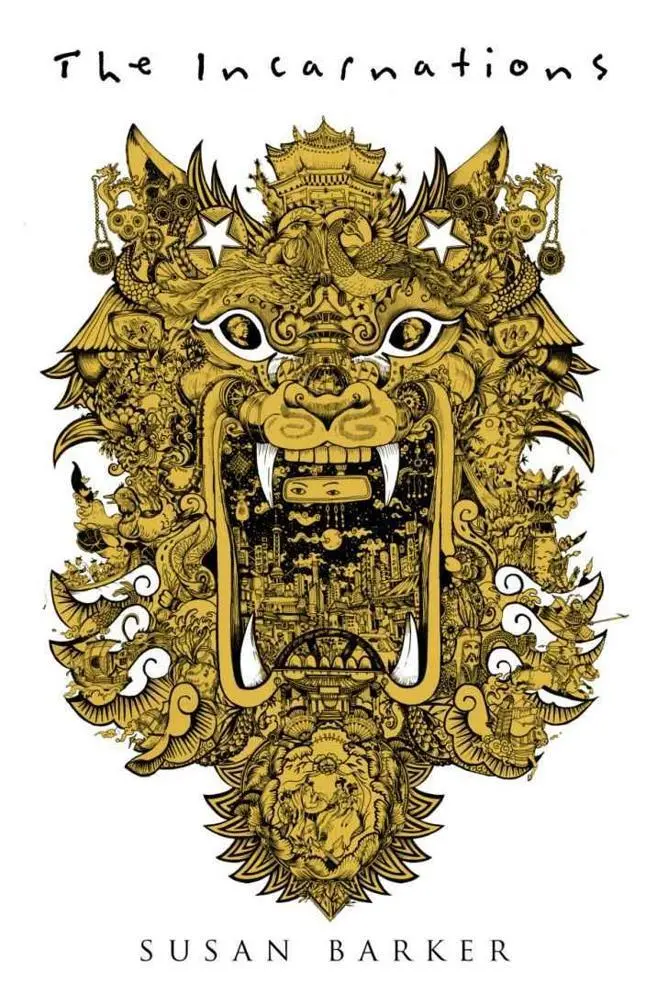
- Название:The Incarnations
- Автор:
- Издательство:Doubleday
- Жанр:
- Год:2014
- ISBN:нет данных
- Рейтинг книги:5 / 5. Голосов: 1
-
Избранное:Добавить в избранное
- Отзывы:
-
Ваша оценка:
The Incarnations: краткое содержание, описание и аннотация
Предлагаем к чтению аннотацию, описание, краткое содержание или предисловие (зависит от того, что написал сам автор книги «The Incarnations»). Если вы не нашли необходимую информацию о книге — напишите в комментариях, мы постараемся отыскать её.
I dream of sixteen concubines, plotting to murder the sadistic Emperor Jiajing.
I dream of the Sorceress Wu lowering the blade, her cheeks splattered with your blood.
I dream of you as a teenage Red Guard, rampaging through the streets of Beijing.
I am your soulmate, Driver Wang and now I dream of you.
You don't know it yet, but soon I will make you dream of me…
A stunning tale of a Beijing taxi driver being pursued by his twin soul across a thousand years of Chinese history, for fans of David Mitchell.
The Incarnations — читать онлайн бесплатно полную книгу (весь текст) целиком
Ниже представлен текст книги, разбитый по страницам. Система сохранения места последней прочитанной страницы, позволяет с удобством читать онлайн бесплатно книгу «The Incarnations», без необходимости каждый раз заново искать на чём Вы остановились. Поставьте закладку, и сможете в любой момент перейти на страницу, на которой закончили чтение.
Интервал:
Закладка:
‘Driver Wang. What can I do for you?’ he asks, and before Wang can even respond, shakes out the hairdressing cape.
Wang hands himself over to Zeng. Allows Zeng to cape him, swivel him in a chair, lather him up with shampoo, rinse him in the sink, trim and blow-dry. And then finally, wordlessly, lead him to a back room, a room of shadows and secret extramarital goings-on, messy with tissues, foil strips of condoms and pump-action dispensers of lubricant. Wang sits on the clean-sheeted, firm-mattressed bed, and Zeng sits beside him and strokes his cheek. He leans to Wang and kisses him, chastely, on the lips. ‘I have been waiting for you,’ he says. ‘I have been waiting for the past ten years.’ And Wang rests his confused and weary head on Zeng’s shoulder and closes his eyes. He does not know how long Zeng holds him for. He does not know how he ends up lying back on the bed with Zeng moving over him; his lips grazing his neck, his tongue blazing a trail of goosebumps as it roams; his hands sliding under his shirt and the waistband of his jeans. It’s as though it’s predestined, and out of his control. Later, they lie side by side, staring up at the ceiling and the halo of light cast by the lamp’s round shade as they speak in murmurs. Wang speaks of the emptiness of driving around Beijing. He speaks of feeling only half alive. ‘Except for now,’ Zeng says. He shapes cigarette smoke in his mouth and blows it out in concentric rings. Then he leans on his arm, propping his head up and gazing at Wang as though his eyes are made of electricity. Wang has to break from Zeng’s gaze. Shifting his eyes back to the ceiling, he says, ‘I liked your letter.’
‘What letter?’
‘The one with the story,’ Wang says. ‘I know you didn’t write it yourself. Where did you steal it from?’
‘Story?’
‘The one about the slaves.’
‘I don’t know what you’re talking about, Driver Wang.’
‘Why are you lying?’
‘No. Honestly. I don’t.’
Wang’s phone beeps in his jacket, on the coat hook on the door.
‘What time is it?’ Wang asks.
‘Eight o’clock,’ says Zeng.
‘Shit. I have to go,’ Wang says.
But he lacks the strength to get up from the bed. The mattress, though deceptively firm, has the undertow of quicksand.
‘Happy birthday, by the way,’ says Zeng.
‘You remembered my birthday?’
‘April fourth, isn’t it? Your thirty-second.’
‘I’m an old-timer now,’ says Wang. ‘Not long for the crematorium. .’
Zeng, who turned thirty-two a month earlier, laughs.
‘Thirty-two is the best age there is,’ he says. ‘Wait and see, Driver Wang. Your life has only just begun. .’
The wave of remorse hits Wang as he walks through the door. Half past eight and the apartment is full of the aromas of his thirty-second-birthday banquet, simmering under various pot lids on the stove. On TV an auditorium of dark-suited Communist Party officials are gathered for some event. As the camera pans out for a wide-angled shot, the officials look as identical as laboratory-made genetic clones.
‘Ba! We’ve been waiting two hours!’ shouts Echo. ‘We’re starving to death!’
Yida stands at the gas stove, yet to acknowledge her husband’s late homecoming. In the kitchen doorway, Wang pleads his case. He had to drive a fare twenty kilometres to the Fragrant Hills. Got caught in a traffic jam on the way back, then the credit ran out on his phone. Yida is dishing up in an efficient manner, with none of her characteristic domestic languor. A warning to Wang that she is unconvinced. She pours a boiling saucepan of longevity noodles — handmade that afternoon from her mother’s Anhui recipe — into a colander. Geysers of steam rush up from the cold aluminium kitchen sink, pinkening her skin. Tendrils of damp curls fall across her eyes and she pushes them back with her forearm. At last, she looks at her husband and remarks, ‘Another haircut, Wang? Getting vain in your old age.’
‘I’m starved!’ yells Echo. ‘Can we eat now? Before I die?’
The dishes are arranged on the table: phoenix-tailed prawns, spicy chicken wings, and Tianjin cabbage with chilli peppers. A bottle of lime-coloured fizzy drink which Yida pours out into paper party cups (to be rinsed after dinner and stacked in the cupboard for reuse). Later there will be pink-iced sponge cake, chosen by Echo from the Good Fortune Bakery. There will be candles and a round of ‘Happy Birthday to You’.
Hungry, they commence eating without fanfare. Yida watches Wang as he attempts to slurp up each noodle in its entirety (a superstition from childhood, to ensure a catastrophe-free year ahead) and, noticing her contempt, Wang bites. He is nostalgic for his twenty-second birthday, when his young wife’s only gift to him was her teasing laughter and her lovely slender body, which he had dragged by the ankles across their bed. He thinks of the way he rested his weary head on Zeng’s shoulder. The way he felt when Zeng had held him; as though it was the only place that he truly belonged.
After dinner Wang unwraps his presents. An air-freshener for his taxi. A bootleg DVD of a Hollywood action movie. A comic book that Echo has made for him, called ‘The Beijing Taxi Driver’. The comic is eight pages long, each page divided into four strips. The main character is a cartoon version of Wang: a superhero taxi driver who fights racoon-masked criminals. (‘I’ll rid this city of corruption if it’s the last thing I do!’ his alter ego shouts.) Echo is anxious and expectant as he turns the stapled pages, and Wang smiles to reassure her.
‘Very impressive, Echo! When you are a world-famous artist, this comic will become a collector’s item, worth millions of yuan!’
Each panel is painstakingly illustrated, and Wang is proud and touched by the effort she has made. He reads aloud from ‘The Beijing Taxi Driver’, and Echo interrupts to expand on plot lines and the good or evil nature of the characters. But as Wang listens to her chattering and praises her hard work, Zeng and the narcotic undertow of the back room seeps into his mind. And he smiles and nods, struggling not to seem too distracted as the simple, uncomplicated joy he derives from Echo’s company begins to fade.
At ten o’clock that evening the phone rings. The landline rings infrequently, and Yida answers in a surprised tone of voice. She passes the receiver to Wang. ‘Lin Hong,’ she mouths.
Wasting no time with greetings, Lin Hong tells Wang that his father wishes to see him. That he would like to wish him happy birthday.
‘Now? Isn’t it past his bedtime?’
‘I am just the messenger. Whether you come or not is your own concern.’
Lin Hong does not wish Wang happy birthday herself or even enquire how he is.
Wang puts on his coat and walks to his father’s apartment. He walks at a brisk pace down Nongzhanguan North Road and Chaoyang Park East Road. When he arrives at his father’s his heart is pumping and his cheeks bright. Lin Hong opens the door, unsmiling in a herb-infused muslin facial mask, showing a glimpse of lacy negligee beneath her cherry-blossom kimono robe. She juts her chin in the direction of the living room, billowing Japanese silk as she turns on her heel back to her mandarin-dubbed Korean soap opera and pillow-arrayed queen-sized bed.
The east wall of the living room is made entirely of glass. The view of Beijing from the tenth floor is of thousands of lights in many wattages of brightness and car headlights gliding up and down the Fourth ring road, shining through the dark. Looking out at the cityscape, Wang senses the electricity surging through the grid and being consumed by the district of Chaoyang. The living-room lights are out, and the night-time view is so mesmerizing that Wang does not immediately see his father, the dark hump of him parked in the shadows. When he does, he starts and turns on a lamp. His father blinks, and Wang wonders if this once-intimidating man, who once commanded the attention of a room, is sad to have gone unseen.
Читать дальшеИнтервал:
Закладка:
Похожие книги на «The Incarnations»
Представляем Вашему вниманию похожие книги на «The Incarnations» списком для выбора. Мы отобрали схожую по названию и смыслу литературу в надежде предоставить читателям больше вариантов отыскать новые, интересные, ещё непрочитанные произведения.





Обсуждение, отзывы о книге «The Incarnations» и просто собственные мнения читателей. Оставьте ваши комментарии, напишите, что Вы думаете о произведении, его смысле или главных героях. Укажите что конкретно понравилось, а что нет, и почему Вы так считаете.