Paul Theroux - Hotel Honolulu
Здесь есть возможность читать онлайн «Paul Theroux - Hotel Honolulu» весь текст электронной книги совершенно бесплатно (целиком полную версию без сокращений). В некоторых случаях можно слушать аудио, скачать через торрент в формате fb2 и присутствует краткое содержание. Год выпуска: 2002, Издательство: Mariner Books, Жанр: Современная проза, на английском языке. Описание произведения, (предисловие) а так же отзывы посетителей доступны на портале библиотеки ЛибКат.
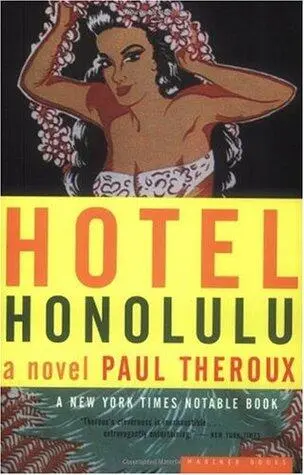
- Название:Hotel Honolulu
- Автор:
- Издательство:Mariner Books
- Жанр:
- Год:2002
- ISBN:нет данных
- Рейтинг книги:4 / 5. Голосов: 1
-
Избранное:Добавить в избранное
- Отзывы:
-
Ваша оценка:
Hotel Honolulu: краткое содержание, описание и аннотация
Предлагаем к чтению аннотацию, описание, краткое содержание или предисловие (зависит от того, что написал сам автор книги «Hotel Honolulu»). Если вы не нашли необходимую информацию о книге — напишите в комментариях, мы постараемся отыскать её.
Hotel Honolulu — читать онлайн бесплатно полную книгу (весь текст) целиком
Ниже представлен текст книги, разбитый по страницам. Система сохранения места последней прочитанной страницы, позволяет с удобством читать онлайн бесплатно книгу «Hotel Honolulu», без необходимости каждый раз заново искать на чём Вы остановились. Поставьте закладку, и сможете в любой момент перейти на страницу, на которой закончили чтение.
Интервал:
Закладка:
"They suck," Rose said, and flounced off.
"That was my daughter."
"Kids today want everything," Ed said.
Upstairs, Sweetie was dressing for dinner — her red dress, her Tahitian necklace, her heels. The necklace she had tightened around her neck like an elegant dog collar.
"What's that?"
"It's a choker."
"For dinner at the Pearl?"
"I want to look nice." She smoothed her dress. She angled her body and looked critically at her legs. Women dressing up seem to scrutinize themselves with other people's eyes, with new expressions. I had never seen this expression on my wife's face before, these eyes.
"Where were you this afternoon?"
"Took Rose to the zoo."
Downstairs, Puamana was at the bar with Kalani. She, too, was dressed up. I had seldom seen her so fashionable, the dress and high heels
that made her look like Sweetie's sister, a yellow silk scarf flung around her neck. Mother and daughter looked at each other with a sort of incestuous approval.
Kalani wore an aloha shirt patterned with pineapples. "I just bought it," he said. He fingered Puamana's scarf. "Like that movie Basic Instinct, where the guy gets tied to the bed with it. Like, don't get any ideas, yah."
"Like, you just gave me one," Puamana said.
From this exchange and their laughter I concluded that they had been in the bar a while. We walked to the Waikiki Pearl. The manager, Kaniela Dickstein, owed me.
"I'm stoked," Kalani said.
Sweetie said, "That movie was awesome."
I glanced away so I wouldn't see my wife saying this.
"You still sit there eating mochi crunch with popcorn and a big root beer?" Kalani asked.
That was an accurate depiction of my wife at a movie.
"And you with a six-pack."
"You see that Titanic?" Puamana said.
"They didn't show it where I was," Kalani said.
I said — my first offering — "They showed it everywhere on the planet."
Puamana glanced sourly at me and Sweetie frowned.
"I know some places they didn't show it," Kalani said. "Anyway, I heard it sucked."
There was silence after this, and it continued after we were seated at the Pearl's restaurant.
"I'm Shayna. I'll be your server. Can I get any of you guys a cocktail?" She was a young, sturdy mainlander with a mainlander's direct gaze.
However marginal my hotel was in the world of hospitality, however thin my managerial experience, still "Aloha" was our greeting — on Buddy's instructions — and no one on my wait staff would ever have introduced himself in this way. Only I seemed to notice.
Kalani said, "Like, I've already had about ten!"
Sweetie ordered a margarita. Puamana giggled with Kalani, who ordered a vodka tonic. I studied the menu.
Kalani said, "I love seeing people eat — just grinding. And laughing. The louder the better. And fighting, that's great. Especially women fighting. That's awesome. Like those women mud wrestlers at Gussie L'Amour's over on Nimitz. The place still there?"
Reflecting on how I disliked seeing people stuffing their mouths, and laughing, and fighting, seeing only open mouths and rows of teeth, I heard Puamana say, "Oh yeah, Gussie still over there."
"When they quarrel, most people turn into monkeys," I said. Kalani clawed his hair. "That's what I like about it." That set Puamana laughing again, and my wife too. "Now what can I get you?" Shayna the waitress said, setting down the drinks and wagging her pad and pencil.
"I would like for lick you leg, starting down here and ending up here," Kalani said, and then indicated those places with his scummy tongue.
I feared legal action — Dickstein would blame me — and was surprised to see Shayna laugh. She said, "You're terrible!"
"That what Buddy's always saying," Puamana said. Kalani was still showing his tongue. "Like Buddy say, 'If you tongue ain't green, you gal ain't clean."
I said to Shayna, "Please ignore him."
"He's kind of cute," Shayna said.
"I'm a real bad influence," Kalani said. "Ask them."
I alone did not find anything humorous in this.
We ordered our meal, and after Shayna had gone, to fill the silence, I said, "There was apparently a waterspout off Aina Haina today. Some guests reported seeing it."
"That's, like, real exciting," Kalani said. It was impossible to tell from anything he said whether he was mocking me.
"What's the Hawaiian word for waterspout?"
Puamana shook her head. "I'm too drunk to remember." Until the food was served there was silence at the table. They started talking as soon as they began to eat, mumbling with their mouths full: movies, meals, the deaths of mutual friends — some of them extremely violent. One had burned to death in a car, another was found with his throat slashed in a cane field, a third had been thrown from his motorcycle into the path of an oncoming dump truck in Nanakuli.
"He was, like, in a million pieces," my wife said as she chewed her meat. It was as if she were chewing one of them.
I stared at her.
"That sucks," Kalani said. "But we been on that road a few times,
yah?"
I stared at him.
"I seen some scars on people you wouldn't believe already,"
Puamana said.
I stared at her and concluded that it was not them. It was me. They belonged; they were content. I was the freak. Knowing Leon Edel had reminded me of how out of place I had felt here, but I had never imagined that I could be so ignorant.
What I missed most was solitude. I had not minded being cut off from my past — in fact, one of my first pleasures in Hawaii was that my past did not matter. But somehow I had taken hold and become involved with these strangers, who seemed as ferocious and simple and unreadable as savages, and in time I had learned that they had unguessable, improbable histories. I had attached myself to them, attached myself to another past. So their history mattered, and I had to listen to its details, even if it was not mine.
"After you had a kid, it's real important for meet your fitness goals," Sweetie was saying.
"You got one awesome little cakey," Kalani said.
Thinking about my history, I heard this on a low frequency. From the silence, which seemed to oppress me like an airless hole I wore like a hat over my ears, I realized that Kalani had spoken to me.
"Thanks very much," I said.
The table had gone quiet and was part of that airlessness, until Puamana said, "The word is waipuhilani. Waterspout."
Now I had an image for my wordless feeling. It was as though a tall column of energy had passed over the table, scoured it of every sound, turned it over, and dropped it. Something within me had been stirred. I gave it the name jealousy, but it wasn't really that. It was a more complex emotion, the feeling of having looked into the window of a house I would never be able to enter. And looking through the window was no good. I had to wait until a waterspout tore the roof off to see the naked people
inside.
After Kalani checked out of the Hotel Honolulu, I felt subdued, and Sweetie was quiet too. The wind had dropped. Rose kept begging me for a motorcycle, my seven-year-old crying, "I want a dirt bike!"
Once when I mentioned Kalani, Sweetie said, "I think he's funny."
"I don't," I said, with a "Take that" tone.
"Then you got a problem."
And another time, out of the blue, she said, "What was I doing before I met you?" But I hadn't asked. "I was in a room. Alone. Just watching TV. Reruns of Gilligan's Island. Waiting for you to show up, yah?"
58 First Love
Sometimes this woman, my wife, surprised me with flashes of intelligence, appraising me like an unsentimental stranger, reminding me that I had to be careful of what I said. It made being married to her difficult at times, as though she weren't deaf but just hard of hearing, not blind but nearsighted. In other places I had lived, people had just enough language to make demands on me but not enough to comprehend when I told them why their demands were unreasonable.
Читать дальшеИнтервал:
Закладка:
Похожие книги на «Hotel Honolulu»
Представляем Вашему вниманию похожие книги на «Hotel Honolulu» списком для выбора. Мы отобрали схожую по названию и смыслу литературу в надежде предоставить читателям больше вариантов отыскать новые, интересные, ещё непрочитанные произведения.









Обсуждение, отзывы о книге «Hotel Honolulu» и просто собственные мнения читателей. Оставьте ваши комментарии, напишите, что Вы думаете о произведении, его смысле или главных героях. Укажите что конкретно понравилось, а что нет, и почему Вы так считаете.