Gerald Murnane - Barley Patch
Здесь есть возможность читать онлайн «Gerald Murnane - Barley Patch» весь текст электронной книги совершенно бесплатно (целиком полную версию без сокращений). В некоторых случаях можно слушать аудио, скачать через торрент в формате fb2 и присутствует краткое содержание. Год выпуска: 2011, Издательство: Dalkey Archive Press, Жанр: Современная проза, на английском языке. Описание произведения, (предисловие) а так же отзывы посетителей доступны на портале библиотеки ЛибКат.
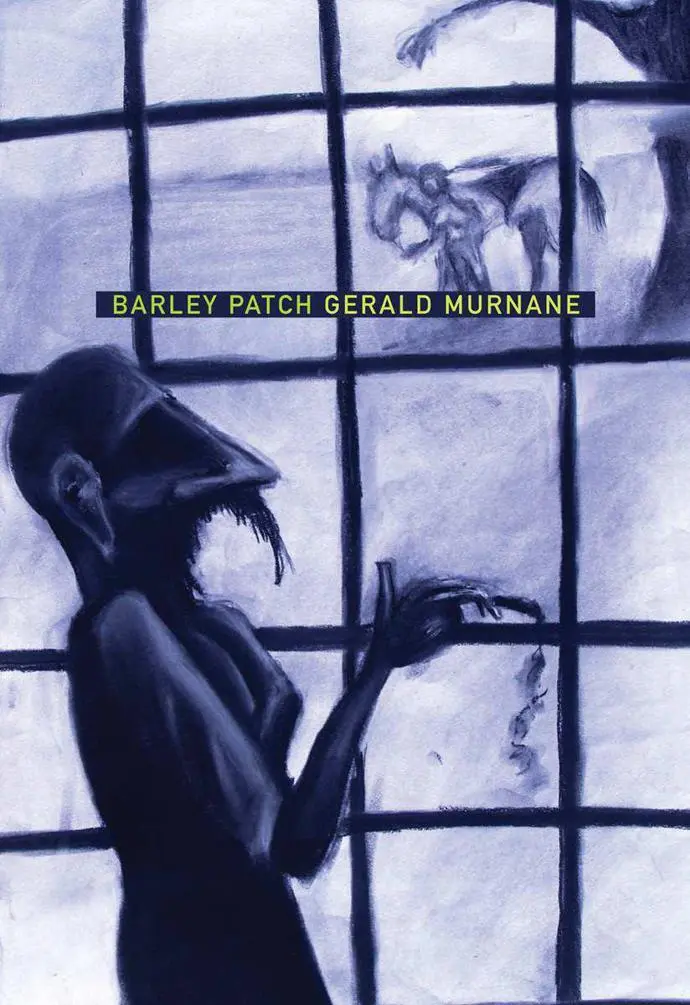
- Название:Barley Patch
- Автор:
- Издательство:Dalkey Archive Press
- Жанр:
- Год:2011
- ISBN:нет данных
- Рейтинг книги:5 / 5. Голосов: 1
-
Избранное:Добавить в избранное
- Отзывы:
-
Ваша оценка:
Barley Patch: краткое содержание, описание и аннотация
Предлагаем к чтению аннотацию, описание, краткое содержание или предисловие (зависит от того, что написал сам автор книги «Barley Patch»). Если вы не нашли необходимую информацию о книге — напишите в комментариях, мы постараемся отыскать её.
Barley Patch — читать онлайн бесплатно полную книгу (весь текст) целиком
Ниже представлен текст книги, разбитый по страницам. Система сохранения места последней прочитанной страницы, позволяет с удобством читать онлайн бесплатно книгу «Barley Patch», без необходимости каждый раз заново искать на чём Вы остановились. Поставьте закладку, и сможете в любой момент перейти на страницу, на которой закончили чтение.
Интервал:
Закладка:
Something that ought to be explained is my having begun again to write fiction only a few years after I had stopped, so I thought, for good.
Four years after I had stopped writing fiction, my seventh book of fiction was published. Some of the book consisted of pieces of fiction that had been published previously in so-called literary magazines, but each of the other three pieces I had written in order to explain one or another of three matters that I could have explained by no other means than by writing a piece of fiction. One of the three pieces was intended to explain to myself and to readers of good will why I had become tired of reading book after book of supposedly memorable fiction and then being unable to remember, a year or more afterwards, any sentence of the text or any detail of my experience as a reader. Another of the three pieces was intended to explain to myself and to readers of good will why I had not been misguided whenever I had struggled from time to time during the previous forty years to devise a set of racing colours in which one or another arrangement of one or another shade of blue or of green explained about me something that could have been explained by no other means than by the appearance of a set of racing colours. The third of the pieces was intended to explain to myself and to readers of good will why I had stopped writing fiction several years before (and had presumably stopped again after having written the text that explained this) and to offer to readers of good will a hint as to what sort of project I now preferred to fiction-writing.
The few reviews of my seventh book of fiction that came to my notice were, on balance, favourable reviews. The most favourable was written by a person who had previously praised other books of mine and found much meaning in them. Towards the end of the review, the reviewer began to comment on the third of the pieces mentioned above. I expected to read that the reviewer had understood my explanation and had taken my hint. I read instead that the reviewer admired the trick of perspective and other items that I had not known were in the piece.
I find myself now in a strange situation. Nearly sixteen years ago, I stopped writing fiction. A few years later, I wrote a piece of fiction intended to explain why I had so stopped. Now, more than ten years later again, I am trying to compose a passage of fiction that might explain my explanatory piece.
My piece of fiction of ten years ago had the title “The Interior of Gaaldine.” When I chose that title, I supposed that most readers of good will would have recognised the provenance of the word Gaaldine . Perhaps most of those readers did so recognise the provenance of the word, but no reviewer seemed to have done so. I had supposed it was common knowledge among readers of my sort of fiction that the sisters who were the authors of some of the best-known works of English fiction in the nineteenth century had written extensively during their youth, and even during their adult life, about so-called imaginary countries, one of which was named Gondal. I had supposed further that many of those readers must have read at some or another time a certain entry written in her diary by one of the sisters mentioned when she was in her seventeenth year, which entry was often quoted as evidence that the writer was as much concerned with the so-called imaginary countries as with her everyday life, so to call it, and which entry reported, among other things, that the inhabitants of Gondal were just then discovering the interior of Gaaldine. For the diversion of my readers, I had the narrator of my piece of fiction report at one point in his narration that he had heard the name of a certain female character as Alice, when the readers would have known, or so I supposed, that the name of the character was Ellis, which had once been the pen-name of the writer of the diary-entry mentioned above, she in whose mind lay the country of Gondal. I even put at the very end of my piece of fiction the names of the three personages from Gondal or, rather, the names of the three characters from one or another of the texts set, so to speak, in Gondal, so that the very last words of the piece of fiction would be the name of the female personage whose presence in the mind of the young woman Emily Brontë caused her later to write about the character named Catherine Earnshaw in a work of fiction set, as it were, far away from Gondal.
I included in my piece of fiction of ten years ago what I supposed was a broad hint that the narrator of the piece had been persuaded during the writing of the text that no more fiction need be written, whether by himself or by any other writer of fiction. The narrator had become aware that the fictional texts already in existence gave way or led back to a series of fictional settings or mental landscapes that could not be thought of as coming to an end. The narrator might have become thus aware either by his reflecting on the series that began with the fictional scenery around the fictional place named Wuthering Heights, the fictional place named Gondal, and the fictional place named Gaaldine, or by his reflecting on the processes called in my piece of fiction decoding or gutting , by means of which the narrator of the typescript mentioned in the text caused fictional horse-races to take place in the fictional country named New Arcadia.
According to the diary-entry mentioned previously, the fictional inhabitants of Gondal had been prompted some time before to learn what lay beyond the boundaries of their fictional country. In my first published book of fiction, which appeared in print thirty-three years ago, the narrator reported, among other matters, that the chief character saw in his mind from time to time certain fictional personages whose district was bounded on one side by tamarisk trees. The narrator reported also certain details of what those personages might have seen from time to time in their own minds, but he reported mostly what they might thus have seen while they were concerned with such events as seemed to take place in their own district. If ever the narrator had reported that one or another of the fictional personages was prompted to learn what lay beyond the boundaries of his or her fictional country, then he, the narrator, would have reported that the personage saw in his or her mind a certain green-gold blur that occupied most of the horizon along one side of his or her district.
For much of the time while I was writing what later became my first published book of fiction, I had in mind a certain dusty backyard in an inland city of Victoria. At the rear end of that yard stood a fence of wire netting. On the far side of the wire netting was the yard behind the house where lived a man who was sometimes described by his neighbours as the mad old bachelor. This man bred a rare variety of poultry known as brown leghorns. The birds were kept in pens and cages while the backyard was used for growing grasses and grains for feeding to the birds. Along the wire netting mentioned earlier was what the owner of the birds called his patch of barley. If ever I myself had written a diary-entry comparable to the diary-entry mentioned above, I might have written that the people of the tamarisks were of a mind to discover the interior of the barley patch.
During the sixteen years when I was a teacher of fiction-writing, I read many books and articles by writers or about writers, and I collected many hundreds of statements that I thought might be of use to my students. Some of the statements I could hardly understand; others I disagreed with; but I put most of the statements in front of my students so that they might learn more than my own views. One statement that I kept for year after year among my notes but seldom read to the students reported how the Russian writer Ivan Turgenev claimed to have discovered many of the characters that he wrote about. According to the statement, Turgenev first met up with many of the characters while he slept. Certain personages seemed to appear to the writer in his dreams. The personages seemed to importune him; they seemed to beg him to write about them; they seemed to yearn to become characters in his writing.
Читать дальшеИнтервал:
Закладка:
Похожие книги на «Barley Patch»
Представляем Вашему вниманию похожие книги на «Barley Patch» списком для выбора. Мы отобрали схожую по названию и смыслу литературу в надежде предоставить читателям больше вариантов отыскать новые, интересные, ещё непрочитанные произведения.



Обсуждение, отзывы о книге «Barley Patch» и просто собственные мнения читателей. Оставьте ваши комментарии, напишите, что Вы думаете о произведении, его смысле или главных героях. Укажите что конкретно понравилось, а что нет, и почему Вы так считаете.