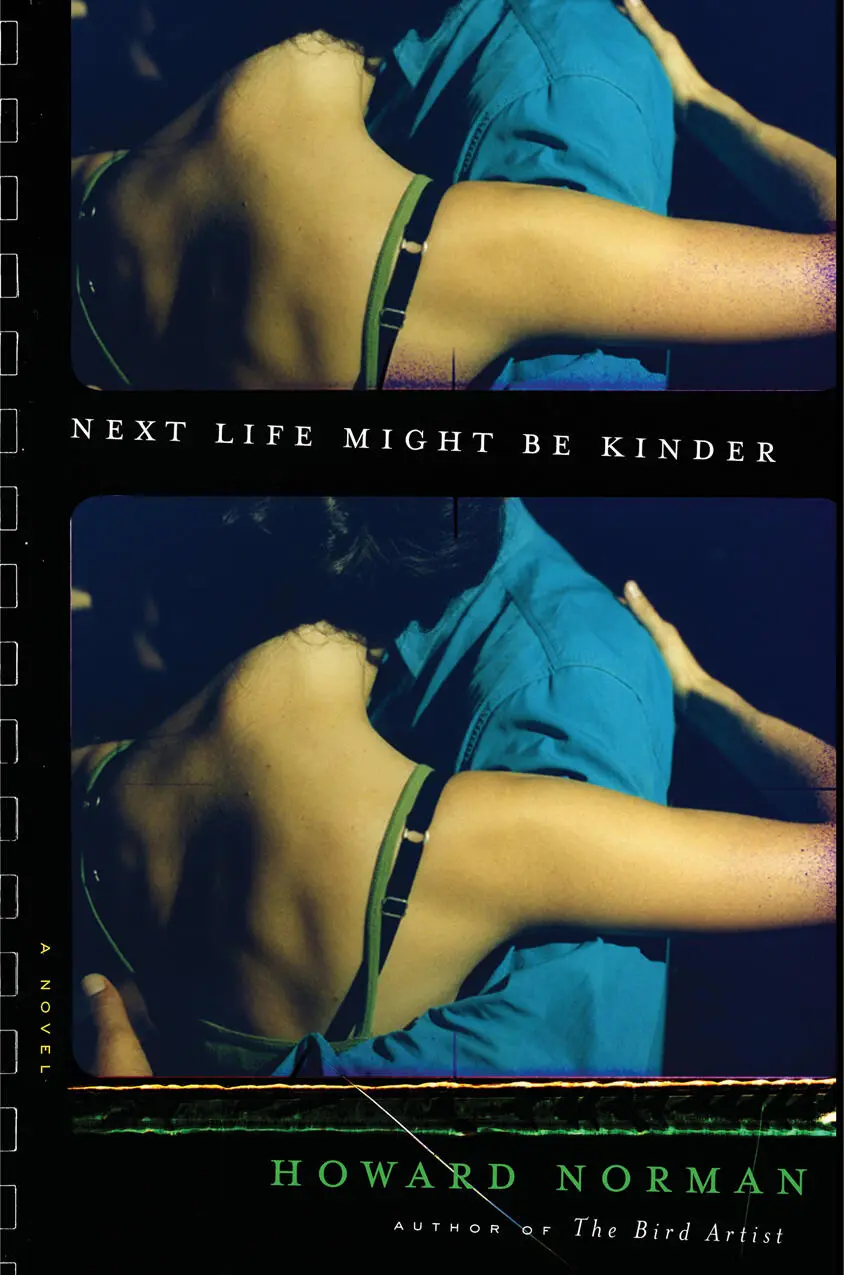
Howard Norman - Next Life Might Be Kinder
Здесь есть возможность читать онлайн «Howard Norman - Next Life Might Be Kinder» весь текст электронной книги совершенно бесплатно (целиком полную версию без сокращений). В некоторых случаях можно слушать аудио, скачать через торрент в формате fb2 и присутствует краткое содержание. Год выпуска: 2014, Издательство: Houghton Mifflin Harcourt, Жанр: Современная проза, на английском языке. Описание произведения, (предисловие) а так же отзывы посетителей доступны на портале библиотеки ЛибКат.
- Название:Next Life Might Be Kinder
- Автор:
- Издательство:Houghton Mifflin Harcourt
- Жанр:
- Год:2014
- ISBN:нет данных
- Рейтинг книги:5 / 5. Голосов: 1
-
Избранное:Добавить в избранное
- Отзывы:
-
Ваша оценка:
Next Life Might Be Kinder: краткое содержание, описание и аннотация
Предлагаем к чтению аннотацию, описание, краткое содержание или предисловие (зависит от того, что написал сам автор книги «Next Life Might Be Kinder»). Если вы не нашли необходимую информацию о книге — напишите в комментариях, мы постараемся отыскать её.
Sam Lattimore meets Elizabeth Church in 1970s Halifax, in an art gallery. The sparks are immediate, leading quickly to a marriage that is dear, erotically charged, and brief. In Howard Norman’s spellbinding and moving novel, the gleam of the marriage and the circumstances of Elizabeth’s murder are revealed in heart-stopping increments. Sam’s life afterward is complicated. For one thing, in a moment of desperate confusion, he sells his life story to a Norwegian filmmaker named Istvakson, known for the stylized violence of his films, whose artistic drive sets in motion an increasingly intense cat-and-mouse game between the two men. For another, Sam has begun “seeing” Elizabeth — not only seeing but holding conversations with her, almost every evening, and watching her line up books on a small beach. What at first seems simply hallucination born of terrible grief reveals itself, evening by evening, as something else entirely.
Next Life Might Be Kinder
Next Life Might Be Kinder — читать онлайн бесплатно полную книгу (весь текст) целиком
Ниже представлен текст книги, разбитый по страницам. Система сохранения места последней прочитанной страницы, позволяет с удобством читать онлайн бесплатно книгу «Next Life Might Be Kinder», без необходимости каждый раз заново искать на чём Вы остановились. Поставьте закладку, и сможете в любой момент перейти на страницу, на которой закончили чтение.
Интервал:
Закладка:
Before and while Elizabeth and I lived in the Essex Hotel, I’d never read The Victorian Chaise-Longue. Naturally, I came to know the novel, since Elizabeth detailed its plot and often referred to it, but I’d not read it. Elizabeth was quite aware of this, and it didn’t noticeably bother her, though she said, “Before you read my dissertation you really should read the novel itself.” I promised, and the subject never came up again.
However, Elizabeth, during our life in the Essex Hotel together, read the novel at least a dozen times all the way through, not to mention rereading hundreds of individual passages, for the sake of writing her dissertation. Mumbling out loud at her desk, “What are you doing here, Marghanita, what are you trying to do with this paragraph?” The séance aspect of her thinking. I’d find notes like this all over the apartment: WHY DID M.L. USE THE WORD “DREAD”?
Elizabeth loved reading the letters of Anton Chekhov, and the one she quoted from most was a letter Chekhov had written to his wife in which he reports: “Last night, I dined with intelligent, lively, accomplished people. And yet I could not locate the soul of the evening.” Lizzy and I didn’t have a lot of friends — didn’t need them — though greatly enjoyed going to the movies with Marie Ligget. On occasion we’d meet our photographer friends Jack and Esme Swir (Esme was later hired to take still photographs on the movie set) at Cyrano’s Last Night, or at a pub on Water Street or Gottingen Street. And I could tell when Elizabeth had found the soul of an evening, because she’d relax and have a rollicking good time. But if the soul of the evening proved elusive, she would insist on leaving. She never made excuses, she’d just say, “Sam, I’m tired. Take me home, darling.” People who knew her didn’t mind. That was just the way Elizabeth was. We mainly were in each other’s company.
But I regret not reading the novel while Elizabeth was alive. So, this evening, I brought her copy with me to the beach. I wanted to tell her that I was reading it now. It was about nine-thirty when Elizabeth appeared, walking out of the stand of birch trees just west of the cove. It was quite cold out; Elizabeth wore an overcoat, dark woolen slacks, galoshes. Her hair was tucked under a knit cap, though the cap couldn’t contain it all. She looked out at the water for a moment, then began to set out her eleven books. Once the books were lined up, she walked over to the rocks, where she sat down on a flat rock and looked at the beach again. That is when she noticed me. I was perhaps twenty meters away, and Philip and Cynthia’s house was in the background. The light was on in their kitchen, but otherwise the house was dark.
On these occasions, when Elizabeth spoke she sounded like herself. Voice-wise, nothing different. Just the same voice that said, “Sam, when you go out today, can you pick up coffee and bread?” Or whispered, “Tonight, your Elizabeth.” Or said with exhaustion, “Work went like shit today, I’m afraid.”
On the beach, I held up her copy of The Victorian Chaise-Longue. Almost immediately, Elizabeth said, “You should have worn a scarf, Sam. Is that my copy of the novel?”
“Yes, it is.”
“Would you do me a favor and set it down here with the other books?”
Walking toward her, I desperately wanted Elizabeth to stay where she was; it would mean I’d get my closest look yet. But as I approached, she stepped back to the rocky surround. I set the novel at the end of the line of books. I didn’t try to read the other titles. Then she said, “Thank you. I won’t keep it, but I wanted to look at something I wrote in the margin of page 66 again.”
“You remember the exact page?”
“I was working on that page the morning I died, silly.”
I couldn’t speak. I can honestly say I was stunned into speechlessness. Elizabeth didn’t speak, either. The horseshoe beach came alive as it had not done before, at least to me. Birds at night: nightjars and another kind I could not identify. The wind was light, the tide out, but the white froth where waves met the shore could be seen. I heard the noise of a television, I think from a house just beyond the trees where a retired lobster fisherman, Alan Leary, now a beekeeper, had lived for fifty years, forty-six of those with his wife, Kristin, who had died in 1967. A slight rustle in the dry cattails, maybe a neighborhood cat or a raccoon. Otherwise, a night so quiet it reminded me of a Japanese poem Lizzy once read to me: “A whispered mention of loneliness / from the moon / has finally arrived.”
Elizabeth picked up the copy of The Victorian Chaise-Longue, opened it to page 66, read for a moment, said, “Oh, of course, now I remember,” then set the book on the sand again. She looked at all the books for a minute or two. “Do you want to know what happened, my love?” she said. “That day. Will it help you in any way to know?”
“Why do you ask this? Why tonight?”
“Never mind for now. I’ll talk about it another night. I can see you’re not up to it yet.”
This was one of our briefer reunions. She gathered up her eleven other books and walked back to the trees. Facing away from me, she waved a quick goodbye over her shoulder.
Back in the cottage, I brushed sand from the cover of The Victorian Chaise-Longue. Reading it, I finally fell asleep at about four A.M., though just for half an hour, during which time I had a dream that I absolutely despised having, despised the thought that I was capable of having it. In this dream I had driven to Halifax, to the police station. I went to a room that had Forensics stenciled on the door. I opened the door and there was Lily Svetgartot wearing a white lab coat. I handed her Elizabeth’s copy of The Victorian Chaise-Longue. She set it on a rectangle of glass, which she then slid under a big microscope. “Come back in five hours,” she said. “I’ll know by then whose fingerprints other than yours I’ve found.” I spent the rest of the dream trying to find my pickup truck.
I woke in a cold sweat, heard myself give a gasping cry. It was lightly snowing out. I turned on the bedside radio. I saw that the book had fallen to the floor. The weather report said, “an accumulation of up to a half inch of snow.” I went into the kitchen, made coffee, and read more of The Victorian Chaise-Longue, but couldn’t concentrate. So I drove, mainly in the dark, to Halifax. It was Tuesday, I realized, but my session with Dr. Nissensen was not until ten. At seven o’clock I was at Cyrano’s Last Night, disappointed not to find Marie Ligget there. I sat in the café through two espressos and a regular coffee, looking out the window, waiting for my appointed fifty minutes.
You Are Getting It All Wrong
SOMETHING NOT GOOD was happening with me. How else to explain why I went to the shoot.
The Chronicle-Herald listed where the day’s scenes would be shot; today the crew was doing “night shots” in the Essex Hotel. I got there at about nine-thirty P.M. Though my picture had appeared a few times in the newspaper (“Author Samuel Lattimore, whose wife’s murder was the inspiration for the movie Next Life, now filming in Halifax, said through a representative, ‘I want nothing to do with the movie. True, I sold the rights, but that is the full extent of my participation, and I wish the filmmakers neither good nor bad luck’”), there was my mug, scowling like I had a degree in scowling. That is to say, no one would recognize me except Lily Svetgartot and Istvakson, so I kept well back from them. I stood with thirty or so people behind a cordon from which hung a sign: NO SPECTATORS BEYOND THIS POINT. According to the papers, the crew had struck up cordial relationships with the city, though there had been complaints about traffic being rerouted and actors being seated in restaurants while regular customers had to wait. Nothing much at all. The movie brought a boost to the local economy, of course, even if it was a relatively low-budget operation.
Читать дальшеИнтервал:
Закладка:
Похожие книги на «Next Life Might Be Kinder»
Представляем Вашему вниманию похожие книги на «Next Life Might Be Kinder» списком для выбора. Мы отобрали схожую по названию и смыслу литературу в надежде предоставить читателям больше вариантов отыскать новые, интересные, ещё непрочитанные произведения.







Обсуждение, отзывы о книге «Next Life Might Be Kinder» и просто собственные мнения читателей. Оставьте ваши комментарии, напишите, что Вы думаете о произведении, его смысле или главных героях. Укажите что конкретно понравилось, а что нет, и почему Вы так считаете.