Howard Norman - Next Life Might Be Kinder
Здесь есть возможность читать онлайн «Howard Norman - Next Life Might Be Kinder» весь текст электронной книги совершенно бесплатно (целиком полную версию без сокращений). В некоторых случаях можно слушать аудио, скачать через торрент в формате fb2 и присутствует краткое содержание. Год выпуска: 2014, Издательство: Houghton Mifflin Harcourt, Жанр: Современная проза, на английском языке. Описание произведения, (предисловие) а так же отзывы посетителей доступны на портале библиотеки ЛибКат.
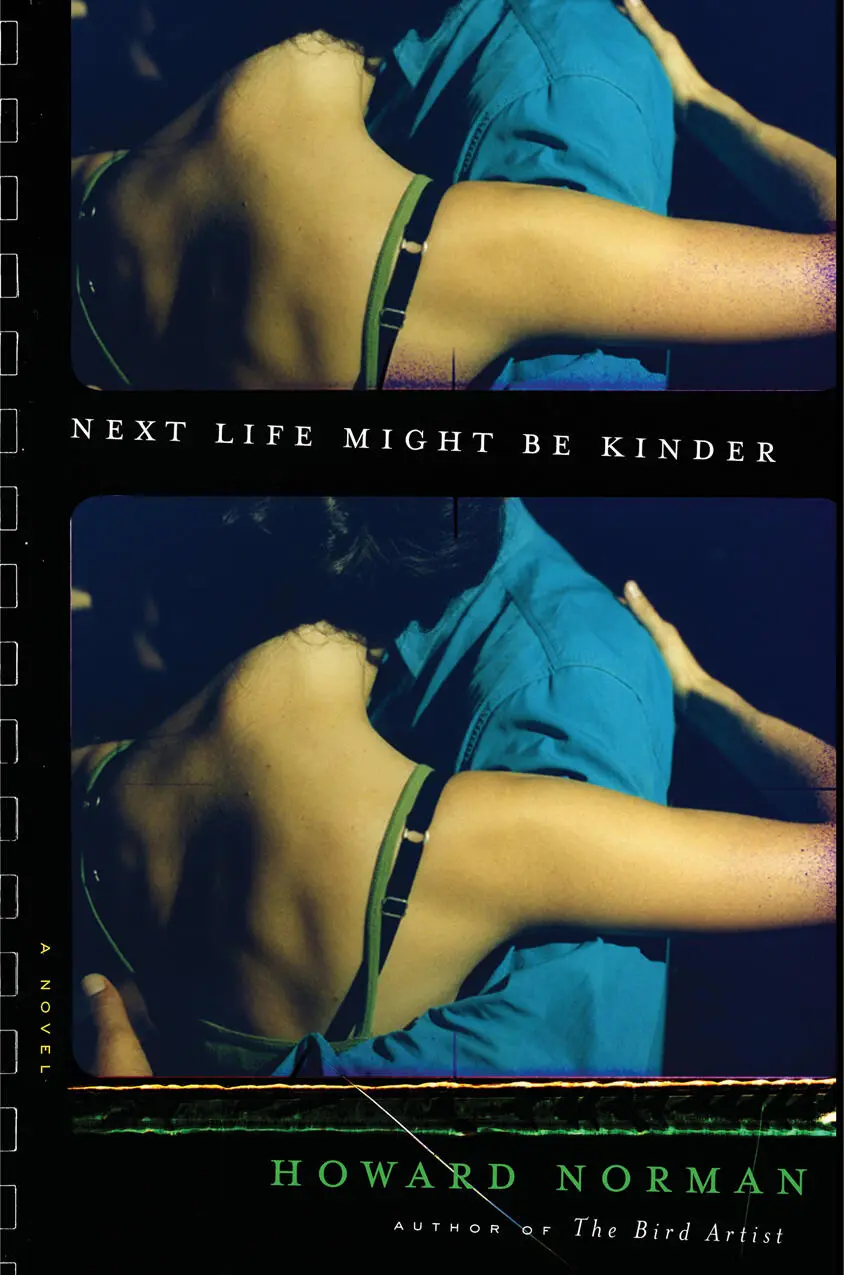
- Название:Next Life Might Be Kinder
- Автор:
- Издательство:Houghton Mifflin Harcourt
- Жанр:
- Год:2014
- ISBN:нет данных
- Рейтинг книги:5 / 5. Голосов: 1
-
Избранное:Добавить в избранное
- Отзывы:
-
Ваша оценка:
Next Life Might Be Kinder: краткое содержание, описание и аннотация
Предлагаем к чтению аннотацию, описание, краткое содержание или предисловие (зависит от того, что написал сам автор книги «Next Life Might Be Kinder»). Если вы не нашли необходимую информацию о книге — напишите в комментариях, мы постараемся отыскать её.
Sam Lattimore meets Elizabeth Church in 1970s Halifax, in an art gallery. The sparks are immediate, leading quickly to a marriage that is dear, erotically charged, and brief. In Howard Norman’s spellbinding and moving novel, the gleam of the marriage and the circumstances of Elizabeth’s murder are revealed in heart-stopping increments. Sam’s life afterward is complicated. For one thing, in a moment of desperate confusion, he sells his life story to a Norwegian filmmaker named Istvakson, known for the stylized violence of his films, whose artistic drive sets in motion an increasingly intense cat-and-mouse game between the two men. For another, Sam has begun “seeing” Elizabeth — not only seeing but holding conversations with her, almost every evening, and watching her line up books on a small beach. What at first seems simply hallucination born of terrible grief reveals itself, evening by evening, as something else entirely.
Next Life Might Be Kinder
Next Life Might Be Kinder — читать онлайн бесплатно полную книгу (весь текст) целиком
Ниже представлен текст книги, разбитый по страницам. Система сохранения места последней прочитанной страницы, позволяет с удобством читать онлайн бесплатно книгу «Next Life Might Be Kinder», без необходимости каждый раз заново искать на чём Вы остановились. Поставьте закладку, и сможете в любой момент перейти на страницу, на которой закончили чтение.
Интервал:
Закладка:
Mr. Winston, a trim fellow about age sixty, wearing light brown trousers and a tweed sports jacket, beige shirt buttoned to the neck and brown bespoke shoes, said, “Delighted.”
Elizabeth opened her arms to Mr. Winston, a wonderful gesture of dismissal to Padgett. At which point Padgett tapped his right-front trouser pocket, a preposterous gesture, and seemed to recite his lines: “Winston, the derringer is the miniature poodle of guns, with rabies.”
“I served in the infantry in France,” Mr. Winston said. “You’re a flea.”
Even Arnie Moran laughed at this. Most of the others began to leave the ballroom. They wanted nothing to do with this nonsense. Moran said, “No, please, let’s just get back to business, please!” The students hesitated, then all but two returned for the lesson. Alfonse Padgett, humiliated, saw me in the entranceway. He could have left by the back exit, but instead walked over and shoved me out of the way. Arnie Moran put the Boswell Sisters on the jukebox.
Elizabeth hurried over, kissed me deeply, and said, “Right after the lesson, let’s go to Cyrano’s.” I waited in the lobby. At about eight forty-five, our coats and scarves on, we walked the five blocks to the café, found a window-side table, and ordered espressos. Elizabeth took my hands in hers and said, “Darling, I am really, really enjoying learning this dance step, and I’m not going to let those two bastards ruin it for me. I paid my fee and now the creep bellman knows what’s what.”
“He accosted me this morning in the lift,” I said. “He spun me like the lindy.”
“We have got to get him sacked. There are grounds for it. Really, there are. We’ll make a list of grievances.”
We had our coffees and sat and talked awhile. When we got back to our apartment, we saw that the chaise longue had been torn, two long shredded furrows, the white stuffing billowing out. We had house detective Derek Budnick up in our room in five minutes. This wasn’t a movie.
Think Gently on Libraries
AT THE COTTAGE, I thought about having my telephone service stopped. I really only wanted to speak with Philip and Cynthia, and they were practically within shouting distance. And with Elizabeth, of course. Instead, I simply kept the phone off the hook, sometimes for whole days.
“I think your phone is not working,” Lily Svetgartot said when I opened the door at ten o’clock on a cold, clear morning. I’d been reading Elizabeth’s notebooks for The Preoccupations of Marghanita Laski. I wanted to review things in case her dissertation came up in conversation on the beach. “Do you have coffee?”
“I’m just leaving,” I said.
“Leaving where to, Mr. Lattimore, may I ask.”
“To look at birds. I’m trying to learn the birds that live around here.”
“Want some companionship?”
“I think you meant to say company, do I want some company. And the answer is no. What did Istvakson send you for this time, Miss Svetgartot?”
“He didn’t send me. I went for a drive. It’s my one-day-and-one-night vacation.”
“Well, enjoy the rest of it, then.”
I took up my rain slicker, binoculars, and boots, went outside, and put them in my truck. Through the kitchen window I saw Lily Svetgartot preparing coffee. I got in the truck and drove past the grocery and post office in Port Medway, then on out to the beach at Vogler’s Cove. I noticed clouds building to the south. I sat in a small seafood café, reading the various local newspapers and drinking a hot chocolate. Through the window I could see a few eider ducks and scoters bobbing on the water. Gulls were out, of course, always gulls. Then, absent-mindedly paging through the Chronicle-Herald, I noticed yet another article about the movie, now officially referred to as Next Life. The piece mentioned where in Halifax scenes were being shot (the gossip journalist had adopted the noun “shoot”) and which actors or actresses were spotted in which restaurants. Four or five paragraphs down, there was a brief interview with Istvakson in which he said, “I’m completely taken over by the sheer pathos of this story I’m filming. Sam Lattimore and Elizabeth Church — it’s almost as if I’m becoming them. I dream them. I daydream them. We’re on a strange and wonderful and very profound journey together.” Reading this, I wanted to lie down on the cold sand so that a gull, any kind of gull, could scream these words out of my brain. Instead, I took a walk.
I had to come to terms with the fact that the novel I’d been working on when Elizabeth was alive, Think Gently on Libraries, not only was stalled, but the mere thirty-one pages I’d written were in bad shape. Here’s the basic story.
In middle age the narrator decides to find out everything he can about the day he was born, March 4, 1929, at 11:58 P.M. in Halifax. What did his mother, a librarian, and his father, a police detective, do that day? Why was he delivered into the world on the roof of the Halifax Free Library? Why was he delivered into the world by a Dr. Petronius? Why did his mother, when the narrator was just a year old, run off with Dr. Petronius to Vancouver? What was she doing on the roof of the library at all? How did Dr. Petronius even know she was there? The narrator teaches art history at Dalhousie University but is himself no artist; he likes teaching, though, and is good at it. His wife of twenty-six years is a police sketch artist and part-time art teacher in two different high schools; they have a daughter, just off to university in Montreal to study medicine, with a special interest in forensic pathology. Anyway, the questions about his birth, his parents’ lives, all sorts of things that up to his middle age had troubled him only now and then, now mercilessly haunt him. They are all he can think about. His obsession is beginning to fray his marriage. Yet as he begins his research, he discovers that none of his academic training is of any use. He applies for a year’s leave (fabricating a research project), receives it, and starts to investigate the day he was born. He begins to find out things he is not sure he wants to know. But he cannot stop finding them out.
I always cringe when a writer, in person or in print, whines about writer’s block. Basically, I don’t believe in it. I think it’s all bullshit. Oh, of course, of course life intervenes: there’s illness, there’s depression, there’s attending to children, there’s a truck to get repaired, there’s Japanese crabapple trees to plant. (I’d read that the Japanese crabapple thrives in the Nova Scotia climate. My second week in the cottage, I ordered twenty young trees and planted them out back, a small orchard. “Expect deer,” Philip said.) All sorts of quotidian anxieties and demands intrude. But what’s necessary is to find a time of the day or night to dedicate exclusively to writing, even if only a page or two, even if you end up writing garbage. Drink more coffee; drink less coffee. Set the alarm for four A.M. “Wait for the moon, admit the moon isn’t showing up,” as Yasunari Kawabata, one of my favorite Japanese novelists, wrote. “No matter — just write every day.” I realize I’m being unsympathetic to the insistences and fragilities of some people’s emotional makeup; I realize it’s idiosyncratic, life to life to life. Who doesn’t know that? Good Lord, listen to me. All platitudes (mine especially) about writing sound hollow, a dumb show.
Still, when we lived in the Essex Hotel, my writing for radio really was demanding. And I was all too willing to set aside the novel to do it. I could have rationalized this by saying that a novel (as Elizabeth had put it, about Marghanita Laski) is a jealous mistress, and there’s no room for distractions of any sort, so if I couldn’t concentrate fully on writing a novel, I’d be better off setting it aside and returning to it when our financial bad weather cleared. Truth be told, Elizabeth was the disciplined writer of the household. Often it was a matter of my own brand of willful incapacitation. While I was convinced of the plot of Think Gently on Libraries and thought about it all the time, I was not devoted enough to writing the thing. Then Elizabeth was murdered.
Читать дальшеИнтервал:
Закладка:
Похожие книги на «Next Life Might Be Kinder»
Представляем Вашему вниманию похожие книги на «Next Life Might Be Kinder» списком для выбора. Мы отобрали схожую по названию и смыслу литературу в надежде предоставить читателям больше вариантов отыскать новые, интересные, ещё непрочитанные произведения.








Обсуждение, отзывы о книге «Next Life Might Be Kinder» и просто собственные мнения читателей. Оставьте ваши комментарии, напишите, что Вы думаете о произведении, его смысле или главных героях. Укажите что конкретно понравилось, а что нет, и почему Вы так считаете.