Richard Ford - The Sportswriter
Здесь есть возможность читать онлайн «Richard Ford - The Sportswriter» весь текст электронной книги совершенно бесплатно (целиком полную версию без сокращений). В некоторых случаях можно слушать аудио, скачать через торрент в формате fb2 и присутствует краткое содержание. Год выпуска: 1995, Издательство: Vintage Books, Жанр: Современная проза, на английском языке. Описание произведения, (предисловие) а так же отзывы посетителей доступны на портале библиотеки ЛибКат.
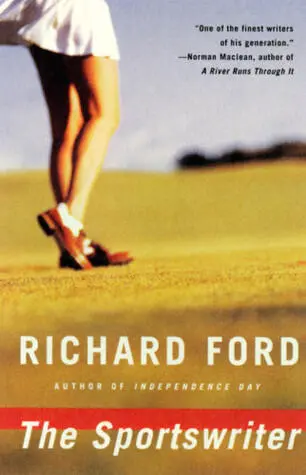
- Название:The Sportswriter
- Автор:
- Издательство:Vintage Books
- Жанр:
- Год:1995
- ISBN:нет данных
- Рейтинг книги:3 / 5. Голосов: 1
-
Избранное:Добавить в избранное
- Отзывы:
-
Ваша оценка:
The Sportswriter: краткое содержание, описание и аннотация
Предлагаем к чтению аннотацию, описание, краткое содержание или предисловие (зависит от того, что написал сам автор книги «The Sportswriter»). Если вы не нашли необходимую информацию о книге — напишите в комментариях, мы постараемся отыскать её.
The Sportswriter — читать онлайн бесплатно полную книгу (весь текст) целиком
Ниже представлен текст книги, разбитый по страницам. Система сохранения места последней прочитанной страницы, позволяет с удобством читать онлайн бесплатно книгу «The Sportswriter», без необходимости каждый раз заново искать на чём Вы остановились. Поставьте закладку, и сможете в любой момент перейти на страницу, на которой закончили чтение.
Интервал:
Закладка:
That is the truth of what I feel and think. To expect anything less or different is idiotic. Bad sportswriters are always wanting to know such things, though they never want to know the truth, never have a place for that in their stories. Athletes probably think and feel the fewest things of anyone at important times — their training sees to that — though even they can be counted on to have more than one thing in their mind at a time.
“I’ll carry my own bag,” Vicki says, pressed against me like my shadow, sniffing away a final tear of arrival happiness. “It’s light as a feather duster.”
“You’re not going to do anything from now on out but have fun,” I say, both bags up and moving. “You just let me see a smile.”
And she smiles a smile as big as Texas. “Look, I ain’t p.g., you know,” she says as the pneumatic hotel doors glide away. “I always carry what’s mine.”
It is four-thirty by the time we get to our room, a tidy rectangle of pretentious midwestern pseudo-luxury — a prearranged fruit basket, a bottle of domestic champagne, blue bachelor buttons in a Chinese vase, red-flocked whorehouse wall décor and a big bed. There is an eleventh-story fisheye view upriver toward the gaunt Ren-Cen and gray pseudopodial Belle Isle in the middle distance — the shimmer-lights of suburbs reaching north and west out of sight.
Vicki takes a supervisory look in all spaces — closets, shower, bureau drawers — makes ooo’s and oh’s over what’s here free of charge by way of toiletries and toweling, then establishes herself in an armchair at the window, pops the champagne and begins to take everything in. It is exactly as I’d hoped: pleased to respectful silence by the splendor of things — a vote that I have done things the way they were meant to be.
I take the opportunity for some necessary phoning.
First, a “touch base” call to Herb to firm up tomorrow’s plans. He is in laughing good spirits and invites us to have dinner with him and Clarice at a steak place in Novi, but I plead fatigue and prior commitments, and Herb says that’s great. He has become decidedly upbeat and shaken his glumness of the morning. (He is on pretty serious mood stabilizers, is my guess. Who wouldn’t be?) We hang up, but in two minutes Herb calls back to check whether he’s given me right directions for the special shortcut once we leave I–96. Since his injury, he says, he’s suffered mild dyslexia and gets numbers turned around half the time with some pretty hilarious results. “I do the same thing, Herb,” I say, “only I call it normal.” But Herb hangs up without saying anything.
Next I call Henry Dykstra, X’s father, out in Birmingham. I have made it my policy to keep in touch with him since the divorce. And though things were strained and extremely formal between us while X’s and my affairs were in the lawyers’ hands, we have settled back since then into an even better, more frank relationship than we ever had. Henry believes it was Ralph’s death pure and simple that caused our marriage to go kaput, and feels a good measure of sympathy for me — something I don’t mind having, even if my own beliefs about these matters are a good deal more complex. I have also stayed an intermediary message-carrier between Henry and his wife, Irma, out in Mission Viejo, since she writes to me regularly, and I have let him know that I can be trusted to keep a confidence and to relay timely information which is often something surprisingly intimate and personal. “The old plow still works,” he once asked me to tell her, and I did, though she never answered that I know of. Families are very hard to break apart forever. I know that.
Henry is a robust seventy-one and, like me, has not remarried, though he often makes veiled but conspicuous references to women’s names without explanation. My personal belief — seconded by X — is that he’s as happy as a ram living on his estate by himself and would’ve had it that way from the day X was born if he could’ve negotiated Irma. He is an industrialist of the old school, who worked his way up in the Thirties and has never really understood the concept of an intimate life, which I contend is not his fault, though X thinks otherwise and sometimes claims to dislike him.
“We’re going broke, Franky,” Henry says, in a bad temper. “The whole damn country has its pants around its ankles to the unions. And we elected the S.O.B.s who’re doing it to us. Isn’t that something? Republicans? I wouldn’t give you a goddamned nickel for the first one they ever made. I stand somewhere to the right of Attila the Hun, I guess is what that means.”
“I’m not much up on it, Henry. It sounds tricky to me.”
“Tricky! It isn’t tricky. If I wanted to steal and lay off everybody at my plant I could live for a hundred years, exactly the way I live now. Never leave the house. Never leave the chair! I came up a Reuther man, you know that, Frank. Lifelong. It’s these gangsters in Washington. All of them. They’re all goddamn criminals, want to run me in the ground. Retire me out of the gasket business. What’s going on at home, anyway? You still divorced?”
“Things’re great, Henry. Today’s Ralph’s birthday.”
“Is that so?” Henry does not like to talk about this, I know, but for me it is a day of some importance, and I don’t mind mentioning it.
“I think he would’ve made a fine adult, Henry. I’m sure of that.”
For a moment then there is stupefied emptiness in our connection while we think over lost chances.
“Why don’t you come out here and we’ll get drunk,” Henry says abruptly. “I’ll have Lula fix duck en brochette. I killed the sons-of-bitches myself. We can call up some whores. I’ve got their private phone numbers right here. Don’t think I don’t call them, either.”
“That’d be great, Henry. But I’m not alone.”
“Got a shady lady with you yourself?” Henry guffaws.
“No, a nice girl.”
“Where’re you staying?”
“Downtown. I have to go back tomorrow. I’m on business today.”
“Okay, okay. Tell me why you think our golfing friend left you, Frank? Tell the truth. I can’t get it off my mind today, for some damn reason.”
“I think she wanted her life put back in her own hands, Henry. There’s not much else to it.”
“She always thought I ruined her life for men. It’s a hell of a thing to hear. I never ruined anybody’s life. And neither did you.”
“I don’t really think she thinks that now.”
“She told me she did last week! As late as that. I’m glad I’m old. It’s enough life. You’re here, then you’re not.”
“I wasn’t always such a great guy, Henry. I tried hard but sometimes you can just fool yourself about yourself.”
“Forget all that,” Henry says. “God forgave Noah. You can forgive yourself. Who’s your shady lady?”
“You’d like her. Her name’s Vicki.” Vicki swings her smiling head around and holds up a glass of champagne to toast me.
“Bring her out here, I’ll meet her. What a name. Vicki.”
“Another visit, Henry. We’re on a short schedule this time.” Vicki goes back to watching the night fall.
“I don’t blame you,” Henry says brashly. “You know, Frank, sometimes the fact of living with somebody makes living with them impossible. Irma and I were just like that. I sent her to California one January, and that was twenty years ago. She’s a lot happier. So you stay down there with Vicki whatever.”
“It’s hard to know another person. I admit that.”
“You’re better off assuming anybody’ll do anything, anytime, than that they won’t. That way you’re safe. Even my own daughter.”
“I wish I could come out there and get drunk with you, Henry, that’s the truth. I’m glad we’re pals. Irma told me to tell you she’d seen a real good performance of The Fantasticks in Mission Viejo. And it made her think of you.”
Читать дальшеИнтервал:
Закладка:
Похожие книги на «The Sportswriter»
Представляем Вашему вниманию похожие книги на «The Sportswriter» списком для выбора. Мы отобрали схожую по названию и смыслу литературу в надежде предоставить читателям больше вариантов отыскать новые, интересные, ещё непрочитанные произведения.



Обсуждение, отзывы о книге «The Sportswriter» и просто собственные мнения читателей. Оставьте ваши комментарии, напишите, что Вы думаете о произведении, его смысле или главных героях. Укажите что конкретно понравилось, а что нет, и почему Вы так считаете.